Georgian Jewellery
A guide to Georgian jewellery (1714-1837): Brazilian diamonds, closed-back foiled settings, rococo and Neoclassical styles, paste, cut steel and pinchbeck, sentimental miniatures, girandoles, rivières and Sévigné bows.
Georgian jewellery spans the reigns of four King Georges and William IV, and it opens the story of modern jewellery - almost everything the Victorians later refined, from foiled paste to mourning rings, was already established practice by the time Victoria came to the throne in 1837.
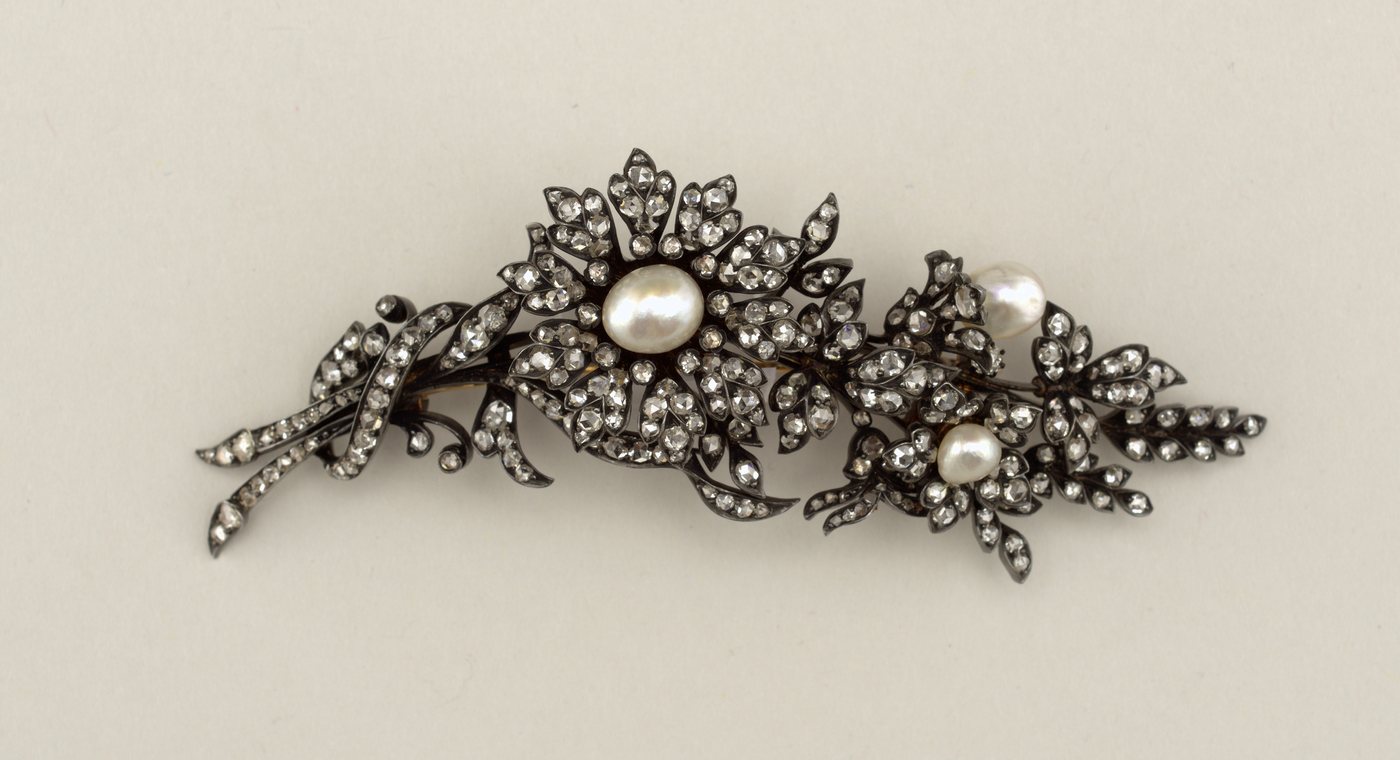
Overview
“Georgian” is a long, loosely defined stretch of over a century, named for the succession of Hanoverian kings rather than a single unified style. Jewellery changed considerably across it, from the asymmetric rococo naturalism of the mid-18th century to the more restrained, Neoclassical-influenced designs of the early 19th century - the latter overlapping with what is now usually treated as its own Regency phase. What unifies the period, technically, is candlelight: jewellery was designed to sparkle by candle and firelight, which shaped both the cutting of stones and the way they were set.
Rococo and Naturalistic Styles
Mid-18th-century Georgian jewellery favoured asymmetric, curling rococo forms alongside naturalistic sprays of flowers, leaves and ribbons, rendered in gold or silver-topped gold and set thickly with gemstones or paste. Girandole earrings - a design with a top stone or bow suspending three pear-shaped drops - and pendeloque (elongated pear-cut) drops were characteristic forms, worn to catch and scatter candlelight across the face and throat.
Closed-Back Settings and Foiled Stones
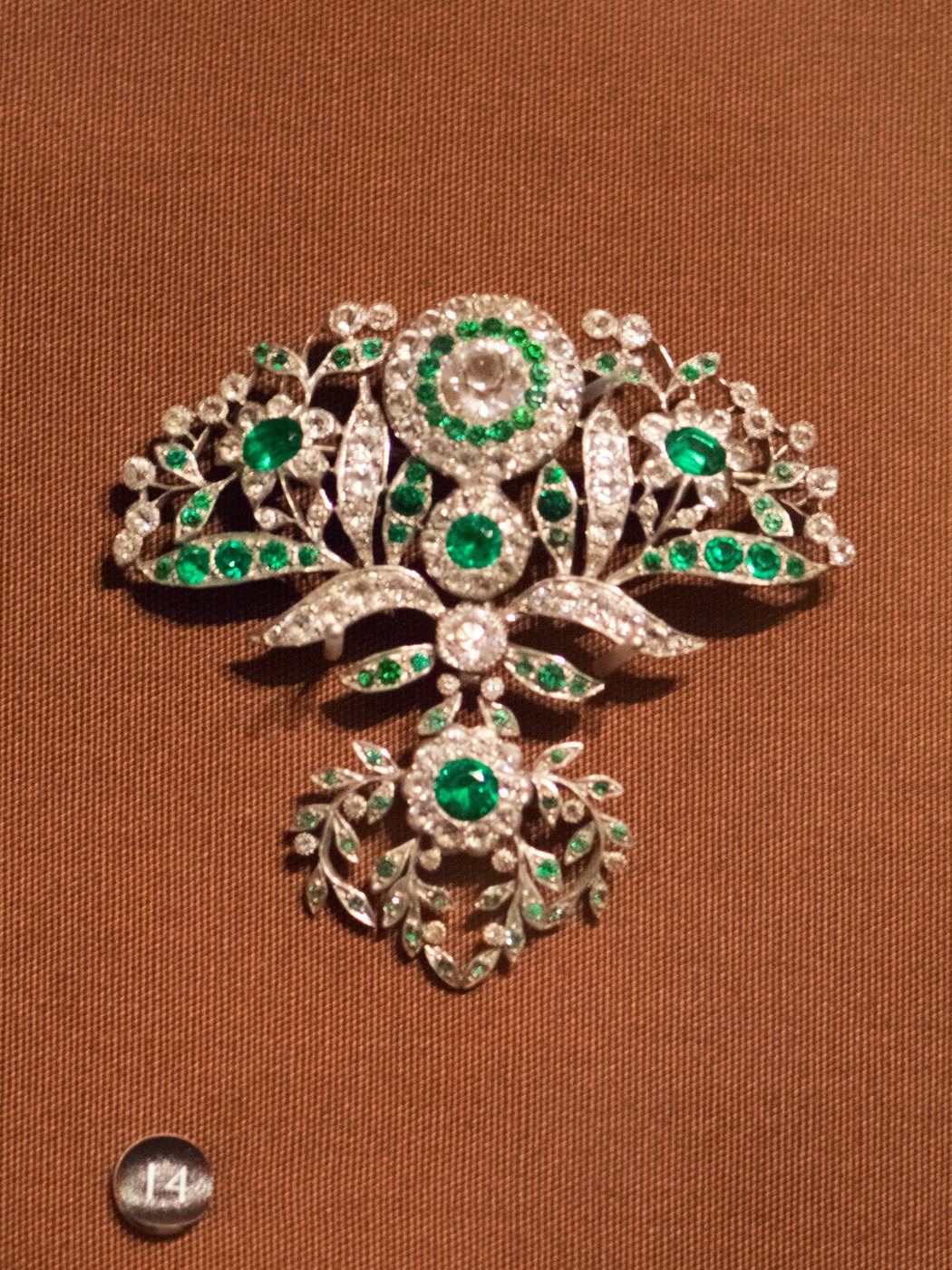
Most Georgian gemstones and paste were set in closed-back mounts, typically silver over a gold body, with a thin metal foil placed behind the stone to reflect light back through it and intensify its colour. Silver was used over the visible faces of the setting because it does not discolour a pale stone the way gold can, while gold formed the reverse and structure of the piece. This closed, foiled construction is one of the most reliable technical markers of earlier Georgian work, since open, unfoiled claw settings only became common later, as stone-cutting quality improved and foiling became less necessary to achieve brilliance.
Cannetille and Cut Steel
Cannetille - fine, coiled and twisted gold wirework built up into filigree-like scrollwork - became especially fashionable in the early 19th century, giving lightweight pieces a lacy, textured appearance without the cost of solid gold. Cut steel jewellery, made from small faceted steel studs riveted to a backing plate to imitate the sparkle of diamonds, was another distinctly Georgian material, produced in quantity in England and valued as a fashionable, affordable alternative to gemstones rather than as a simple imitation.
Materials
Gold, silver and silver-topped gold predominate in finer Georgian pieces, with pinchbeck - a copper-zinc alloy developed in the early 18th century to imitate gold’s colour - common in less expensive jewellery. Paste, a lead glass cut and foiled to imitate gemstones, was worn openly as fashionable jewellery in its own right at every social level, not only as a cheap substitute, alongside genuine diamonds, garnets, amethyst, topaz and coloured gemstones.
A New Supply of Diamonds
For most of history, diamonds had come from the Golconda region of India. In the 1720s diamonds were found in Brazil, in the Minas Gerais region, and by the middle of the century Brazilian stones were reaching Lisbon and the cutting centres of Amsterdam and Antwerp in quantity. The new supply made diamonds more available to the wealthy of Europe and encouraged the fashion for jewellery set entirely with diamonds, usually as rose cuts or early brilliants (old mine cuts). Brazilian gold and coloured stones, including golden topaz from Ouro Preto, followed the same route. See Diamonds in Jewellery History.
Neoclassicism
The excavations of Herculaneum (from 1738) and Pompeii (from 1748), and the Grand Tour that took young aristocrats to Italy, made classical antiquity the dominant taste from the 1760s onward. Jewellery followed: cameos and intaglios of classical heads, urns, laurel wreaths and Greek key borders replaced rococo asymmetry. Josiah Wedgwood’s jasperware cameos, launched in the 1770s, were mounted in cut steel by Matthew Boulton in Birmingham, and James Tassie in London made glass-paste copies of ancient engraved gems in thousands. See What Is a Cameo?.
Sentimental Jewellery
The late 18th century developed a new language of sentiment in jewellery:
- Memorial miniatures of the 1770s-1800s, painted in sepia on ivory, show urns, tombs, weeping willows and mourning women, sometimes worked partly in dissolved or chopped hair of the dead.
- Lover’s eye miniatures, fashionable from the 1780s, set a single painted eye in a brooch or ring; see Lover’s Eye Jewellery.
- Hair was plaited behind glass in lockets, rings and brooches, often framed in pearls or paste; see What Is Hair Jewellery?.
- Seed pearl jewellery, threaded with horsehair onto mother-of-pearl frames, was popular for weddings and gifts at the end of the period.
- Posy rings carried short inscriptions inside the band; see What Is a Posy Ring?.
Common Jewellery Types
- Girandole earrings and brooches - three pear-shaped drops from a central bow or cluster.
- Rivière necklaces of collet-set diamonds or paste; see What Is a Rivière Necklace?.
- Bow brooches, often called Sévigné brooches after the 17th-century letter-writer Madame de Sévigné.
- Stomachers and bodice ornaments in diamonds or paste; see What Is a Stomacher?.
- Aigrettes and jewelled hair ornaments in the form of feathers and sprays; see What Is an Aigrette?.
- Giardinetti rings - “little garden” rings with openwork baskets of coloured stones, fashionable around 1750.
- Chatelaines hung with watches, seals and étuis; see What Is a Chatelaine?.
- Fob seals for men, worn on the watch chain; see What Is a Fob Seal?.
Makers and Retailers
Most Georgian jewellery is unmarked, and individual makers are rarely known. In London the leading retail goldsmiths and jewellers included Garrard, appointed Crown Jewellers in 1843 but already established in the 18th century, and Rundell, Bridge & Rundell, the dominant royal goldsmiths of the early 19th century. Christopher Pinchbeck in London gave his name to the gold-coloured alloy he developed, Matthew Boulton’s Soho Manufactory in Birmingham made cut steel on an industrial scale, and in Paris Georges Frédéric Strass refined the lead-glass paste that bears his name.
Mourning and Memento Mori Jewellery
Mourning jewellery has roots well before Victoria’s reign. Georgian mourning rings, often distributed to family and friends at a funeral as a keepsake, typically carried the deceased’s initials, dates or an inscription, sometimes enamelled black or, more rarely, white - white usually indicating that the deceased was a child or unmarried. Earlier in the period, memento mori jewellery - skulls, coffins, skeletons and mottos reminding the wearer of mortality - was still current, a tradition inherited from the 17th century, before mourning jewellery shifted toward more personal, sentimental imagery incorporating hair or portrait miniatures as the 18th century progressed.
Motifs
Bows, ribbons, floral sprays, feathers, urns, and later Neoclassical devices such as classical figures and laurel wreaths all recur, alongside the mortality symbols of memento mori pieces and the initials, dates and mottos typical of mourning rings.
How to Recognise Georgian Jewellery
Closed-back settings with foil behind the stone, silver-topped gold construction, cannetille wirework, cut steel studs, and hand-cut, irregular table or rose-cut stones (rather than the more standardised cuts of later periods) are all strong indicators of Georgian work, though surviving pieces from this period are comparatively rare and were frequently reset or reworked by later owners.
Transition to Regency and Victorian Jewellery
From the 1790s onward, jewellery style shifted toward the lighter, Neoclassical taste generally described as Regency - itself still part of the wider Georgian period rather than a fully separate era - before giving way to the very different naturalistic and sentimental idiom of early Victorian jewellery after 1837.
Read next
Compare
Georgian vs Regency Jewellery
Regency jewellery is not a separate era from Georgian but its late, most Neoclassical phase - here's what distinguishes Regency style within the wider Georgian sweep.
Compare
Georgian vs Victorian Jewellery
How Georgian and Victorian jewellery differ in settings, techniques and motifs, and why Victorian jewellery itself spans several distinct phases.

Eras
A Guide to Jewellery Through History
A chronological guide to jewellery history from the Georgian era to the 1940s - how style, materials and meaning changed decade by decade across Britain, France and the United States.
Eras
Regency Jewellery
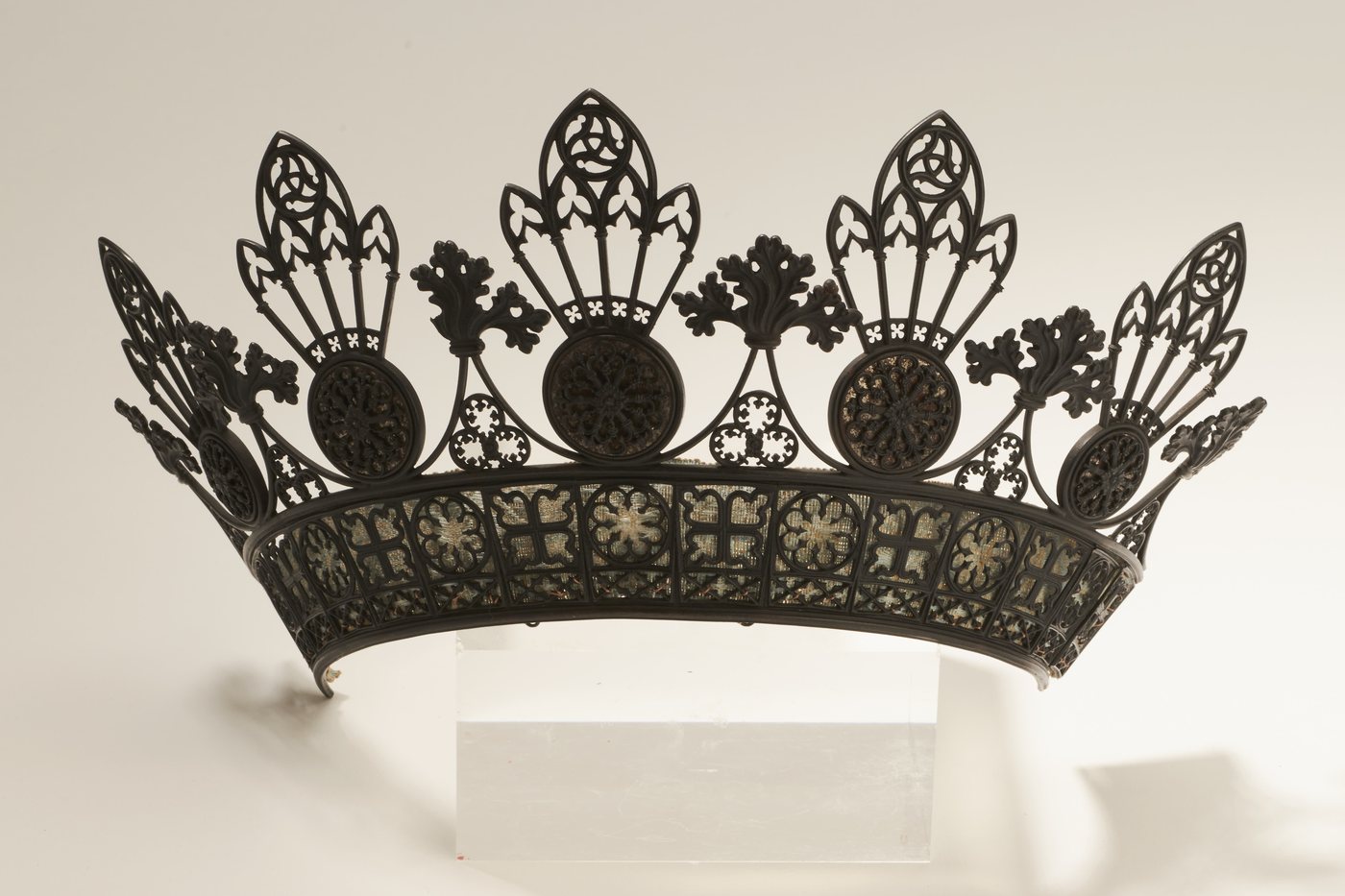
A guide to Regency jewellery (c.1795-1837): Empire fashion, cameos and Neoclassical parures at Napoleon's court, coloured gold and cannetille, Berlin iron and cut steel, acrostic rings, and memorial jewellery for Nelson and Princess Charlotte.
Eras
Victorian Jewellery
A guide to Victorian jewellery (1837-1901): the Romantic, Grand and Aesthetic periods, the Great Exhibition, gold rushes and 9ct gold, mourning and Whitby jet, archaeological revival, Scottish jewellery, and how to recognise each phase.
Materials
What Is Paste Jewellery?
What paste jewellery is, from English lead glass and Georges Frédéric Strass in Paris to foiled closed settings, black-dot culets and later Bohemian stones, and why fine paste is collected today.