Stone-Setting Styles Explained
Historical stone-setting styles from foiled closed-back collets to open claws, coronet, gypsy, millegrain, platinum knife-edge, channel, illusion and mystery settings - and roughly when each was used.
Historical jewellery uses a range of distinct stone-setting styles, each with its own construction, appearance and typical period of popularity. Between 1700 and 1950 the broad direction of change was from enclosed, foiled settings that hid the back of the stone towards open settings that let light through it, and then towards settings that hid the metal altogether. This page maps out the main terms; cut and setting are closely linked, so see also How to Date a Diamond by Its Cut.

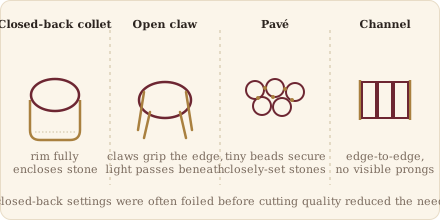
Closed-Back (Collet or Box) Setting
A closed-back setting, sometimes called a collet or box setting, encloses a stone within a rim of metal that fully surrounds it and is backed with solid metal. Until about 1800 this was the normal way to set both diamonds and coloured stones, and it remained common for coloured stones into the 1830s and 1840s. A thin metal foil, often tinted, was placed behind the stone inside the mount to reflect light back through it and strengthen its colour or brilliance. Foiled closed-back settings are discussed further on the paste page, where foiling is closely associated with imitation gemstones, and on the diamonds in jewellery history page, where the same approach is shown to have been used behind real stones as well.
Georgian diamond jewellery was usually made of silver-topped gold: the stones were set in silver, whose white colour flattered diamonds, while the back of the piece was gold, which did not tarnish against the skin or clothing. The collet edge was rubbed or pushed over the girdle of the stone and then often cut down into small scallops or points, a style known as a cut-down setting. Some Georgian paste and diamond collets have a small black dot painted on the foil behind the stone, imitating the culet (the small flat facet at the base) of an old-cut diamond.
The Move to Open Settings
From the late 18th century, open-backed collets began to appear on fine diamond jewellery, and over the first half of the 19th century they became standard for diamonds. Open backs let light enter the stone from behind and made foiling unnecessary for a well-cut stone. Foiling of real stones became rare after the mid-19th century, although it continued in paste.
Open Claw (Prong) Setting
An open claw setting, also called a prong setting, holds a stone with individual metal claws gripping it at points around its girdle rather than with a continuous rim. Because the sides and back of the stone are largely open, light can reach it from behind as well as from the front. Several forms are associated with particular periods:
- Coronet or crown settings, in which the top of a collet is cut into a ring of pointed claws, were widely used from the mid-19th century on rings, brooches and necklaces.
- The Tiffany setting, a raised six-claw mount for a single diamond, was introduced by Tiffany & Co. in New York in 1886 and set the pattern for solitaire engagement rings that followed.
- Fine platinum claws of the Edwardian period, much thinner and less visible than gold or silver claws, were possible because platinum is strong enough to hold a stone securely in a very small cross-section.
The claw setting became the standard approach for fine diamond and gemstone jewellery by the later 19th century and remained so into the 20th.
Rub-Over and Gypsy Settings
A rub-over or bezel setting holds the stone with a continuous band of metal burnished over its edge, like an open-backed collet. It was used throughout the period, especially for cabochons, cameos and stones in men’s rings. A gypsy setting sinks the stone into the surface of a heavy gold ring so that its table sits flush with the metal; when the metal around the stone is engraved with radiating lines it is called a star setting. Both were popular in late Victorian and Edwardian gold rings, particularly for men.
Millegrain and Platinum Settings
Platinum became workable for jewellery around 1900 and changed setting design. Because it is so strong, Edwardian jewellers could reduce collets and claws to thin rims and points, link them with fine openwork galleries, and use knife-edge bars - thin strips of platinum set on edge, so they look like a fine line from the front - to carry stones in delicate garland designs. The edges of collets and mounts were often finished with milgrain, a row of tiny beads that softened the metal outline and made stones look slightly larger. Before platinum, the same delicate look was approximated with silver-topped gold; in the transition years after 1900, some pieces were made of platinum backed with gold.
Pavé Setting
Pavé setting secures many small stones closely together across a surface, each held by tiny beads or fine prongs of metal raised between them, so that the mount is almost entirely hidden beneath a continuous field of stone. The pavé setting page covers the technique in full, from Victorian turquoise and pearl pavé to Edwardian platinum work.
Channel and Calibré Setting
Channel setting fits stones snugly edge to edge into a continuous metal channel, held by the channel’s walls alone with no visible prongs or beads between individual stones. It depends on calibré cutting, in which stones are cut to precise, matching sizes and shapes to fit the channel exactly. Calibré-cut rubies, sapphires, emeralds and onyx were used by Cartier and other Paris houses from the 1910s and are particularly associated with Art Deco jewellery of the 1920s and 1930s. The result is a smooth, unbroken run of colour, distinct from both the beaded texture of pavé and the enclosed look of a collet.
Illusion and Mystery Settings
Two 1930s developments pushed the trend for hiding metal further:
- Illusion settings surround a small diamond with a plate of white metal cut with bright facets or a star pattern, so that the stone appears larger than it is. They were common in diamond rings of the 1930s and 1940s.
- The mystery setting (serti mystérieux), patented by Van Cleef & Arpels in Paris in 1933, slides specially grooved calibré stones onto a fine metal grid so that no metal at all shows on the front. It was used for flower and leaf brooches and remained a speciality of the firm.
Choosing Between Them
These styles are not mutually exclusive within a single piece - a ring might combine a closed-back central collet with an open claw surround, or a pavé shoulder leading into a channel-set band - and recognising which style is used where is often more useful than assigning a whole piece to one category. As a general guide: a closed-back collet fully encloses a stone and was often foiled; an open claw grips a stone at points and lets light through from behind; pavé covers a surface with many small, individually beaded stones; and channel or calibré setting runs stones edge to edge with no visible prongs. Settings are also the part of a jewel most often repaired or replaced, so a setting style that does not match the rest of a piece may be a later alteration.
Frequently Asked Questions
Does an open claw setting mean a stone cannot be foiled? Not as an absolute rule, but foiling depends on a closed back to hold the foil in place, so open claw settings are not generally foiled in the way closed-back collets frequently were.
Which setting style is oldest? The closed-back collet is the oldest of the styles discussed here in terms of dominant use, giving way gradually to open settings through the late 18th and 19th centuries, though timing varied by region, workshop and the type of jewellery involved.
Read next

Eras
Art Deco Jewellery
A guide to Art Deco jewellery (c.1915-1935): geometric symmetry, the 1925 Paris Exposition, Cartier's Tutti Frutti and Van Cleef & Arpels' Mystery Set, the modernist jewellers, new stone cuts, Egyptian and Indian influences, and costume jewellery.

Eras
Edwardian Jewellery
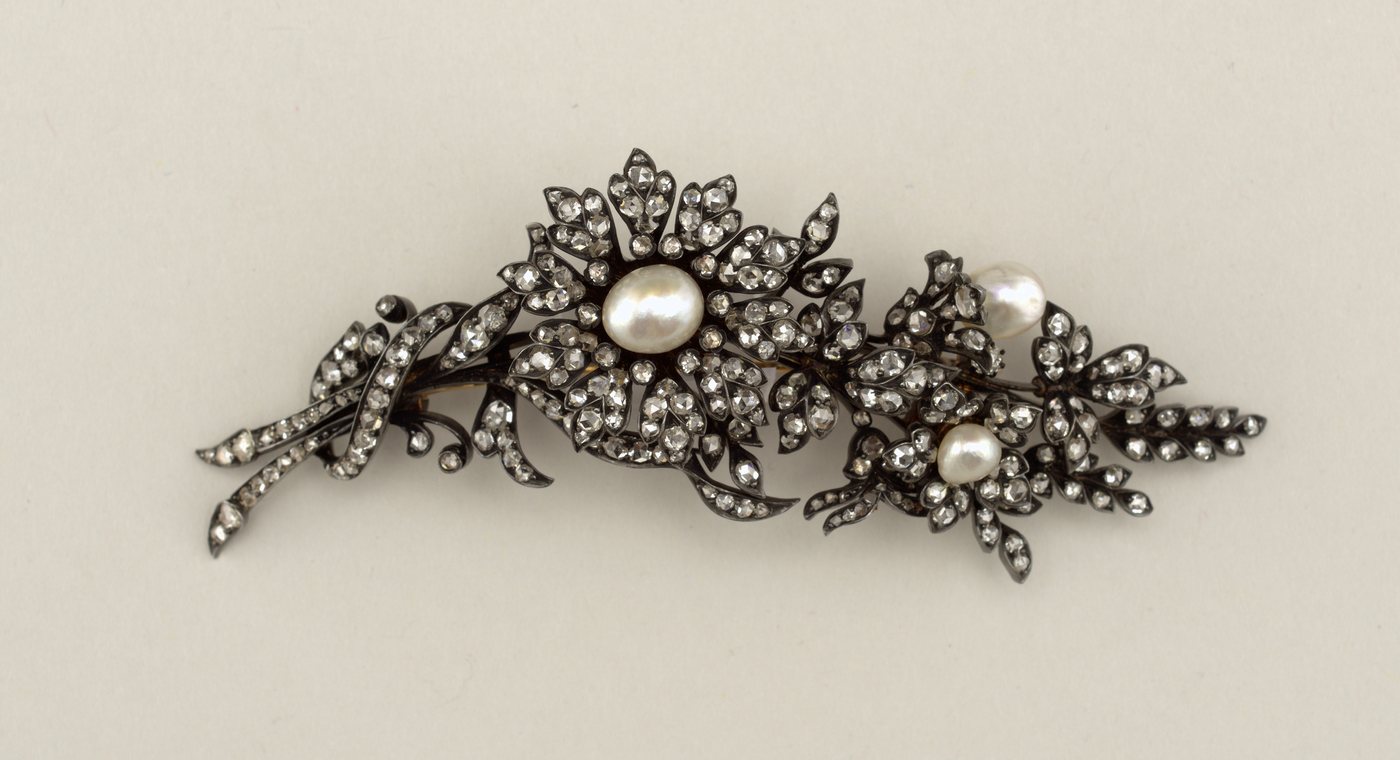
A guide to Edwardian jewellery (1901-1915): platinum and the garland style, Queen Alexandra's dog collars, Cartier, Boucheron and Fabergé in London, the Cullinan diamond, lavaliers, milgrain settings and day jewellery.
Eras
Georgian Jewellery
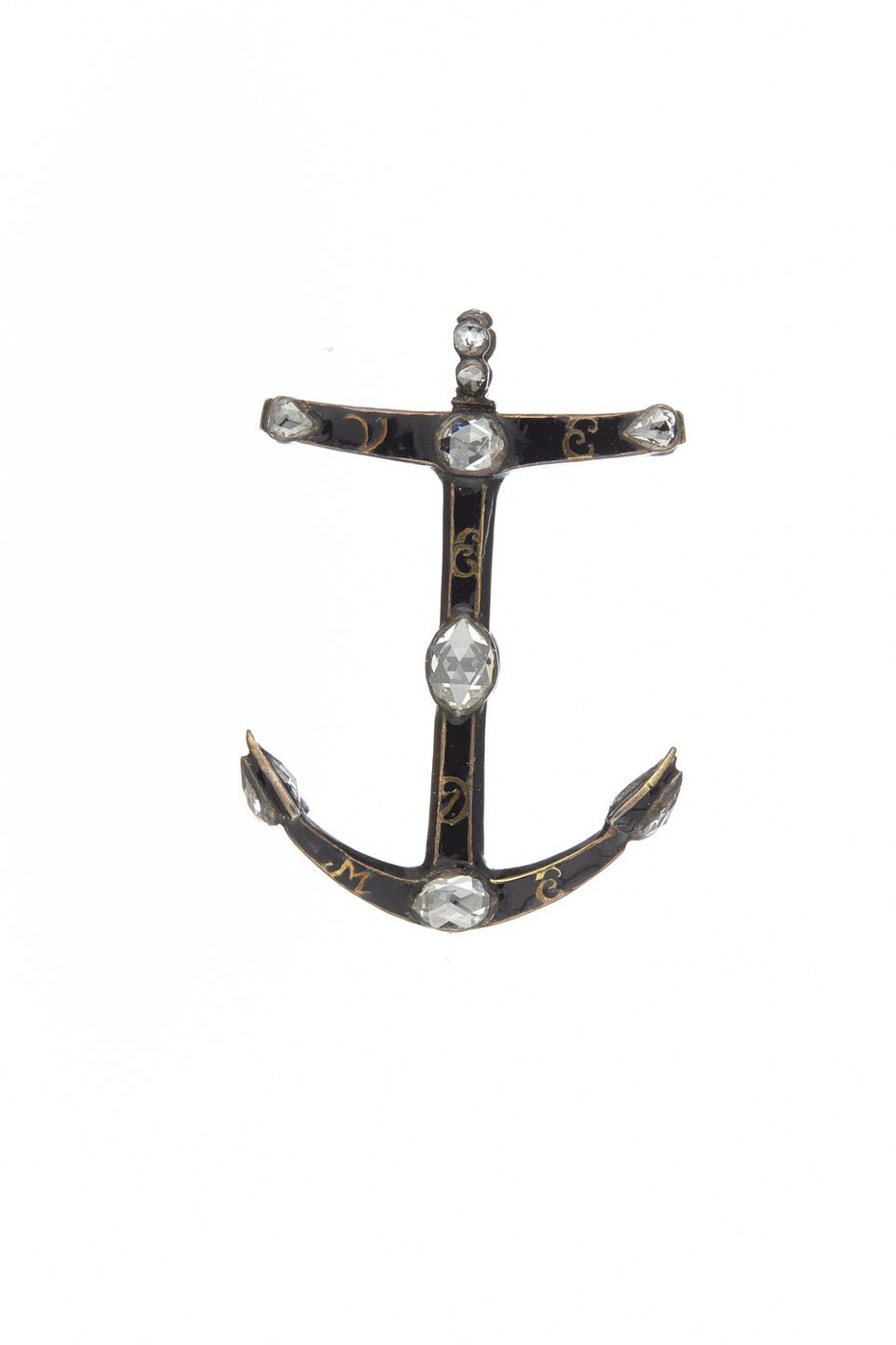
A guide to Georgian jewellery (1714-1837): Brazilian diamonds, closed-back foiled settings, rococo and Neoclassical styles, paste, cut steel and pinchbeck, sentimental miniatures, girandoles, rivières and Sévigné bows.
Gemstones
Diamonds in Jewellery History
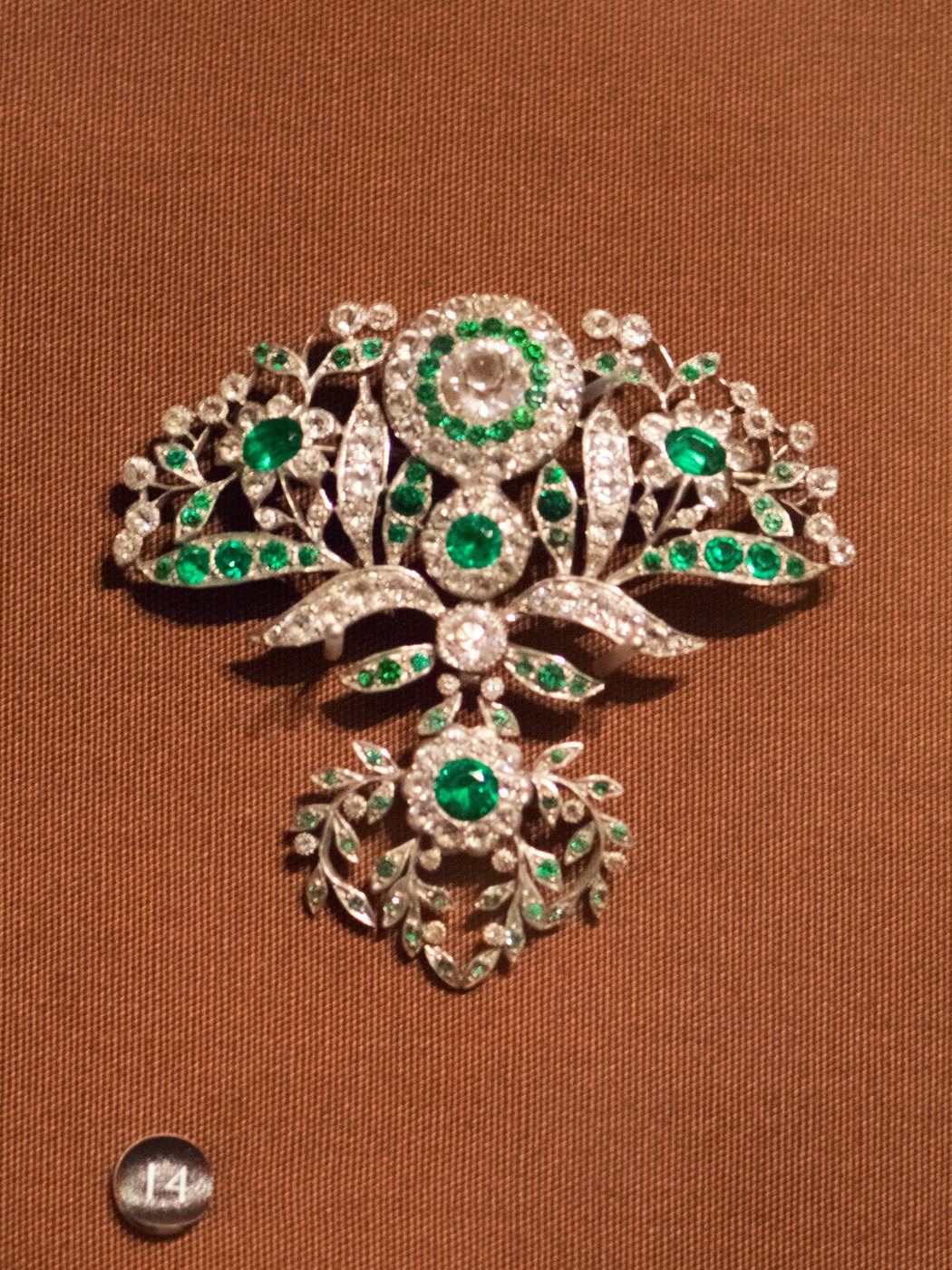
From Indian and Brazilian diamonds to the 1867 South African discoveries and Kimberley, famous stones such as the Regent, Hope and Cullinan, and how diamond cutting and setting changed 1700-1950.
Materials
What Is Paste Jewellery?
What paste jewellery is, from English lead glass and Georges Frédéric Strass in Paris to foiled closed settings, black-dot culets and later Bohemian stones, and why fine paste is collected today.
Techniques
What Is Pavé Setting?
What pavé setting is, how stones were seated and held by raised beads, its use from Victorian turquoise pavé to Edwardian platinum and Art Deco work, and how it differs from channel setting.