What Is an Aigrette?
What an aigrette is, how it held a spray of feathers in the hair or on a headdress, and why the plume trade behind it became a documented early conservation issue.
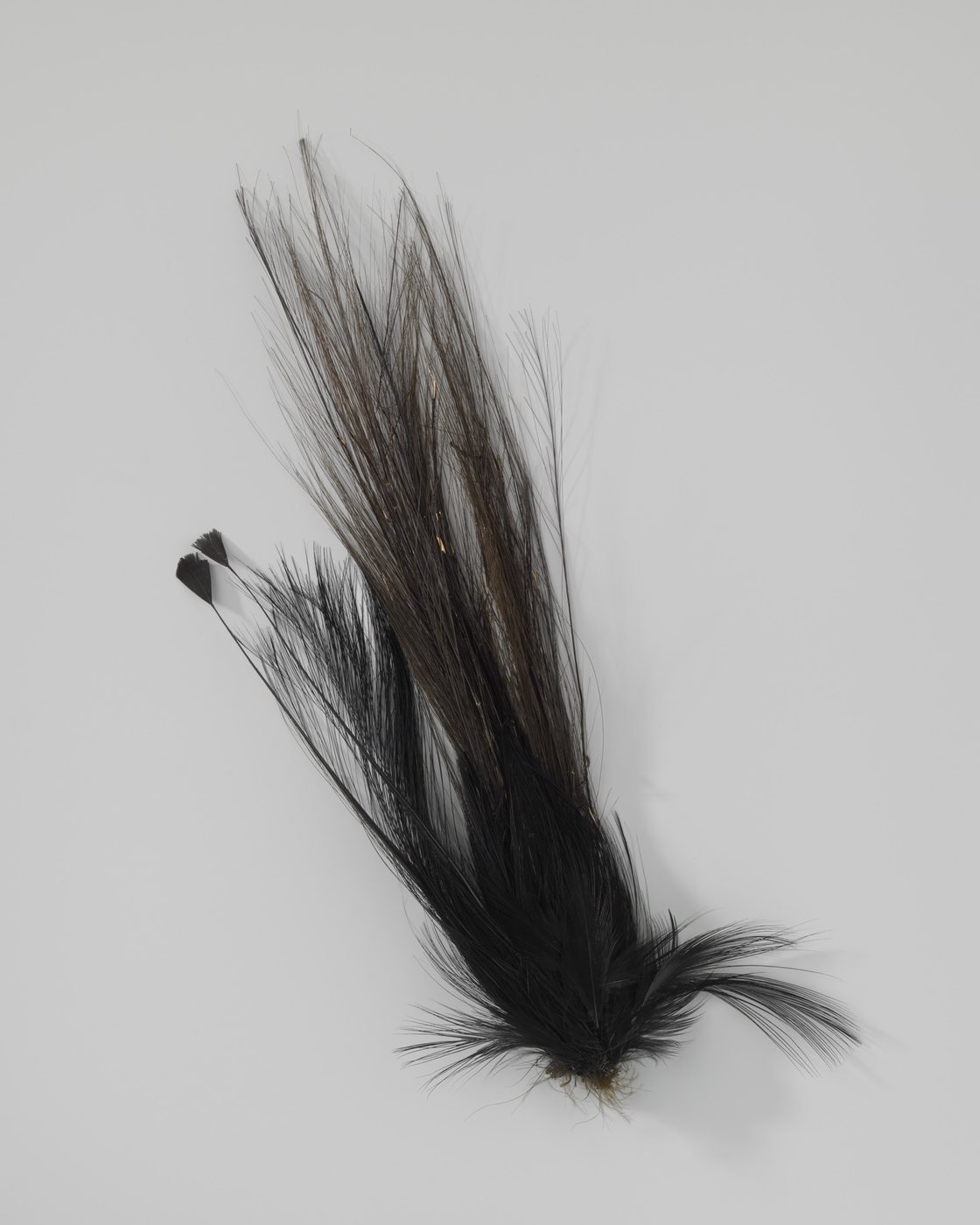
An aigrette is a jewelled mount, clip or base designed to hold and display a spray of feathers in the hair or on a headdress, its name borrowed from the French word for the egret, whose plumes were historically a favoured feather for the form.
What Is an Aigrette?
An aigrette is defined by its function as much as its shape: a decorative fitting - often a jewelled clasp, band or spray of its own in gold, platinum or set gemstones - engineered specifically to grip and present one or more upright feathers. The jewelled mount itself could range from a simple clip to an elaborate, gem-set ornament in its own right, but its purpose was always to carry and frame the feather spray above it.
How to Recognise It
Look for a fitting with a socket, clip or small tube designed to hold a feather quill, often combined with a jewelled base of scrollwork, a spray motif, or calibré-cut stones typical of Edwardian and early Art Deco work. Surviving examples sometimes retain the original feathers, though many have lost them over time, leaving only the jewelled mount - which can then look like an unusually shaped brooch or hair ornament until its original purpose is understood.
When Was It Worn?
Aigrettes were worn for formal and evening occasions, fixed in the hair, on a turban, or at the front of a bandeau-style headdress, with their fashionable peak running from the Edwardian period through the 1910s and into the early 1920s.
Origins
Feather ornaments for the hair and headwear have a long history across many cultures, and jewelled aigrettes were already worn at European courts by the early 17th century and again in the Regency period. The aigrette’s Edwardian revival as a fashionable jewellery form drew heavily on the Orientalist taste that shaped much of Edwardian and early 20th-century fashion, including the turban-influenced headdresses popularised by figures associated with the Ballets Russes and contemporary couture. The jewelled mount, rather than the feather alone, became the focus of considerable craftsmanship during this period.
How It Changed Over Time
Edwardian aigrettes tended toward delicate, naturalistic jewelled mounts in platinum and diamonds, in keeping with the lace-like taste of the period. Through the 1910s, as turban and bandeau headdresses became fashionable evening wear, the aigrette grew bolder and more architectural, often combined directly with a bandeau-tiara or worn as its centrepiece. By the later 1920s, changing hair fashions and a decline in tall feather ornaments generally saw the aigrette recede as an everyday fashion accessory, though feather motifs continued to appear in jewellery more broadly.
Materials
Gold and, increasingly through the Edwardian period, platinum were used for the jewelled mount, frequently set with diamonds or other gemstones. The feathers themselves were most often associated with the egret, though other plume feathers were also used; a jewelled aigrette mount could also be adapted to hold other feather types depending on availability and fashion.
Construction
The jewelled mount was built as a small, self-contained fitting - typically a clip, socket or wrapped band - engineered to hold the base of a feather quill securely while presenting the plume upright or in a graceful curve. Many aigrette mounts were fine jewellery in their own right, using the same claw and millegrain settings found in other Edwardian and Art Deco diamond work.
How It Was Worn
Fixed at the front or side of the hair, on a bandeau or turban-style headdress, or occasionally on a hat, with the feather spray rising above the head as the ornament’s most visible feature.
Who Wore It?
Aigrettes were worn by fashionable women for formal and evening dress, with the most elaborate gem-set examples belonging to wealthier wearers able to afford both the jewelled mount and genuine plume feathers.
Notable Variations
- Turban aigrette - mounted at the front of a turban or wrapped headdress, closely associated with 1910s Orientalist fashion.
- Diamond spray aigrette - a fully jewelled mount treated as fine jewellery in its own right, sometimes usable without feathers at all.
Terminology
“Aigrette” is sometimes used loosely for the feather spray itself rather than the jewelled mount that holds it; in jewellery history the term generally refers to the mount, or to the combined ornament as a whole.
Similar Jewellery
An aigrette is easily confused with a bandeau-tiara or diadem when the feathers are missing, since the jewelled base alone can resemble a small hair ornament; the presence of a feather socket or clip fitting is the clearest sign of an aigrette specifically.
Examples in Museum Collections
- Aigrette, c.1810, with some stones probably added c.1820-35. Victoria and Albert Museum, London, M.127-1951. Brilliant-cut diamonds, turquoises, an emerald and other coloured stones - a fully jewelled spray aigrette from the earlier, Regency phase of the fashion.
- Turban with aigrette, Aine-Montaillé, Paris, c.1910-15. Rijksmuseum, Amsterdam, BK-1984-89-A. Black satin with a feather aigrette, showing the turban-and-plume look of the 1910s, although the museum notes the aigrette was probably added later.
- Aigrette, early 20th century. Victoria and Albert Museum, London, S.241-1985. A stamped white-metal mount gripping an upright plume of mauve spun glass - the mount-and-spray construction in an inexpensive form.
Read next

Eras
Art Deco Jewellery
A guide to Art Deco jewellery (c.1915-1935): geometric symmetry, the 1925 Paris Exposition, Cartier's Tutti Frutti and Van Cleef & Arpels' Mystery Set, the modernist jewellers, new stone cuts, Egyptian and Indian influences, and costume jewellery.

Eras
Edwardian Jewellery
A guide to Edwardian jewellery (1901-1915): platinum and the garland style, Queen Alexandra's dog collars, Cartier, Boucheron and Fabergé in London, the Cullinan diamond, lavaliers, milgrain settings and day jewellery.

Jewellery
What Is a Bandeau Tiara?
What a bandeau tiara is, why it sits low across the forehead rather than up over the crown, and how bobbed hair and cloche hats made the form fashionable in the 1910s and 1920s.
Jewellery
What Is a Diadem?
What a diadem is in the strict sense, its classical and ceremonial associations, and how the term is used alongside - and often interchangeably with - tiara.
Jewellery
What Is a Tiara?
What a tiara is, how it differs from a full diadem, and how bandeau and convertible tiara styles developed alongside aristocratic and fashionable wear.