Regency Jewellery
A guide to Regency jewellery (c.1795-1837): Empire fashion, cameos and Neoclassical parures at Napoleon's court, coloured gold and cannetille, Berlin iron and cut steel, acrostic rings, and memorial jewellery for Nelson and Princess Charlotte.
Regency jewellery is not really a separate era at all - it is the late-Georgian style produced roughly between the 1790s and the accession of Victoria in 1837, named after a fashion sensibility rather than a strict political period.
Overview
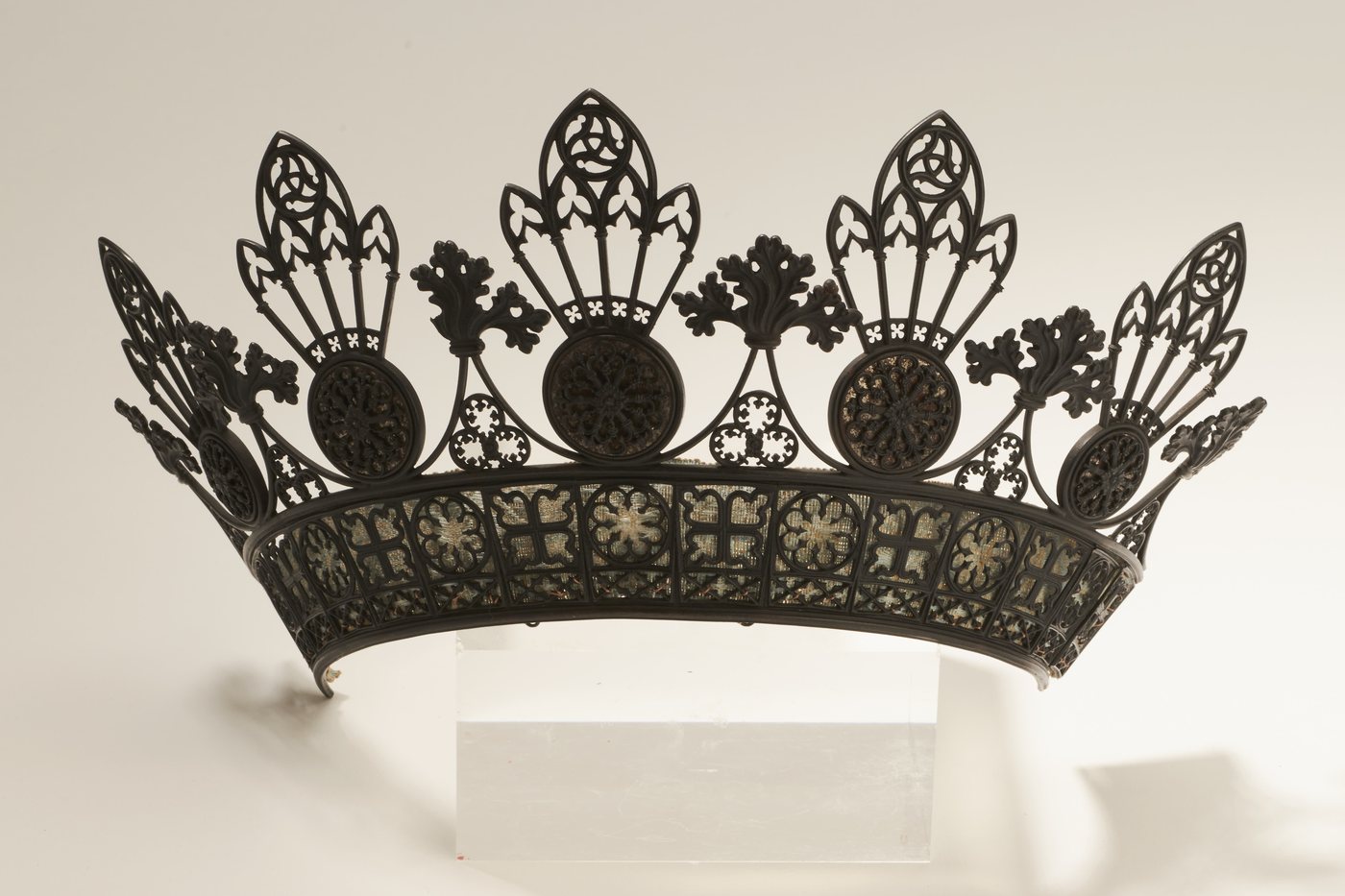
Strictly, the British Regency lasted only from 1811 to 1820, when the Prince of Wales governed as Prince Regent during George III’s final illness, followed by his own reign as George IV until 1830 and then William IV until 1837. Jewellery and fashion historians, however, generally use “Regency” more broadly, to describe the Neoclassical style current from around 1795 through to Victoria’s accession - a style that sits inside the wider Georgian era rather than replacing it. Treating Regency jewellery as a separate era can be misleading; it is better understood as Georgian jewellery’s final, most Neoclassical phase.
Empire Silhouettes and Changing Jewellery
Fashionable dress changed dramatically in this period, moving from the structured, wide-skirted gowns of the mid-18th century to the high-waisted, columnar “Empire” silhouette inspired by classical drapery, popularised in France after the Revolution and worn across Britain and Western Europe. This style exposed the neck, upper chest and arms far more than earlier fashions had, and jewellery adapted accordingly: necklaces, including the rivière necklace - a single row of graduated, individually set stones, became more prominent, as did long pendant earrings and armlets worn above the elbow.
Neoclassical Taste and Cameos
The period’s dominant aesthetic looked back to Greek and Roman antiquity, reinforced by ongoing excavations at Pompeii and Herculaneum and by the broader Neoclassical movement in architecture and the decorative arts. Cameos - carved relief portraits and classical scenes, in hardstone, shell or glass - became especially fashionable in this climate. Napoleon Bonaparte’s own enthusiasm for cameos, and his support for the art of gem engraving, are often credited in jewellery history with helping drive the style’s popularity in France and, from there, more widely across Europe, though the fashion also drew on a longer-standing Neoclassical taste independent of any one patron.
The Napoleonic Court
In France, Napoleon used jewellery deliberately to give his new imperial court the splendour of the old monarchies. Marie-Étienne Nitot, the founder of the house later known as Chaumet, became the court jeweller and, with his son François-Regnault Nitot, who succeeded him in 1809, made grand parures of diamonds, pearls, emeralds and engraved gems for the empresses Joséphine and Marie-Louise. Classical forms - diadems, cameo parures, laurel wreaths - spread from Paris to fashionable society across Europe, including Britain, despite the long wars between the two countries. See What Is a Diadem?.
Public Mourning: Nelson and Princess Charlotte
Two deaths produced waves of memorial jewellery in Britain. After Admiral Lord Nelson was killed at Trafalgar in 1805, memorial rings were made for his family and friends, and commemorative brooches, lockets and seals were sold to the public. In 1817 the death in childbirth of Princess Charlotte, the Prince Regent’s only child and heir, caused national grief, and memorial jewellery with her portrait, initials or hair was produced at every price. See What Is a Mourning Ring? and Memorial Brooches.
Acrostic and “Regard” Jewellery
Sentimental jewellery using gemstones as a coded message flourished in this period. Acrostic jewellery arranged stones so their first letters spelled a word - most famously “regard,” using ruby, emerald, garnet, amethyst, ruby and diamond - giving a piece of jewellery a private, legible meaning shared between giver and wearer. See Acrostic Jewellery for how this device was used across both romantic and mourning contexts.
Materials and Techniques
Gold remained standard for finer work, often worked in the fine coiled wirework of cannetille that was especially popular in this period, alongside silver-topped gold for set stones. Paste and other imitation stones continued in wide use, and pinchbeck remained a common gold substitute for less expensive pieces. Hardstone and shell cameo carving, coral, and seed pearls were all fashionable, reflecting the period’s Neoclassical and romantic tastes.
Coloured Gold, Iron and Steel
Two very different looks sat side by side. Wealthy buyers wore delicate coloured gold - yellow, red and green gold combined - worked in cannetille and granulated beading and set with topaz, amethyst, chrysoberyl, aquamarine and pink topaz, often as matching parures in fitted cases. At the other end of the scale, cut steel from Birmingham and Woodstock and black-lacquered Berlin iron from Prussia were fashionable in their own right, the latter carrying patriotic meaning after 1813.
Common Jewellery Types
Long earrings, riviere necklaces, cameo brooches and rings, armlets, and combs, bandeaux and tiaras suited to the classical hairstyles of the period were all characteristic, alongside acrostic and sentiment rings.
How to Recognise Regency Jewellery
Cameos in classical subjects, riviere-style graduated necklaces, cannetille goldwork, acrostic gemstone arrangements, and jewellery scaled to an exposed neck, chest and upper arm rather than a covered one are all strong indicators of this phase, though - as with the wider Georgian period - closed-back, foiled settings remain typical throughout.
Transition Within and Out of the Georgian Period
Regency style did not end sharply; its Neoclassical taste and lighter goldwork continued to influence jewellery into William IV’s reign, before the very different naturalistic and sentimental style of early Victorian jewellery took hold after 1837.
Read next
Compare
Georgian vs Regency Jewellery
Regency jewellery is not a separate era from Georgian but its late, most Neoclassical phase - here's what distinguishes Regency style within the wider Georgian sweep.

Eras
A Guide to Jewellery Through History
A chronological guide to jewellery history from the Georgian era to the 1940s - how style, materials and meaning changed decade by decade across Britain, France and the United States.
Eras
Georgian Jewellery
A guide to Georgian jewellery (1714-1837): Brazilian diamonds, closed-back foiled settings, rococo and Neoclassical styles, paste, cut steel and pinchbeck, sentimental miniatures, girandoles, rivières and Sévigné bows.
Eras
Victorian Jewellery
A guide to Victorian jewellery (1837-1901): the Romantic, Grand and Aesthetic periods, the Great Exhibition, gold rushes and 9ct gold, mourning and Whitby jet, archaeological revival, Scottish jewellery, and how to recognise each phase.

Jewellery
What Is a Cameo?
What a cameo is, how it differs from an intaglio, and how carved shell and hardstone cameos moved from Grand Tour souvenirs to mass-produced Victorian jewellery.
Jewellery
What Is a Hatpin?
What a hatpin is, how its decorative head ranged from simple to elaborate, and the surprising documented history of hatpins as a means of self-defence before their Edwardian-era decline.