A Guide to Jewellery Through History
A chronological guide to jewellery history from the Georgian era to the 1940s - how style, materials and meaning changed decade by decade across Britain, France and the United States.
Jewellery history rarely moves in clean, self-contained chapters - one style fades as the next rises, and the two overlap in real wardrobes for years - but a rough chronological walk through roughly 1700 to 1950 still gives the clearest way to understand why a given piece looks the way it does.

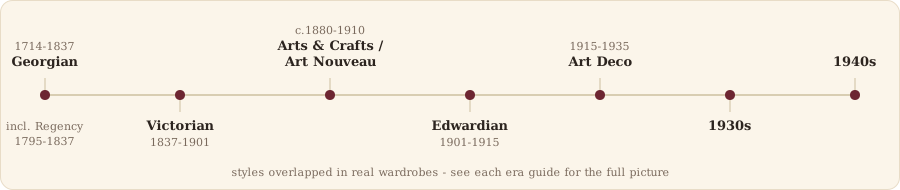
Why Start Around 1700?
Jewellery has a much longer history than this site covers in depth - ancient, medieval and Renaissance jewellery all have rich traditions of their own. This guide, and the site more broadly, concentrates on the period from the early 18th century to the mid-20th century in Britain, France, Western Europe and the United States, because it’s the period with the richest surviving evidence: enough documented objects, portraits, trade literature and museum collections to talk about specific eras, techniques and fashions with real confidence, rather than working mostly from fragmentary archaeological evidence.
Georgian Jewellery (1714-1837)
The Georgian era spans four kings named George and William IV and covers well over a century, so it’s better understood as a foundation than a single style. Rococo naturalism, closed-back foiled gemstone settings, cannetille filigree wirework, and cut steel jewellery all belong to this broad period, alongside early forms of mourning and sentimental jewellery that predate the Victorian mourning boom by decades. Within this span sits the Regency (roughly 1795-1837), a distinctive late phase driven by Neoclassical taste and changing dress silhouettes, rather than a fully separate era in its own right.
Victorian Jewellery (1837-1901)
Queen Victoria’s 63-year reign is the longest single reign between 1700 and 1950, and Victorian jewellery changed dramatically across it - from early naturalistic Romantic-period pieces, through the mid-century “Grand Period” dominated by mourning jewellery and archaeological-revival styles following Prince Albert’s death in 1861, to a lighter, more Aesthetic-Movement-influenced late period. No single description fits the whole reign; a piece described simply as “Victorian” could plausibly date from anywhere across six decades of real stylistic change.
Arts and Crafts and Art Nouveau (c. 1880-1910)
Two reform movements emerged in close succession, reacting against mainstream industrial jewellery production but pursuing different goals. Arts and Crafts jewellery valued visible hand-craftsmanship and honest, modest materials as something close to an ethical statement about labour and craft. Art Nouveau jewellery, most fully realised in France under figures like René Lalique, pursued flowing organic line and artistic effect - translucent enamel, unconventional materials, insect and figure motifs - as an aesthetic movement first. Their nearly identical date ranges are exactly why the two are so often confused despite different underlying philosophies.
Edwardian Jewellery (1901-1915)
The Edwardian era, sometimes called the Belle Époque in its French context, brought a marked visual break from heavier Victorian gold jewellery. Platinum became workable for fine settings once high-temperature soldering technology reached jewellers’ benches around the turn of the century, enabling the delicate, lace-like “garland style” - bows, swags, laurel wreaths, milgrain edging - built from diamonds and pearls in barely-visible platinum mounts.
Art Deco Jewellery (1915-1935)
Art Deco replaced the Edwardian garland’s soft curves with hard-edged geometric symmetry and bold colour contrast, taking its name retrospectively from the 1925 Paris Exposition Internationale des Arts Décoratifs. Egyptian Revival motifs following the 1922 discovery of Tutankhamun’s tomb, calibré-cut coloured stones set in unbroken lines, and the double-clip brooch are among its most recognisable signatures.
The 1930s and 1940s
Art Deco’s sharp geometry gradually softened into the bolder, more sculptural Retro style of the 1930s, driven partly by Depression-era economics that pushed openly artificial costume jewellery into the mainstream for the first time. The 1940s intensified that sculptural, large-scale gold jewellery, shaped directly by the Second World War: platinum was requisitioned for military use and largely disappeared from civilian jewellery for the war’s duration, while sweetheart jewellery - patriotic tokens exchanged between servicemen and the people waiting for them - became a distinctive wartime category of its own.
A Note on Region
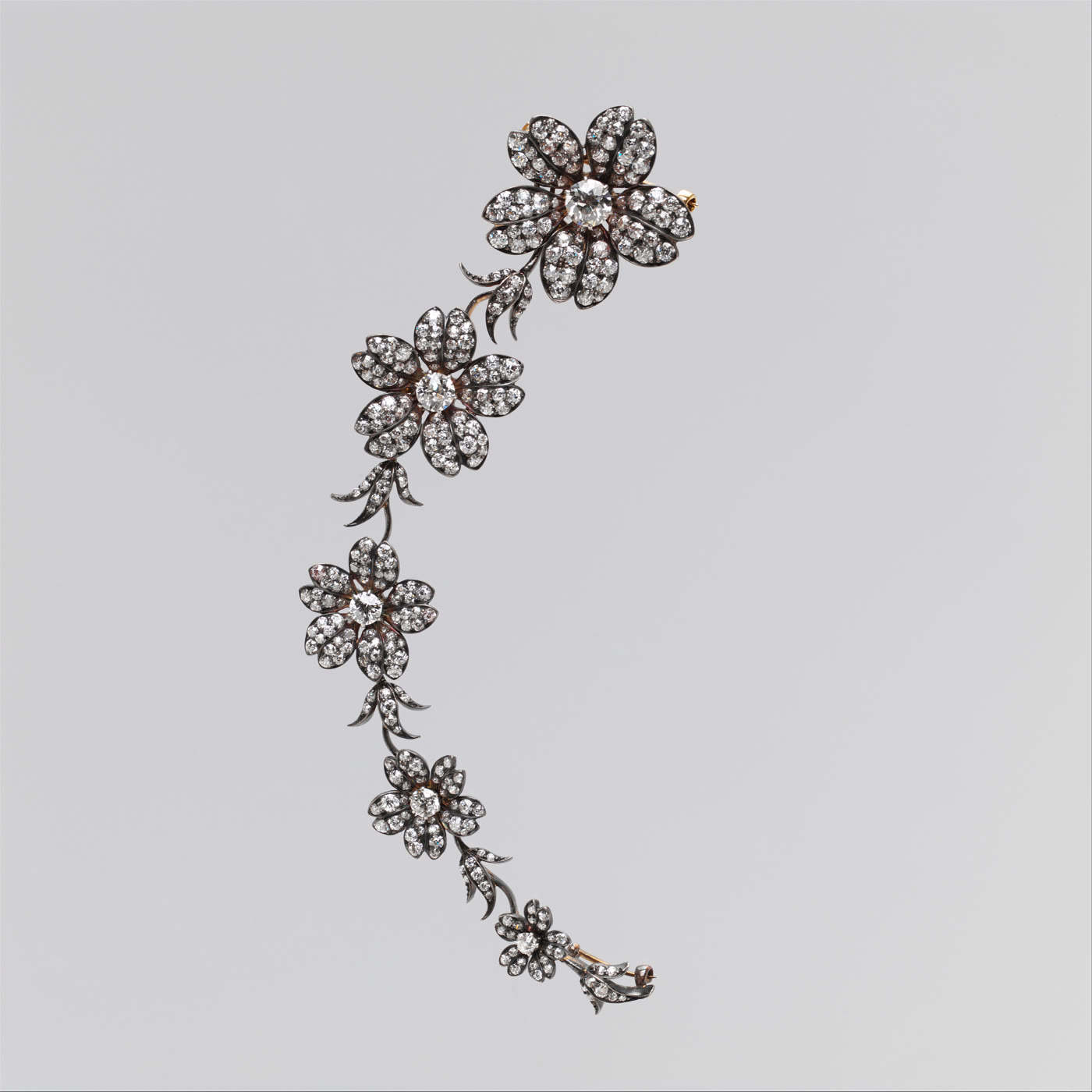
Most of the eras above are framed primarily around British and French fashion, since that’s where the clearest, best-documented stylistic through-line sits across this whole period. American jewellery followed and adapted these same broad currents rather than developing an entirely separate style - see American Jewellery in the Gilded Age for how that played out among the newly wealthy American elite of the late 19th century.
Where to Go Next
For a closer look at any single period, visit its dedicated era guide linked above, or browse jewellery types, materials and techniques to see how specific forms and construction methods moved across these same decades.
Read next
Eras
American Jewellery in the Gilded Age
How enormous new industrial wealth fuelled American fine jewellery in the decades after the Civil War, Tiffany & Co.'s major historical role, and the period's close ties to European style.

Eras
Art Deco Jewellery
A guide to Art Deco jewellery (c.1915-1935): geometric symmetry, the 1925 Paris Exposition, Cartier's Tutti Frutti and Van Cleef & Arpels' Mystery Set, the modernist jewellers, new stone cuts, Egyptian and Indian influences, and costume jewellery.

Eras
Edwardian Jewellery
A guide to Edwardian jewellery (1901-1915): platinum and the garland style, Queen Alexandra's dog collars, Cartier, Boucheron and Fabergé in London, the Cullinan diamond, lavaliers, milgrain settings and day jewellery.
Eras
Georgian Jewellery
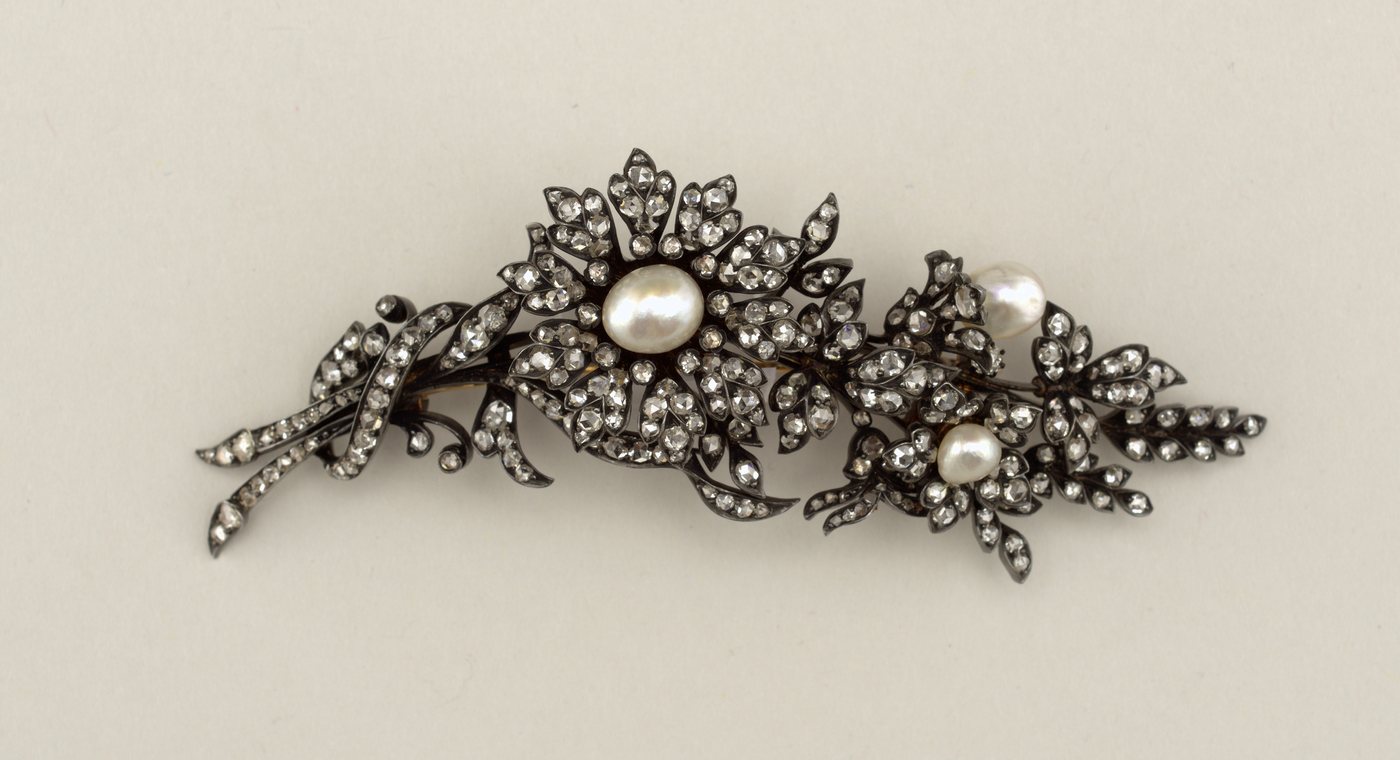
A guide to Georgian jewellery (1714-1837): Brazilian diamonds, closed-back foiled settings, rococo and Neoclassical styles, paste, cut steel and pinchbeck, sentimental miniatures, girandoles, rivières and Sévigné bows.
Eras
Victorian Jewellery
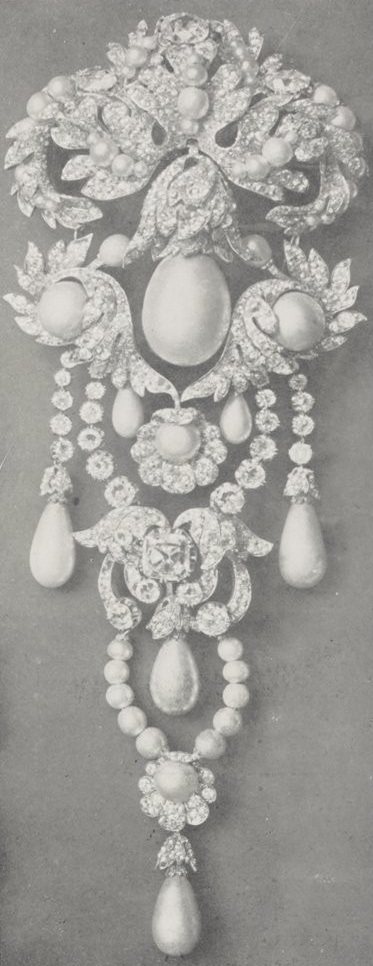
A guide to Victorian jewellery (1837-1901): the Romantic, Grand and Aesthetic periods, the Great Exhibition, gold rushes and 9ct gold, mourning and Whitby jet, archaeological revival, Scottish jewellery, and how to recognise each phase.
Mourning & Sentimental
What Is Mourning Jewellery?
What mourning jewellery is, how it developed from Stuart and Georgian memorial rings, why it peaked in Victorian Britain after Prince Albert's death in 1861, and the etiquette and materials behind it.