Georgian vs Regency Jewellery
Regency jewellery is not a separate era from Georgian but its late, most Neoclassical phase - here's what distinguishes Regency style within the wider Georgian sweep.
“Georgian vs Regency” is a slightly different kind of comparison from most here, because Regency is not a separate era standing alongside Georgian - it is a style phase that sits inside it. Understanding what’s distinctive about Regency jewellery means looking at how fashion, taste and silhouette shifted within the closing decades of a much longer period, rather than contrasting two independent traditions.
Short Answer
Georgian jewellery is the broad umbrella term for jewellery made across the reigns of Britain’s four King Georges and William IV, roughly 1714 to 1837. Regency jewellery, roughly 1795 to 1837, refers to the later Neoclassical style current within that same span - named after the fashion sensibility of the period around the Prince Regent’s rule rather than a distinct political era of its own. Every piece of Regency jewellery is Georgian jewellery; not every piece of Georgian jewellery is Regency in style. The useful comparison, then, is between the earlier/broader Georgian idiom - rococo naturalism and closed-back foiled settings as a general period-wide practice - and the later Regency phase’s more specific Neoclassical, cameo-loving, Empire-silhouette character.
What Defines the Wider Georgian Period?
Georgian jewellery covers over a century of hand-worked production, and its earlier and middle decades (roughly the 1720s through the 1780s) are dominated by rococo taste: naturalistic but asymmetrical sprays, ribbons, bows and scrolling forms. The fine coiled and twisted gold wirework known as cannetille filigree came later, fashionable only from about 1815. Stones through most of the period were very commonly set with a closed metal back, often foiled to enhance colour and brilliance under candlelight, a practice that reflected the more variable cutting and clarity of period gemstones rather than any intent to deceive. This closed-back, foiled approach to setting stones runs across the whole Georgian period as general practice, not as something specific to its later Regency phase.
What Defines Regency Style Specifically?
Regency jewellery describes the late-Georgian style current from roughly the 1790s to Victoria’s 1837 accession, taking its name loosely from the Prince Regent’s era rather than strictly from his 1811-1820 regency alone. Its defining influence is Neoclassicism, reinforced by ongoing excavations at Pompeii and Herculaneum and by the high-waisted, columnar “Empire” silhouette that spread from post-Revolutionary France across Britain and Western Europe. That silhouette exposed the neck, upper chest and arms far more than earlier 18th-century dress had, and jewellery adapted to suit it: multi-strand riviere necklaces of graduated stones, long pendant earrings and armlets worn above the elbow became newly prominent, favouring pieces designed to be seen against bare skin rather than a heavily structured, covered bodice. Within this same climate, cameos - carved relief portraits and classical scenes in hardstone, shell or glass - rose sharply in fashionable popularity, a trend often linked in jewellery history to Napoleon Bonaparte’s own well-documented enthusiasm for the form, including his support for the art of gem engraving, though the fashion also drew on a broader Neoclassical taste that did not depend on any single patron.
Key Differences
| Property | Wider Georgian (c. 1714-1837) | Regency phase specifically (c. 1795-1837) |
|---|---|---|
| Relationship | The broad umbrella period | A late style phase within that same period |
| Dominant taste | Rococo naturalism and asymmetry across earlier/mid decades | Neoclassicism, driven by classical excavation and Empire fashion |
| Silhouette served | Structured, wide-skirted mid-18th-century dress | High-waisted, columnar Empire-line dress exposing neck, chest and arms |
| Favoured forms | Girandole earrings, rococo brooches, general period-wide range | Riviere necklaces, long pendant earrings, armlets |
| Cameo popularity | Present but not especially dominant | Sharply fashionable, tied partly to Napoleon's enthusiasm for the form |
| Stone setting | Closed-back, foiled - general period-wide practice | Same closed-back, foiled practice, continuing unchanged |
| Signature technique | Gem-set work in closed, foiled settings; cannetille only from about 1815 | Cannetille filigree, fashionable from about 1815 into the 1830s |
Historical Context
Because Regency sits inside Georgian rather than after it, there is no meaningful chronological gap to bridge here - the two labels overlap almost entirely for the years after about 1795. The distinction is one of emphasis rather than sequence: “Georgian” is the safer, broader term to reach for when a piece’s rococo character, general date, or hand-worked construction is clear but its precise decade is not, while “Regency” is the more specific term worth reaching for when a piece shows the distinctly Neoclassical, cameo-forward, Empire-silhouette character described above. Dating jewellery within this span by style alone is difficult even for specialists, since closed-back foiled settings persisted as standard practice across both the earlier rococo decades and the later Regency phase without a sharp technical break.
Where the Terms Overlap
In practice, “Georgian” and “Regency” overlap so thoroughly for jewellery made after about 1795 that many dealers and collectors use them close to interchangeably for pieces from this window, reaching for “Regency” mainly when a piece shows unmistakably Neoclassical or Empire-associated features and “Georgian” as the safer default otherwise. Strictly, the British Regency proper lasted only 1811-1820, with George IV’s own reign (1820-1830) and William IV’s (1830-1837) following - yet jewellery historians commonly extend “Regency” as a style label across this whole later Georgian stretch, since the underlying Neoclassical taste did not reset with each change of monarch. Treat “Regency” less as a hard boundary and more as a description of a fashionable idiom that rose within, and never fully separated from, the wider Georgian period.
Related Reading
See the full entries on Georgian Jewellery and Regency Jewellery for the complete picture, and Georgian vs Victorian Jewellery for how the Georgian period as a whole compares with what followed it.
Read next
Compare
Georgian vs Victorian Jewellery
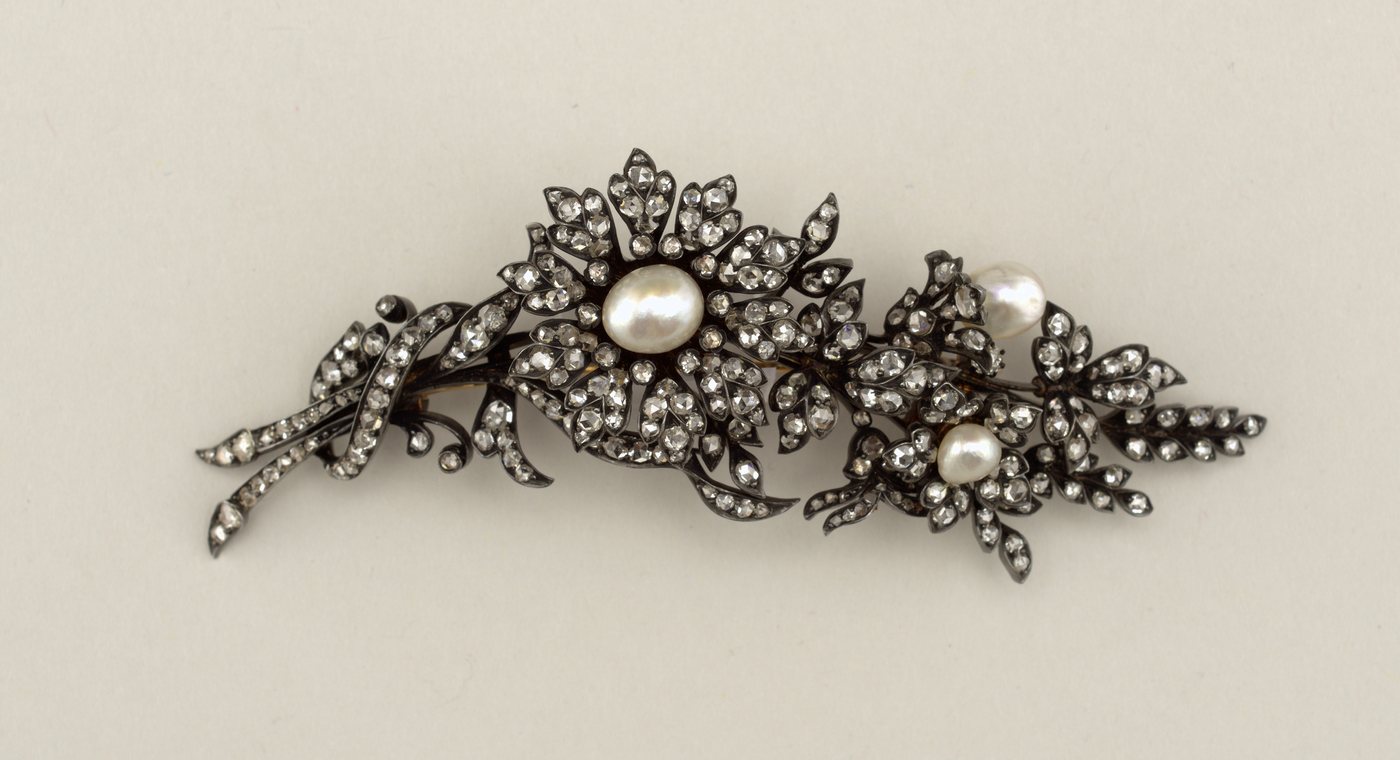
How Georgian and Victorian jewellery differ in settings, techniques and motifs, and why Victorian jewellery itself spans several distinct phases.
Eras
Georgian Jewellery
A guide to Georgian jewellery (1714-1837): Brazilian diamonds, closed-back foiled settings, rococo and Neoclassical styles, paste, cut steel and pinchbeck, sentimental miniatures, girandoles, rivières and Sévigné bows.
Eras
Regency Jewellery
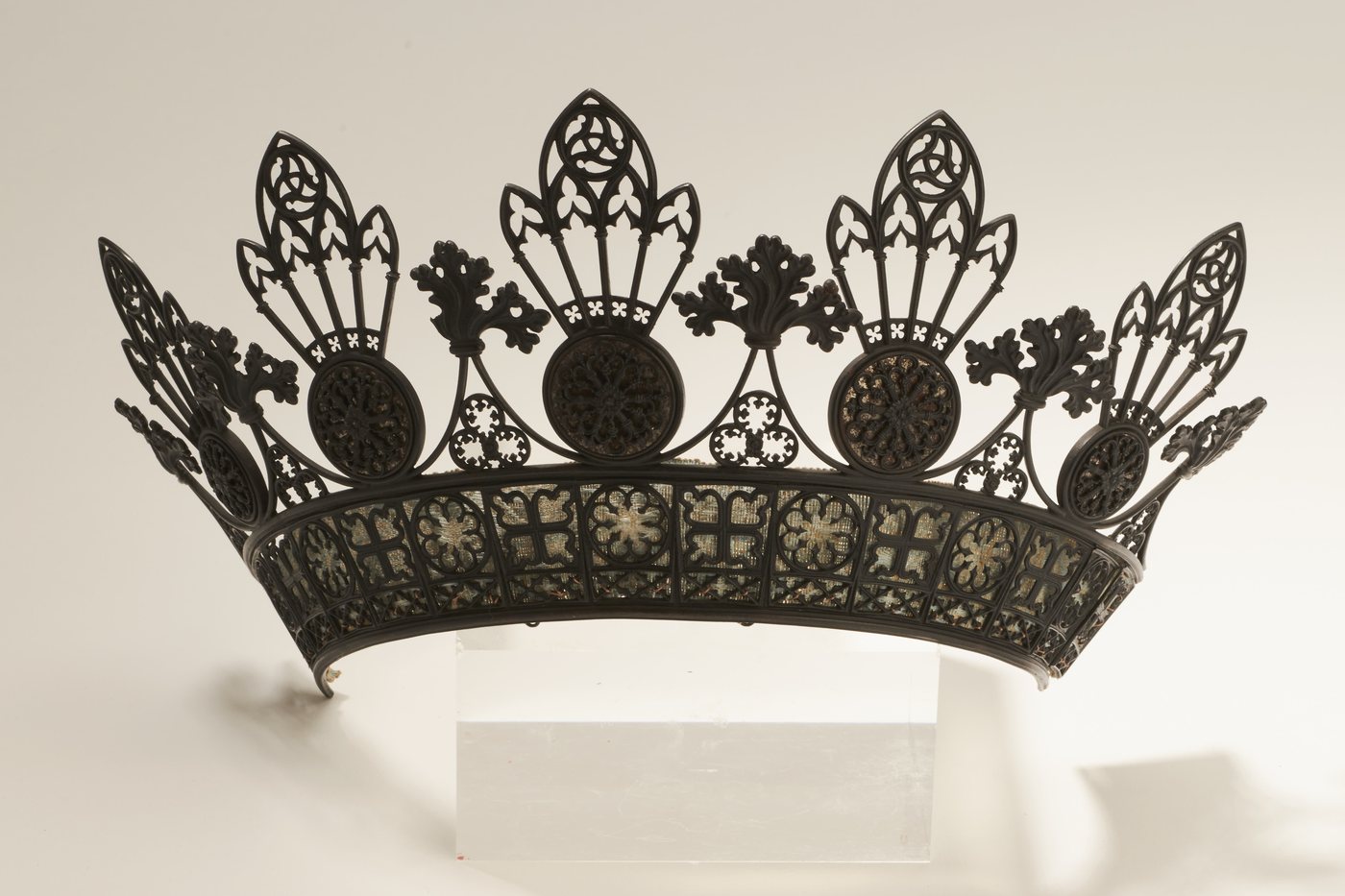
A guide to Regency jewellery (c.1795-1837): Empire fashion, cameos and Neoclassical parures at Napoleon's court, coloured gold and cannetille, Berlin iron and cut steel, acrostic rings, and memorial jewellery for Nelson and Princess Charlotte.

Jewellery
What Is a Cameo?
What a cameo is, how it differs from an intaglio, and how carved shell and hardstone cameos moved from Grand Tour souvenirs to mass-produced Victorian jewellery.
Jewellery
What Is a Rivière Necklace?
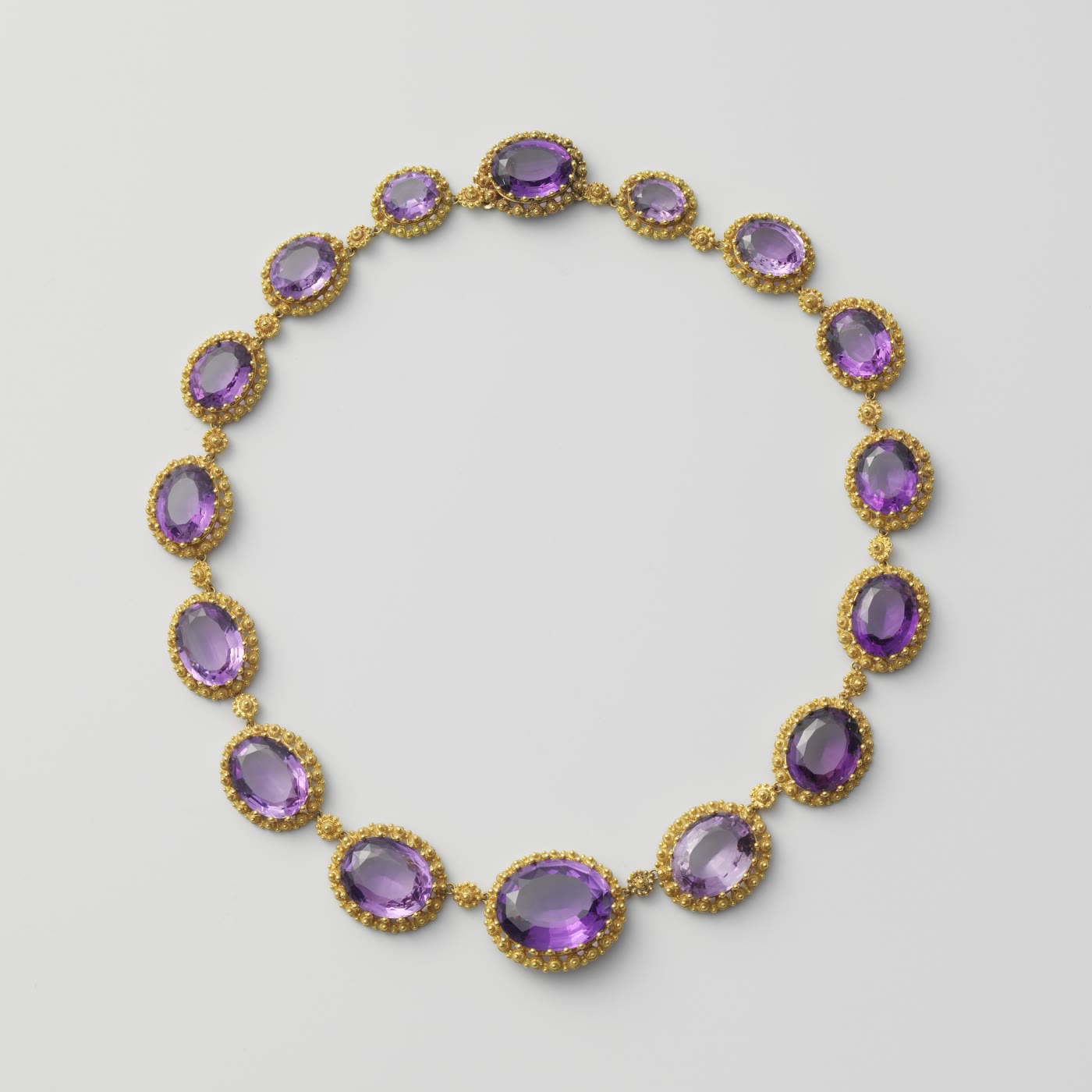
What a riviere necklace is, why its unbroken line of individually set stones made it one of the most enduring necklace forms, and how it differs from a festoon or fringe necklace.
Techniques
What Is Filigree?
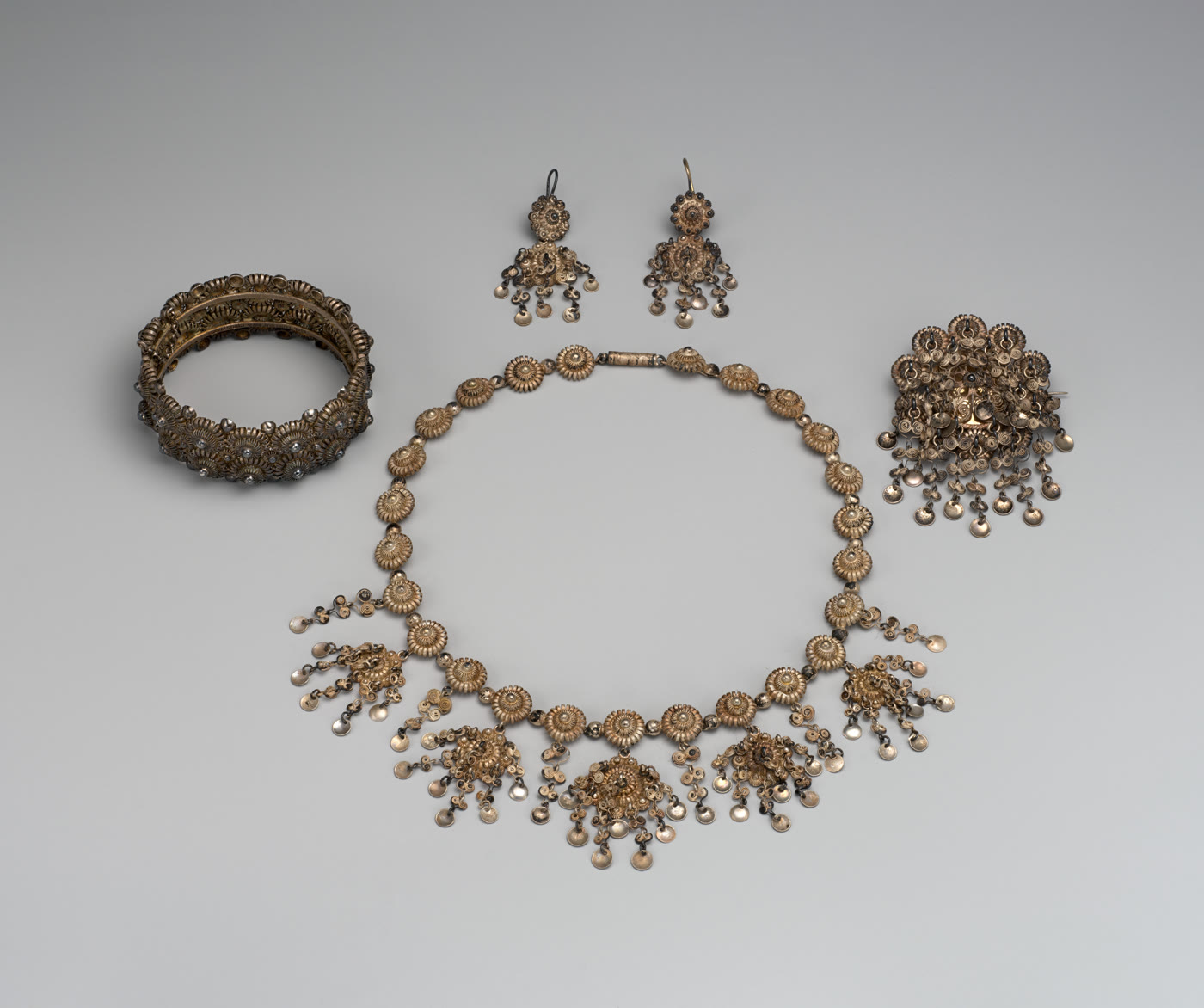
What filigree is, how the wire was drawn and soldered, cannetille c.1815-40, Genoese, Maltese and Portuguese filigree, Castellani revival work and die-struck 1920s 'filigree' rings.