Georgian vs Victorian Jewellery
How Georgian and Victorian jewellery differ in settings, techniques and motifs, and why Victorian jewellery itself spans several distinct phases.
Georgian and Victorian jewellery sit back to back across the 18th and 19th centuries, and pieces from the end of one period and the beginning of the next can look similar - but the two periods differ in construction, setting technique and dominant motifs in ways that offer real clues for narrowing a piece’s likely date.
Short Answer
Georgian jewellery (roughly 1714-1837) tends toward closed-back foiled settings, rococo asymmetry and hand-worked construction typical of pre-industrial production, while Victorian jewellery (1837-1901) spans a much wider range as fashion, mechanisation and mourning customs shifted across the era’s early, mid and late phases, but broadly moved toward open-back claw settings, mass production, and motifs that ran from naturalism through archaeological revival to Aesthetic-period lightness.
What Is Georgian Jewellery?
Georgian jewellery covers the reigns of Britain’s four King Georges plus the brief reign of William IV, spanning roughly 1714 to 1837. Production was still substantially hand-work, and surviving pieces tend to show the individual, sometimes slightly irregular character of that hand construction. Rococo taste favoured naturalistic but asymmetrical designs - sprays, ribbons, bows and scrolling forms - and stones were very commonly set with a closed metal back, often with foil placed behind the stone to enhance or alter its colour and brilliance under candlelight, since cutting and clarity in period gemstones varied considerably.
What Is Victorian Jewellery?
Victorian jewellery covers Queen Victoria’s 64-year reign (1837-1901), long enough to encompass distinct early Romantic, mid-period “Grand” (dominated by mourning fashion after 1861), and late Aesthetic phases, each with its own character. Across the period, industrial techniques increasingly supplemented hand craftsmanship, stone-cutting quality improved, and jewellery became available to a much broader range of buyers than in the Georgian period, through cheaper materials and more efficient production.
Key Differences
| Property | Georgian (c. 1714-1837) | Victorian (1837-1901) |
|---|---|---|
| Stone settings | Predominantly closed-back, often foiled to enhance colour | Increasingly open-back claw settings as cutting quality improved, though closed settings persisted |
| Construction | Substantially hand-made, pre-industrial | Hand craftsmanship increasingly supplemented by mechanisation |
| Dominant motifs | Rococo naturalism, asymmetry, ribbons and scrolls; girandole earrings | Naturalism (early), mourning and archaeological revival (mid), Aesthetic/Japonisme motifs (late) |
| Characteristic technique | Foiled closed-back settings; cannetille filigree in the late Georgian years (from c.1815) | Granulation and archaeological-revival goldwork (mid-period), micromosaic |
| Mourning jewellery scale | Present but comparatively modest | Vast production, especially in jet, following Albert's death in 1861 |
| Availability | Largely a wealthier, hand-made luxury | Wider availability across classes via cheaper materials and mechanised production |
Historical Usage
Georgian jewellery reflects a smaller, more artisanal industry serving a wealthier clientele, with late Georgian techniques like cannetille - fine coiled and twisted gold wire filigree - used to build lightweight but visually rich settings, and girandole earrings (a top stone suspending three pear-shaped drops) a signature rococo form. Foiling behind closed-back settings was less a deception than standard period practice, compensating for the more limited stone-cutting and clarity available at the time.
Victorian jewellery’s much longer span makes broad generalisation risky. The early Romantic phase continued Georgian-style naturalism in gold and pinchbeck. Prince Albert’s death in 1861 then reshaped the middle of the period around mourning convention, driving enormous demand for jet and other black materials alongside a strong archaeological-revival movement led by jewellers such as the Castellani family, who revived ancient techniques including granulation. By the late Aesthetic period, diamonds from newly discovered South African mines and Japonisme taste produced a lighter, more diamond-forward style anticipating the Edwardian era to follow.
Where the Terms Overlap
Style did not change on the day William IV died in 1837, and early Victorian jewellery is, in most meaningful respects, a continuation of late Georgian taste - naturalistic gold work, cannetille filigree and closed-back foiled settings all persisted well into Victoria’s reign before mid-century mourning fashion and improving stone-cutting shifted the picture. Dating a piece to “Georgian” versus “early Victorian” from style alone is often difficult, and collectors and dealers sometimes use “Georgian-style” loosely to describe early Victorian pieces that closely follow the earlier idiom. Treat a precise-sounding date range for any individual piece with appropriate caution unless it is backed by hallmarks, provenance or other firmer evidence.
Related Reading
See the full era guides for Georgian and Victorian jewellery, and Cameo vs Intaglio for a closer look at a carving distinction that spans both periods.
Read next
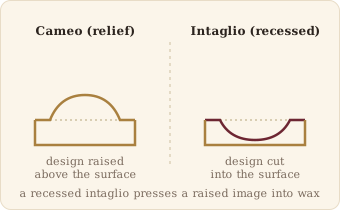
Compare
Cameo vs Intaglio: What's the Difference?
The structural difference between a cameo, carved in relief, and an intaglio, carved into the surface - and why that difference mattered for seals.
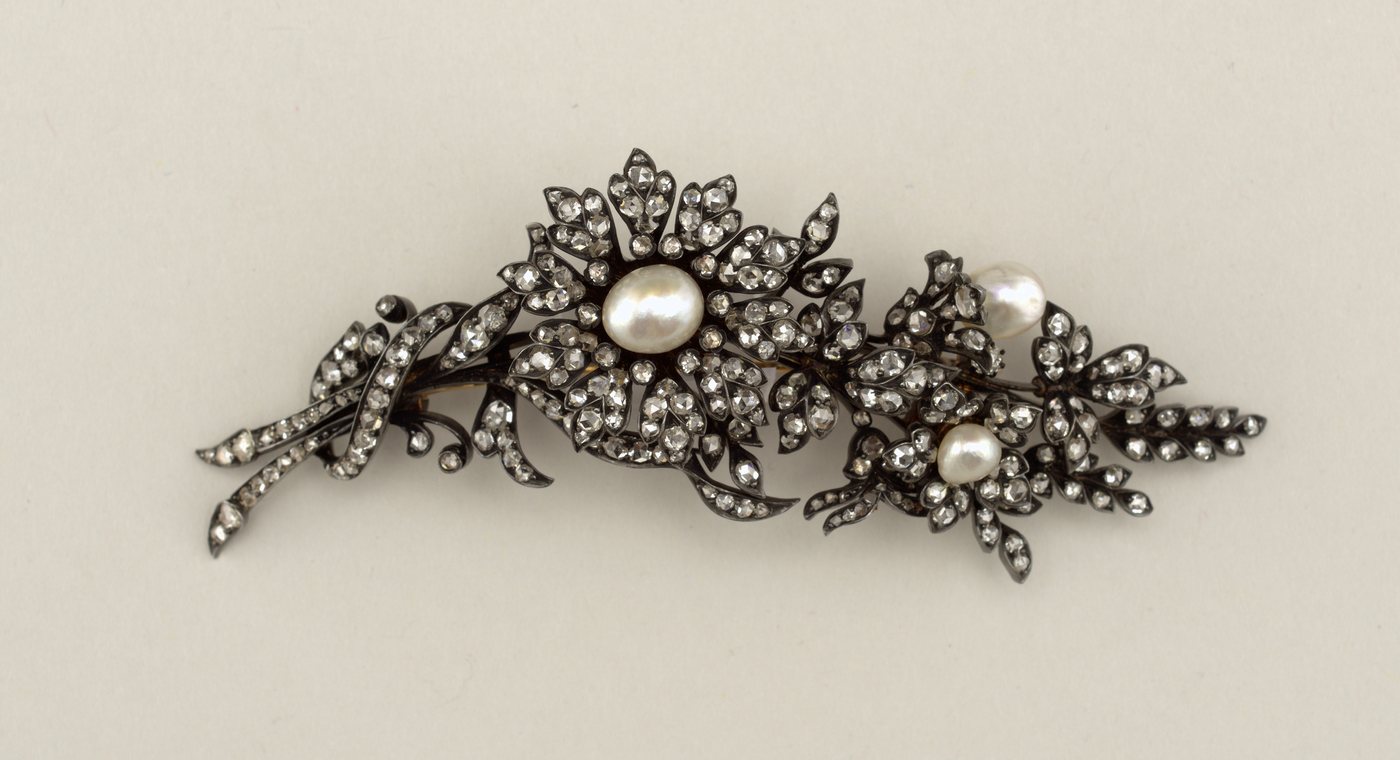
Eras
Georgian Jewellery
A guide to Georgian jewellery (1714-1837): Brazilian diamonds, closed-back foiled settings, rococo and Neoclassical styles, paste, cut steel and pinchbeck, sentimental miniatures, girandoles, rivières and Sévigné bows.
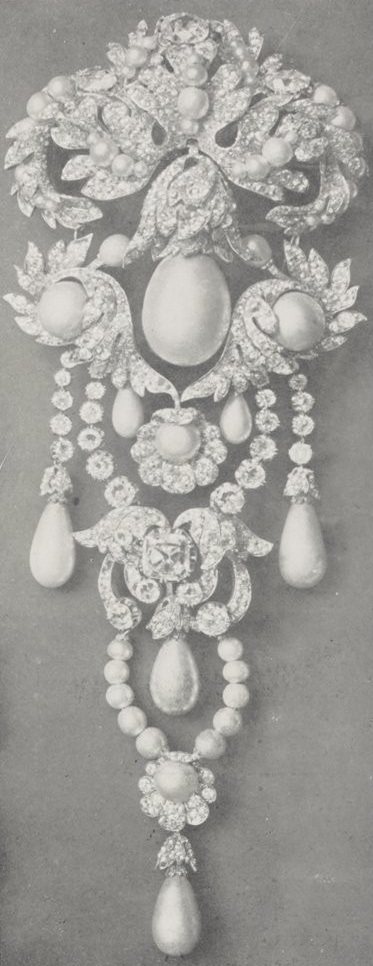
Eras
Victorian Jewellery
A guide to Victorian jewellery (1837-1901): the Romantic, Grand and Aesthetic periods, the Great Exhibition, gold rushes and 9ct gold, mourning and Whitby jet, archaeological revival, Scottish jewellery, and how to recognise each phase.

Materials
What Is Jet Jewellery?
What jet is, where it came from - Whitby, Asturias, southern France - its use from the Bronze Age to the Victorian mourning boom, and how to tell genuine jet from vulcanite and French jet.

Materials
What Is Pinchbeck?
What pinchbeck is, how Christopher Pinchbeck's gold-coloured alloy imitated gold in Georgian jewellery and watch cases, why it declined after 1854, and how it is collected today.
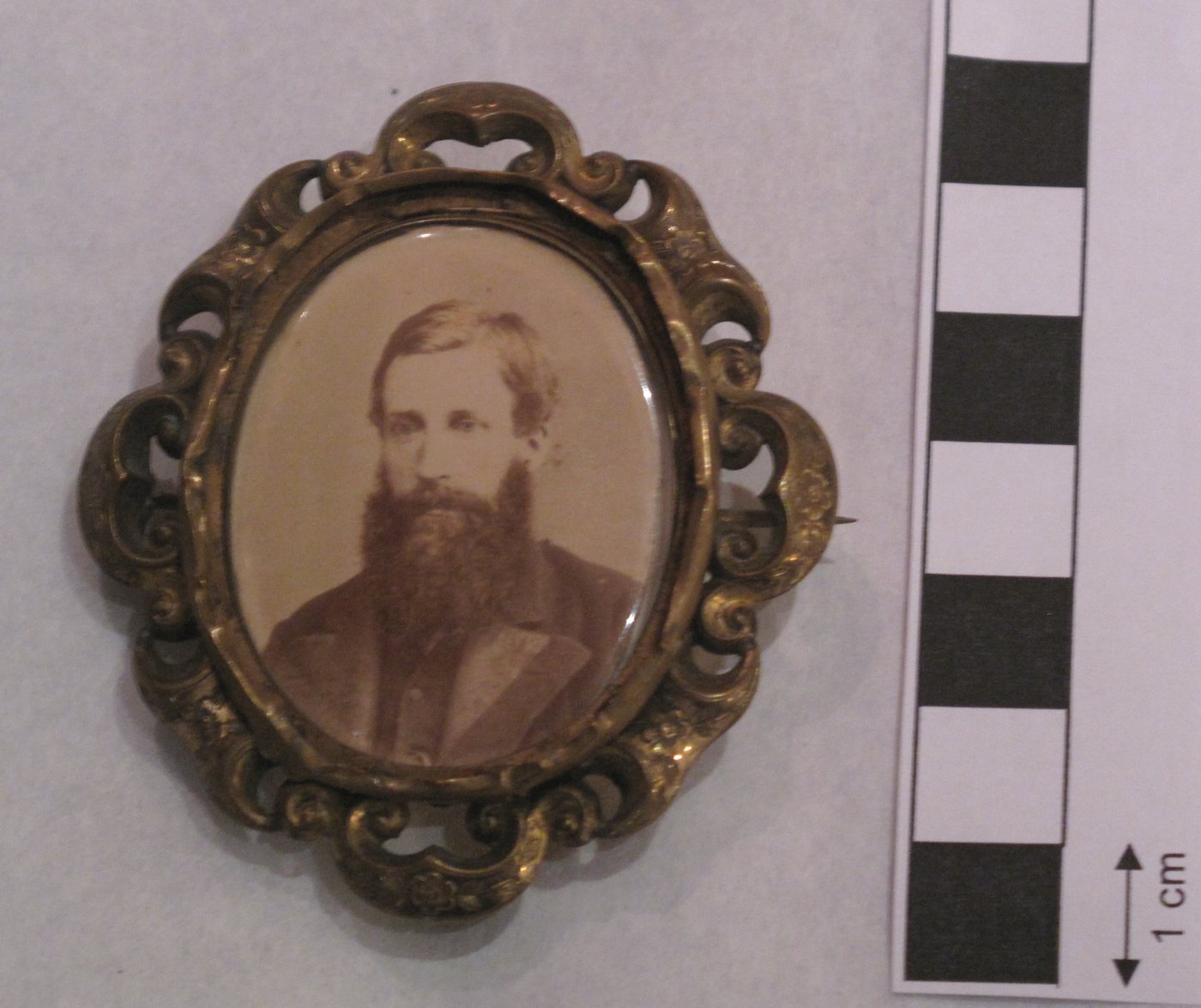
Mourning & Sentimental
What Is Mourning Jewellery?
What mourning jewellery is, how it developed from Stuart and Georgian memorial rings, why it peaked in Victorian Britain after Prince Albert's death in 1861, and the etiquette and materials behind it.