What Is Mourning Jewellery?
What mourning jewellery is, how it developed from Stuart and Georgian memorial rings, why it peaked in Victorian Britain after Prince Albert's death in 1861, and the etiquette and materials behind it.
Mourning jewellery is jewellery made or worn specifically to commemorate a death - as a badge of grief during a formal mourning period, as a lasting memorial to a specific person, or both at once.
Two Overlapping Purposes
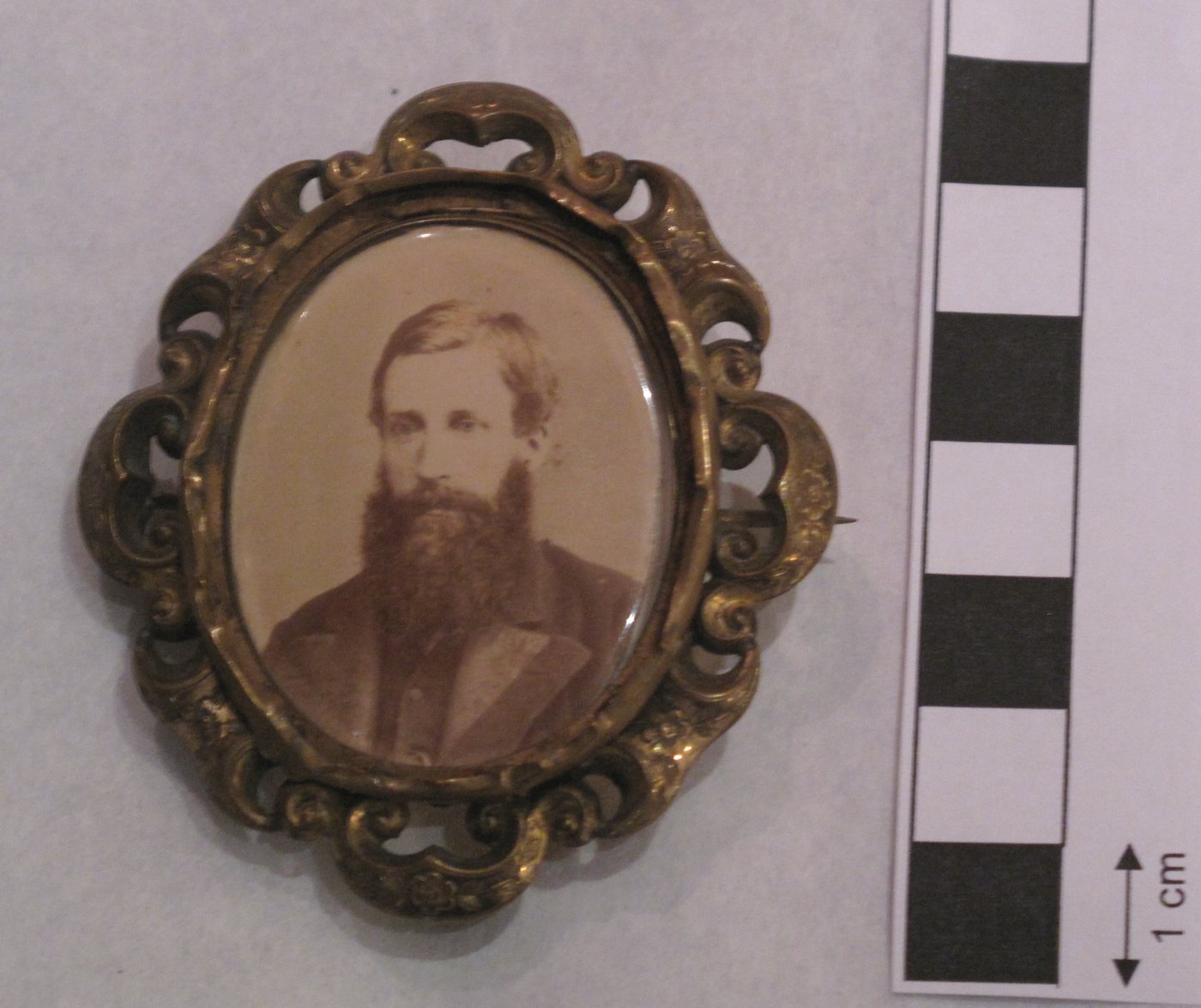
Mourning jewellery often did two things at once. First, it signalled that the wearer was in mourning, following social conventions that specified acceptable colours and materials for different stages of grief. Second, it memorialised a specific individual, often incorporating that person’s hair, initials, portrait or dates - a function that could continue long after the formal mourning period ended, and that overlaps closely with sentimental jewellery more broadly.
Origins
Jewellery marking death has a long history - memento mori jewellery, reminding the wearer of mortality through symbols like skulls and coffins, was already established by the 16th century. In 17th-century England the custom of leaving money in a will for mourning rings to be given to relatives and friends became widespread, and after the execution of Charles I in 1649 royalists wore rings, lockets and slides bearing his portrait as a discreet sign of loyalty and grief.
Through the 18th century, mourning jewellery became more personal and more fashionable. From the 1770s, neoclassical taste replaced skulls and skeletons with urns, broken columns, weeping willows and grieving women at tombs, painted in sepia on ivory and often incorporating the hair of the dead. Public deaths created a market for memorial jewellery among people who had never known the deceased: rings were made after Lord Nelson’s death at Trafalgar in 1805, and the death of Princess Charlotte, the only child of the Prince Regent, in childbirth in 1817 produced a wave of memorial brooches and rings.
The Victorian Peak
Mourning jewellery is most strongly associated with the Victorian period, and especially with Queen Victoria herself. Prince Albert died at Windsor Castle on 14 December 1861, and the Queen wore mourning for the rest of her life, until her death in January 1901. Court and fashionable society followed her example, some more strictly than others. Victoria commissioned memorial jewellery containing Albert’s hair or portrait, wore it herself and gave it to family and members of the household.
The demand reached every level of society. Specialist mourning warehouses sold everything needed for a period of mourning, from crape dresses to jewellery; the best known, Jay’s London General Mourning Warehouse in Regent Street, opened in 1841. The most important material was jet, particularly Whitby jet carved on England’s Yorkshire coast, where the trade expanded rapidly in the 1850s and 1860s. Cheaper alternatives included black glass (“French jet”), vulcanite (a hardened rubber developed in the 1840s and often mistaken today for jet), Irish bog oak, gutta-percha, black enamel and dark garnets. See Victorian Jewellery for how this shaped the wider jewellery landscape of the period.
Mourning Etiquette and Stages
Formal Victorian mourning etiquette distinguished stages - full or “deep” mourning, followed by “second mourning” and “half mourning” - each associated with progressively less severe dress and jewellery. Etiquette books and magazines of the 1870s and 1880s commonly suggested around two years for a widow, beginning with a year and a day of deep mourning; about a year for a parent or child; and shorter periods for brothers, sisters and more distant relatives. Widowers were expected to mourn for much shorter periods and with far less change to their dress. Full mourning called for dull, unpolished black: jet was acceptable, but bright gold and gems were not. Second mourning permitted polished jet and some gold; half mourning allowed white, grey, mauve and purple, along with pearls and amethyst. Duration and strictness varied by class, region and family custom rather than a single fixed rule.
Common Forms
Mourning rings, memorial brooches and lockets containing hair or a photograph were the most common forms, alongside hair jewellery worked into bracelets, necklaces and brooches. Many pieces carried an inscription giving the deceased’s name, dates and sometimes an epitaph, which can make them unusually well documented compared with undated ordinary jewellery. High Victorian pieces often carry the words “In Memory Of” in gold Gothic lettering on black enamel.
Materials Beyond Jet
Gold mourning jewellery, often black-enamelled, was common for wealthier wearers and for men, frequently taking the form of a mourning ring given to relatives and friends as a keepsake - a custom with roots in the 17th and 18th centuries, well before jet’s Victorian popularity. White enamel was often used for the death of a child or an unmarried person.
Outside Britain
Mourning jewellery followed similar patterns in the United States, where the Civil War of 1861-65 and the assassination of Abraham Lincoln in 1865 produced large quantities of memorial hairwork, photographic brooches and black jewellery. In France and the German states, black jewellery and hairwork were also worn in mourning, though without the same national focus that Queen Victoria’s long widowhood gave to British fashion.
Decline
Strict mourning etiquette relaxed considerably from the 1880s and especially after Queen Victoria’s death in 1901, as fashion turned against heavy black jewellery and the Whitby trade contracted. The First World War, with death on a scale that made individual elaborate mourning displays impractical for many families, accelerated the decline of the Victorian mourning-jewellery tradition as it had existed through the 19th century, though small photographic brooches and lockets continued to be worn in memory of men killed in the war.
Frequently Asked Questions
Is all black Victorian jewellery mourning jewellery? No - jet, vulcanite and other black materials were also worn simply as fashionable jewellery outside of mourning, so black material alone doesn’t confirm a mourning purpose; an inscription, hair compartment or memorial motif is stronger evidence.
How can I tell genuine jet from vulcanite or French jet? See What Is Jet Jewellery? for physical differences; as with all identification questions, treat visual tests as a starting point rather than a certain answer.
Read next
Eras
Victorian Jewellery
A guide to Victorian jewellery (1837-1901): the Romantic, Grand and Aesthetic periods, the Great Exhibition, gold rushes and 9ct gold, mourning and Whitby jet, archaeological revival, Scottish jewellery, and how to recognise each phase.

Materials
What Is Jet Jewellery?
What jet is, where it came from - Whitby, Asturias, southern France - its use from the Bronze Age to the Victorian mourning boom, and how to tell genuine jet from vulcanite and French jet.
Materials
Whitby Jet and Victorian Jewellery
How Whitby's jet workshops grew from the early 19th century, boomed after 1861 with Victorian mourning, showed at the 1851 Great Exhibition, and declined by the 1880s and 1890s.

Mourning & Sentimental
What Is Hair Jewellery?
What hair jewellery is, how table-work and palette-work hairwork were made, the hairworkers and manuals behind the craft, and why it served sentimental as well as mourning purposes.

Mourning & Sentimental
What Is Memento Mori Jewellery?
What memento mori jewellery is - skull rings, coffin pendants and Stuart crystal slides - and how it gave way to the more personalised Georgian and Victorian mourning-jewellery tradition.

Mourning & Sentimental
What Is a Memorial Brooch?
What a memorial brooch is, how its design changed from Georgian sepia-and-hair brooches to Victorian black-enamel and photographic brooches, and how it differs from general mourning jewellery.