What Is Paste Jewellery?
What paste jewellery is, from English lead glass and Georges Frédéric Strass in Paris to foiled closed settings, black-dot culets and later Bohemian stones, and why fine paste is collected today.
Paste is a leaded glass, cut and often backed with metal foil, used from the 18th century onward to imitate the brilliance and sometimes the specific colour of gemstones, above all diamonds.
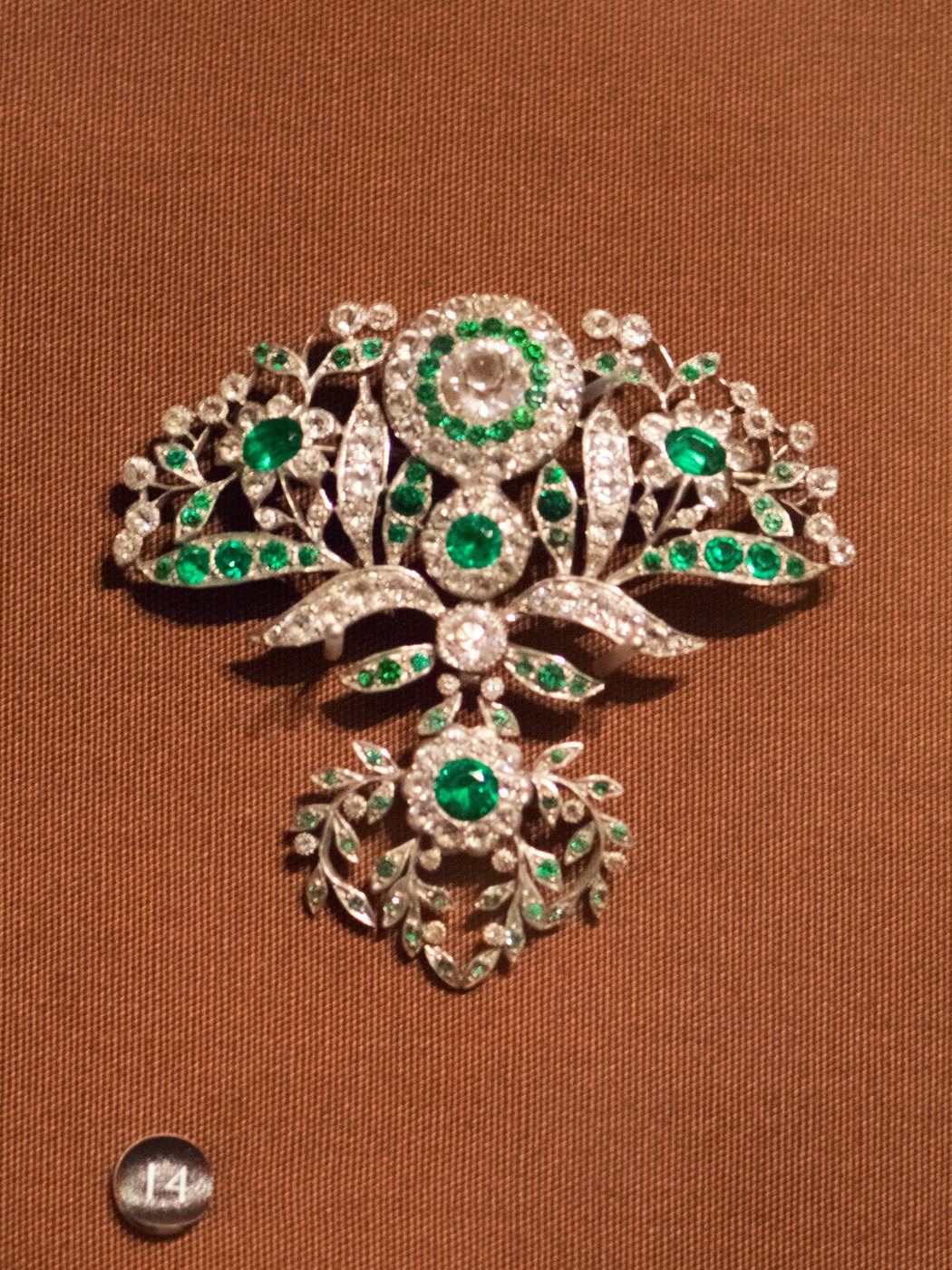
What Paste Is
Structurally, paste is a heavily leaded glass - the addition of lead oxide raises the glass’s refractive index, giving it more sparkle and “fire” than ordinary glass, closer to the brilliance of a genuine diamond or coloured gemstone. Lead glass of this kind was developed in England in the 1670s by George Ravenscroft, working in London, and English “flint glass” became the standard material for cut glass and, soon after, for jewellery stones. Paste was cut and faceted with methods adapted from lapidary work on real gemstones - ground and polished on wheels - then set in ways designed to make the most of its light.
Because lead glass is soft, paste stones were cut by hand to the shapes and sizes each design needed. In good 18th-century work stones were cut to fit their settings exactly and packed tightly together, so that the metal between them almost disappears.
Foiled Settings
A defining technique of paste jewellery is the foiled, closed-back setting: a thin sheet of metal foil, sometimes tinted, was placed behind the cut paste stone within a closed metal collet, reflecting light back through the glass to intensify its brilliance and, where tinted foil was used, its colour. Colourless paste was usually set in silver, which suited the white glitter of diamond imitations, often with a gold back in finer pieces; coloured paste was set in silver or gold.
Some details are typical of 18th and early 19th-century paste:
- The black dot. Many Georgian paste stones have a small black spot painted on the point of the culet (the bottom tip of the stone). It imitates the dark spot seen through the table of an old-cut diamond, whose open culet shows as a small dark circle.
- Tinted foils. Coloured foils let one type of glass suggest several gemstones, and the pink-tinged milky glass known as opaline paste, backed with pink foil, was used to suggest opal.
- Rose and table cuts. Paste followed diamond cutting fashions, so 18th-century stones are usually table, rose or old cushion-shaped brilliant cuts, not the round modern brilliant.
This closed-back foiling was also widely used behind genuine gemstones in the same period, since many real stones of the time were less brilliantly cut than later gemstones and benefited from the same reflective boost - so a foiled closed-back setting on its own does not indicate paste rather than a genuine stone.
Not Always Meant to Deceive
While paste certainly served as an honest, lower-cost alternative to gemstones for buyers who could not afford the real thing, grand paste jewellery of the 18th century was also a respected decorative material in its own right. The name most associated with fine paste is Georges Frédéric Strass (1701-1773). Born near Strasbourg, he moved to Paris in the 1720s and was appointed jeweller to Louis XV in the 1730s. He is credited with improving both the glass and the foiling of imitation stones, and his work was so successful that “strass” is still the word for paste or rhinestones in French, German and other European languages. Paris was the centre of the trade: in 1767 the makers of imitation jewellery there were organised into their own guild, the joailliers-faussetiers, and French paste was exported across Europe. Under candlelight - the primary evening lighting of the period - well-cut, well-foiled paste could rival or even outperform the more modestly cut diamonds typical of the time, making it a genuine fashion choice rather than only a compromise.
Period of Popularity
Paste was at its height through the Georgian and Regency periods, worn in rivière-style necklaces, large stomacher brooches, shoe buckles, hair ornaments and elaborate parures that would have been prohibitively expensive - or simply unobtainable in matching quantity - in genuine diamonds.
- c.1720-1790: the great age of paste. Men’s shoe and knee buckles, women’s stomachers, sprays, girandole earrings and necklaces, mainly in colourless paste set in silver, with green, red, blue and opaline paste in coloured pieces. Kenwood House in London has a notable display of Georgian paste and shoe buckles.
- c.1790-1830: smaller, lighter paste in Neoclassical and Regency designs; coloured paste set in gold and in pinchbeck.
- c.1830-1890: paste continued in less prestigious jewellery. After the South African diamond discoveries of the late 1860s brought cheaper diamonds, the fashionable use of fine paste declined.
- c.1890-1940: mass-produced glass stones took over the market. The Bohemian glass industry around Gablonz (now Jablonec nad Nisou) supplied pressed and cut glass stones worldwide, and in 1892 Daniel Swarovski patented a machine for cutting glass stones, founding his firm at Wattens in the Tyrol in 1895. French paste set in silver was fashionable in the 1920s and 1930s.
Paste Versus Later Rhinestones and Diamante
Paste is often loosely grouped together with later glass and crystal imitation stones, but there are meaningful differences. Fine 18th-century paste was typically hand-cut and hand-foiled, set into closed-back metal mounts by the same standards of craftsmanship applied to genuine gemstone jewellery of the period. Later 19th and 20th-century rhinestones and diamanté, by contrast, increasingly relied on mass-production methods, machine-pressed facets, and eventually foil-backed open settings or fully machine-applied reflective coatings, produced at far greater volume and lower unit cost. The two sit on a continuum rather than being sharply distinct categories, but early foiled paste in a fine period setting is generally treated as a more significant and more collectible object than a later mass-produced rhinestone piece.
How to Recognise It
Paste stones tend to show a slightly different sparkle pattern from genuine gemstones under close inspection - sometimes described as a softer, more “watery” flash compared to a diamond’s sharper fire - along with facet edges that can look less crisp under magnification than a hard gemstone’s, since glass wears differently from mineral crystal. Air bubbles or swirl marks within the glass, visible under magnification, are also a useful indicator where present. A painted black dot on the culet, or tinted foil visible at the back, points towards period paste. These are starting points for informed observation rather than a means of definitively confirming a stone’s identity without specialist examination.
Why Paste Is Collected Today
Fine antique paste jewellery is collected today on its own merits - for its craftsmanship, its design, and its direct connection to 18th-century fashion - rather than viewed simply as a failed imitation of “real” jewellery. Well-preserved foiled paste in an original period setting is, in its own way, as much a specialist category as any gemstone.
Frequently Asked Questions
Is paste the same as cut glass generally? Not quite - “paste” specifically refers to the leaded glass composition and cutting/foiling tradition used to imitate gemstones, rather than describing cut glass in general.
Can paste be told apart from a real diamond by eye? Not reliably by eye alone in every case, especially with fine old paste in a period setting; a jeweller’s testing tools or laboratory examination are the reliable way to distinguish glass from genuine gemstone material.
Read next
Compare
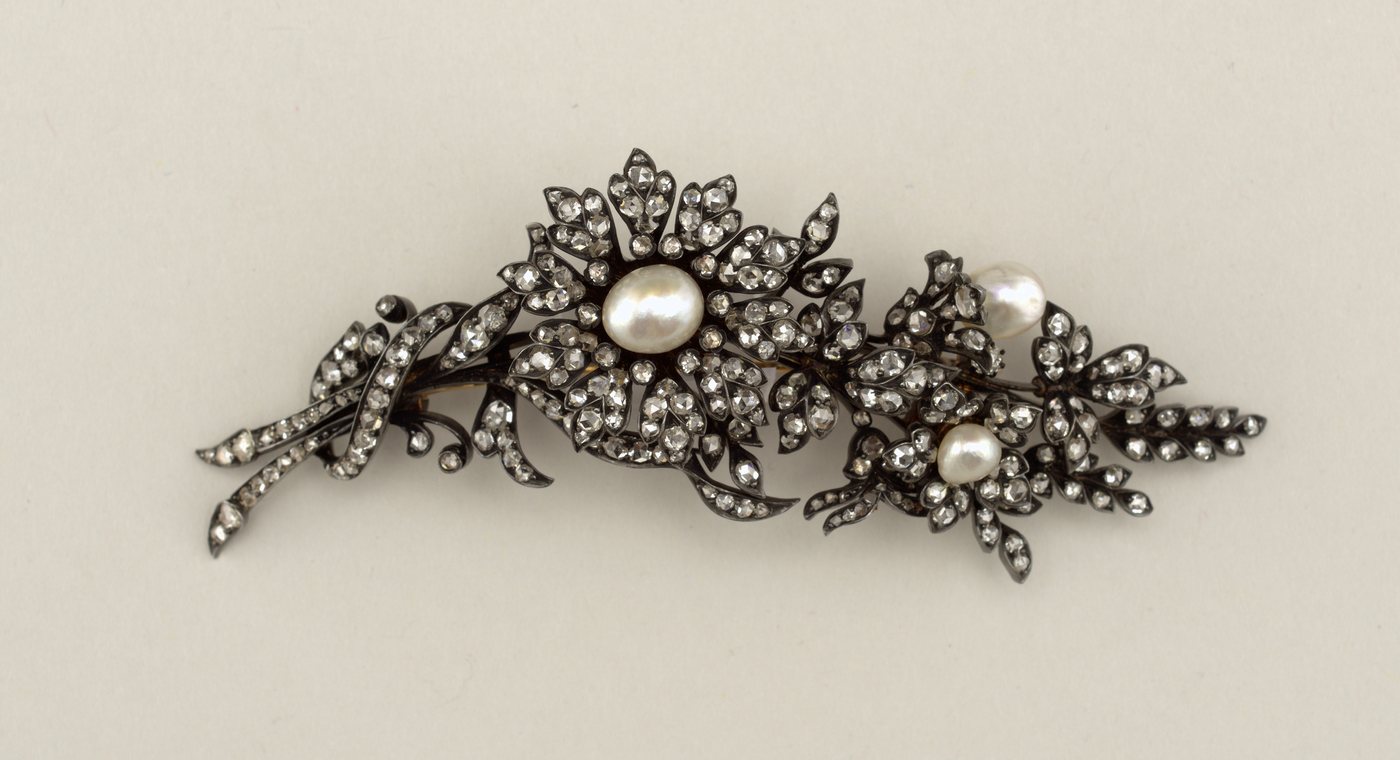
Paste vs Rhinestone: What's the Difference?
Why paste and rhinestone describe glass simulants from different periods and manufacturing contexts, and why the two words are nonetheless often used interchangeably today.
Eras
Georgian Jewellery
A guide to Georgian jewellery (1714-1837): Brazilian diamonds, closed-back foiled settings, rococo and Neoclassical styles, paste, cut steel and pinchbeck, sentimental miniatures, girandoles, rivières and Sévigné bows.
Eras
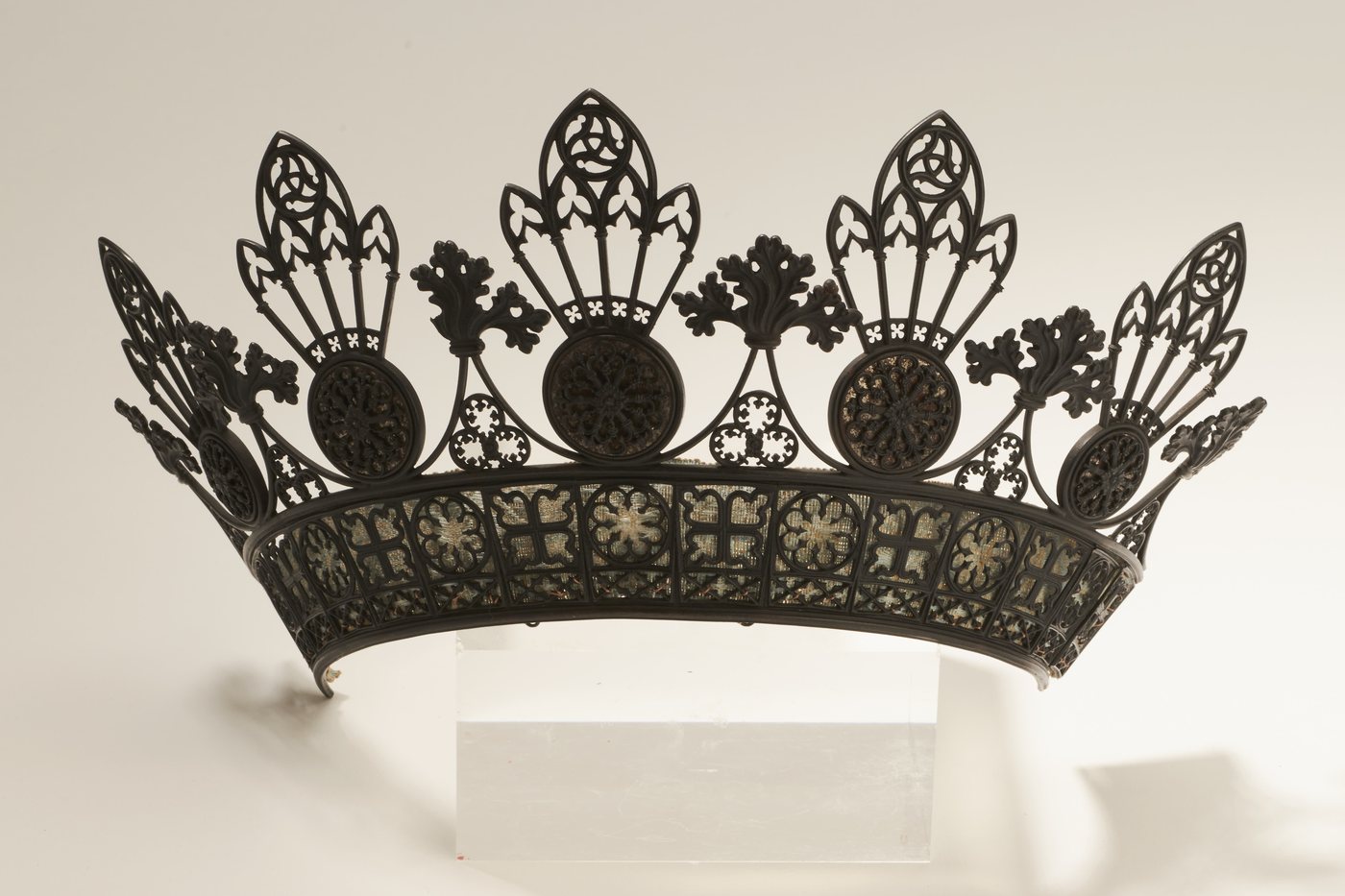
Regency Jewellery
A guide to Regency jewellery (c.1795-1837): Empire fashion, cameos and Neoclassical parures at Napoleon's court, coloured gold and cannetille, Berlin iron and cut steel, acrostic rings, and memorial jewellery for Nelson and Princess Charlotte.
Gemstones
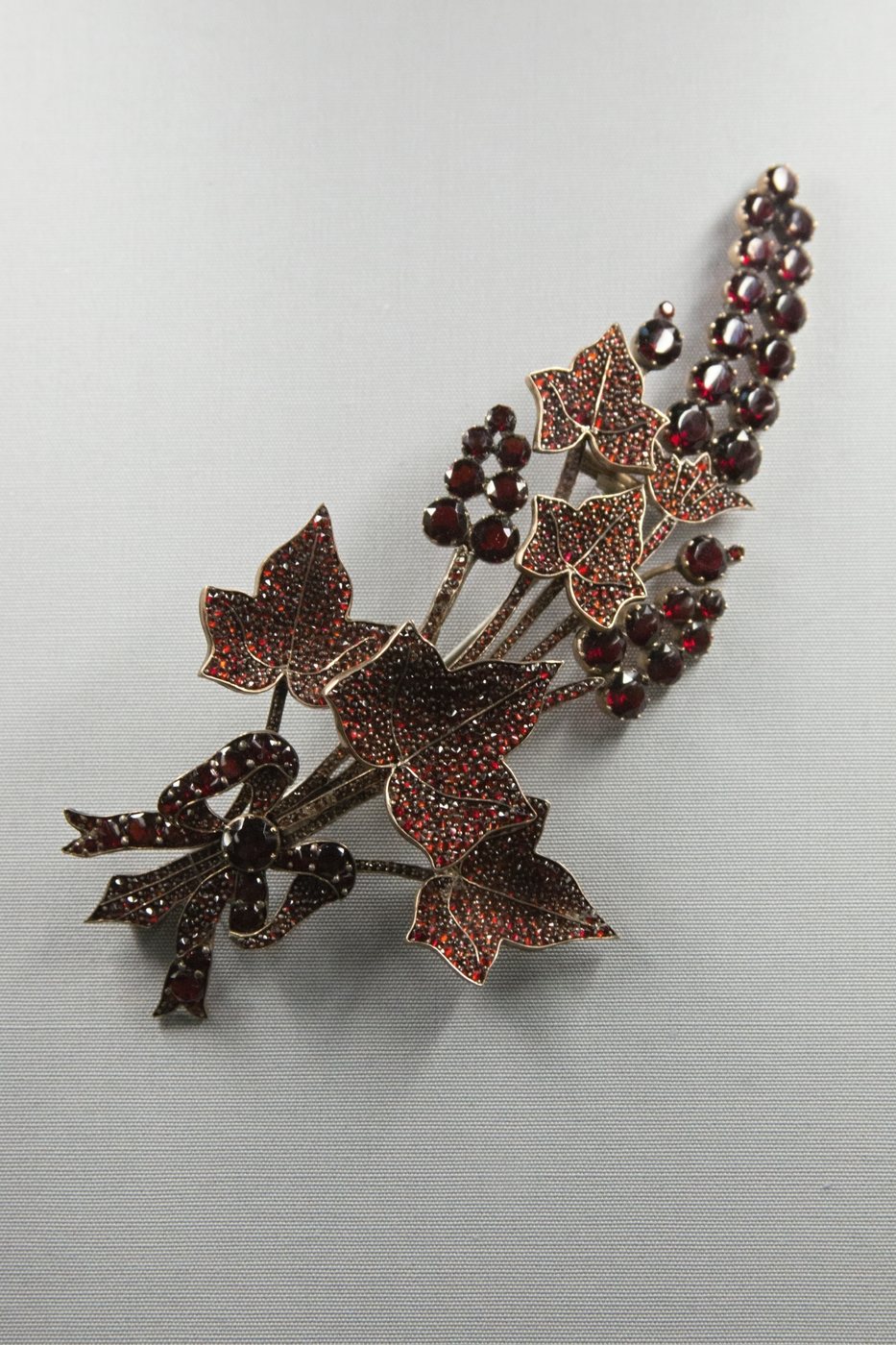
Garnets in Victorian Jewellery
Why Bohemian pyrope garnets from Třebenice, cut and set in Turnov and Prague, became a hallmark of Victorian jewellery, with carbuncles, demantoids, cluster settings and their meanings.
Jewellery
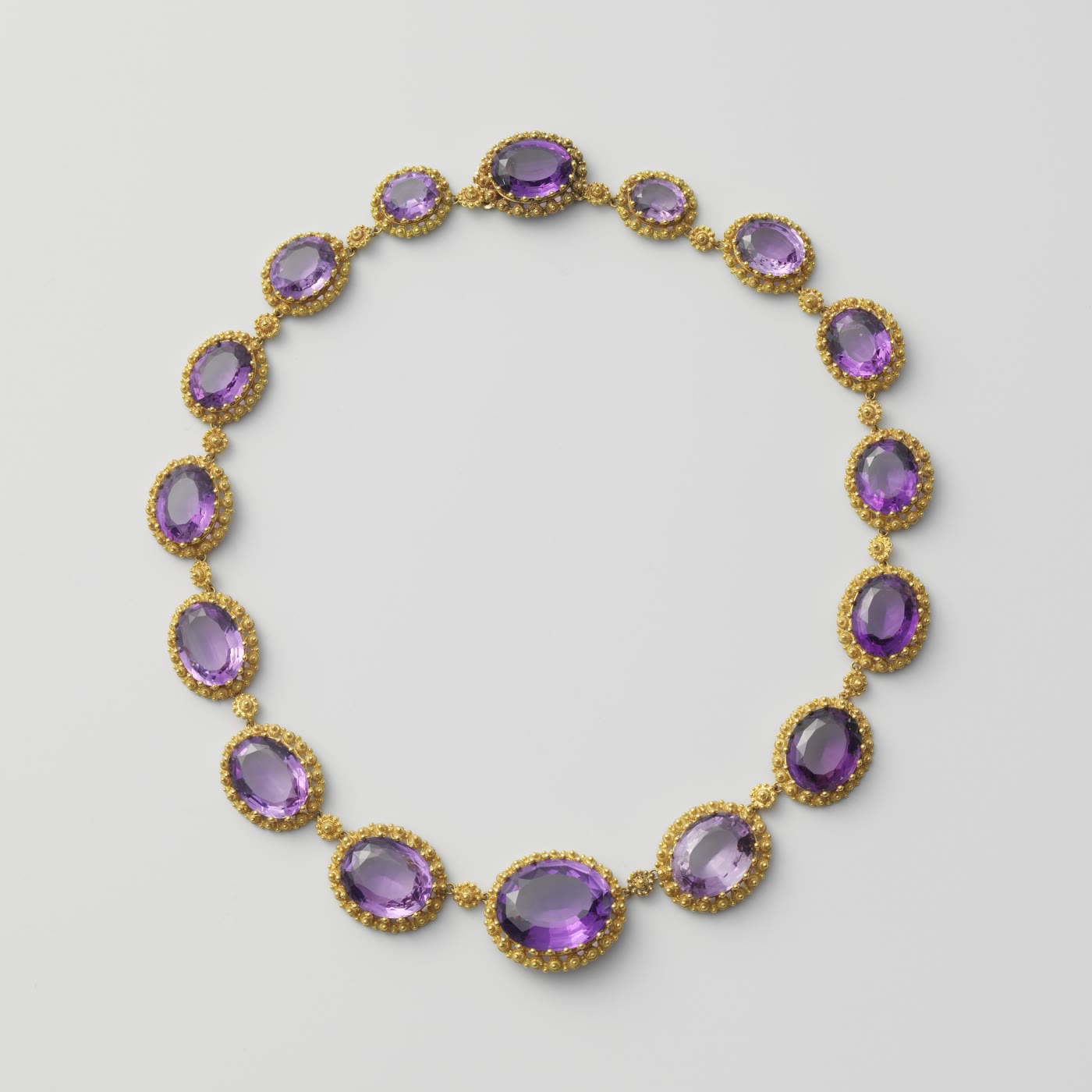
What Is a Rivière Necklace?
What a riviere necklace is, why its unbroken line of individually set stones made it one of the most enduring necklace forms, and how it differs from a festoon or fringe necklace.

Materials
Gold in Historical Jewellery
How gold standards, supply, colour and working methods changed from Georgian to 1940s jewellery - the 1854 standards, the gold rushes, bloomed and coloured gold, rolled gold - and gold's imitations.