Diamonds in Jewellery History
From Indian and Brazilian diamonds to the 1867 South African discoveries and Kimberley, famous stones such as the Regent, Hope and Cullinan, and how diamond cutting and setting changed 1700-1950.
Diamond has been prized as a gemstone for centuries, but its role in jewellery changed fundamentally in the second half of the 19th century, when a dramatic increase in world supply turned a scarce luxury material into the dominant stone of two entire jewellery eras.
India and Golconda
Until the 18th century almost every diamond in Europe came from India. The richest workings were alluvial mines along the Krishna river in the Deccan, such as Kollur, and the stones were traded through the city of Golconda, near modern Hyderabad - so that “Golconda” became, and remains, a byword for diamonds of exceptional whiteness and transparency. The French merchant Jean-Baptiste Tavernier travelled to the Indian mines several times in the mid-17th century and in 1668 sold Louis XIV a large blue diamond. Recut for the French crown, it was stolen in 1792; a stone cut from it resurfaced in London in the early 19th century, became known as the Hope diamond after the collector Henry Philip Hope, of the Hope banking family, and is now in the Smithsonian’s National Museum of Natural History in Washington.
Another Indian stone, the Regent, found around 1700, was bought by Thomas Pitt, governor of Madras, cut in London and sold in 1717 to Philippe d’Orléans, Regent of France. It was set in successive French crowns and is now in the Louvre.
Brazil from the 1720s
Diamonds were found in Minas Gerais, Brazil, in the 1720s, around the settlement of Tejuco (now Diamantina). The Portuguese crown took control of the diamond district and later made it a royal monopoly, but Brazilian output quickly overtook India’s, and through the 18th century and the first half of the 19th it supplied most of the diamonds set in European jewellery. The extra supply helps explain the profusion of diamond-set Georgian court jewels, from rivière necklaces to large bodice ornaments. Supply was still limited by modern standards, and diamonds remained a material for the wealthiest buyers; many people wore paste instead.
South Africa from 1867
The decisive change came with the discovery of diamonds in South Africa. In 1867 a boy found a pebble near Hopetown on the Orange River that was identified as a diamond of over 21 carats, later named the Eureka. In 1869 the much larger “Star of South Africa” was found in the same district, and in 1871 diamonds were found at Colesberg Kopje, where the town of Kimberley grew up around what became the Big Hole. Within a few years South African output far exceeded that of Brazil and India. Competing claims were consolidated, and in 1888 Cecil Rhodes formed De Beers Consolidated Mines, which came to control most of the world’s production and its sale through London.
This supply shift is the reason diamond-heavy jewellery styles that would have been prohibitively expensive earlier in the 19th century became achievable at scale by its end. The all-diamond garland style of the Edwardian period, with its lace-like, diamond-encrusted platinum mounts made by firms such as Cartier, Boucheron and Chaumet, depended directly on the greater availability of diamonds that South African production made possible. The pattern continued into the geometric, diamond-set jewellery of Art Deco, where diamonds - by then set alongside coloured gemstones in bold contrast - remained a staple in a way earlier, scarcer supply had never supported.
Famous Stones and Their Settings
Several named stones mark the stages of this history and can still be seen:
- The Koh-i-Noor, an Indian diamond acquired by the British Crown in 1849, was shown at the Great Exhibition of 1851, where its old Indian cut disappointed visitors. It was recut in London in 1852 by cutters brought from Amsterdam, losing much of its weight to gain brilliance. It is set in the crown of Queen Elizabeth The Queen Mother among the Crown Jewels at the Tower of London.
- The Tiffany Yellow Diamond, found at Kimberley in 1877 or 1878, was bought by Tiffany & Co. and cut in Paris - an early sign of American firms’ growing place in the trade. In 1887 Tiffany was also among the principal buyers at the French government’s sale of the French Crown Jewels.
- The Cullinan, found at the Premier Mine near Pretoria in 1905 and still the largest gem diamond ever found, was presented to Edward VII in 1907 and cut by Joseph Asscher & Co. of Amsterdam in 1908. Its two largest stones are set in the Sovereign’s Sceptre and the Imperial State Crown.
Historical Cutting Styles
Diamond cutting changed steadily between 1700 and 1950, and the cut of a stone is one of the most useful dating clues in a piece of jewellery. In brief: the flat-based, dome-faceted rose cut dominated the 18th century and survived for small stones; the cushion-shaped old mine cut, with its high crown, small table and large culet, was the standard brilliant of the late 18th and most of the 19th century; the round old European cut, made possible by powered bruting machines, is typical of c.1890-1930; and after Marcel Tolkowsky’s Diamond Design of 1919, proportions moved towards the modern round brilliant through the transitional cuts of the 1930s and 1940s. Step cuts - emerald, baguette and the Asscher cut patented in 1902 - belong mainly to the 1920s and 1930s.
Older cuts produce a softer play of light with broader flashes, rather than the tighter scintillation of later cutting designed to maximise brilliance. For the features of each cut and how to examine them, see How to Date a Diamond by Its Cut, which covers the subject in detail, including the old mine cut and the small single-cut stones used in borders.
Settings: Foiled and Closed, Then Open and Claw-Set
Georgian diamond jewellery was usually set in silver, whose white colour flattered the stones, in closed-back collets, sometimes with a thin metal foil placed behind the stone to reflect more light back through it - a technique also used with paste and with coloured stones of the period. From the late 18th century the standard construction became silver-topped gold: a silver front holding the diamonds, backed with gold so that the metal against the skin and clothes did not tarnish. As cutting quality improved and the material became more available, jewellers increasingly moved to open mounts that let light pass through the stone from behind. Open claw settings, and then fine millegrain and pavé work in platinum from around 1900, became the standard approach for diamond jewellery by the Edwardian period and remained dominant through Art Deco.
The single-stone engagement ring took its familiar modern form in the same years: in 1886 Tiffany & Co. introduced its six-claw “Tiffany Setting”, which raised a solitaire diamond above the band so that light could enter it from the sides.
Symbolism
Diamond’s hardness and clarity gave it a long-standing association with enduring love and constancy - the Greek adamas, “unconquerable”, is the root of its name - a meaning that fed into its established role in engagement and wedding jewellery, discussed on the history of engagement rings page. Beyond that specific role, diamonds were also the most direct visual signal of wealth and status, worn in quantity once supply allowed it.
A Note on Authentication
No claim is made here about how to determine, from a description or photograph, whether a specific diamond is natural, treated or genuine. That determination requires laboratory or specialist gemmological examination. This page discusses historical supply, cutting and setting practice only.
Read next

Eras
Art Deco Jewellery
A guide to Art Deco jewellery (c.1915-1935): geometric symmetry, the 1925 Paris Exposition, Cartier's Tutti Frutti and Van Cleef & Arpels' Mystery Set, the modernist jewellers, new stone cuts, Egyptian and Indian influences, and costume jewellery.

Eras
Edwardian Jewellery
A guide to Edwardian jewellery (1901-1915): platinum and the garland style, Queen Alexandra's dog collars, Cartier, Boucheron and Fabergé in London, the Cullinan diamond, lavaliers, milgrain settings and day jewellery.
Jewellery
What Is a Rivière Necklace?
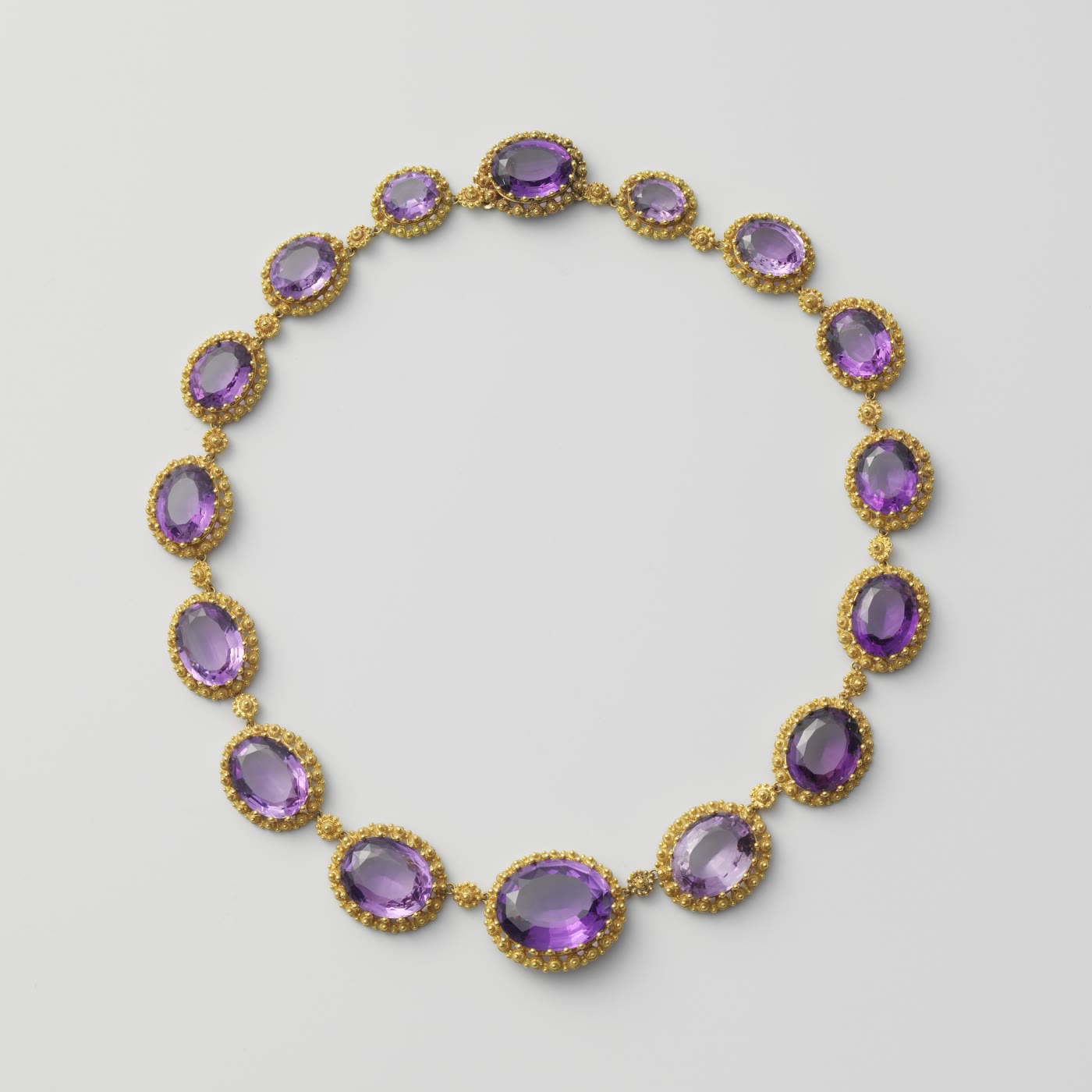
What a riviere necklace is, why its unbroken line of individually set stones made it one of the most enduring necklace forms, and how it differs from a festoon or fringe necklace.
Materials
What Is Paste Jewellery?
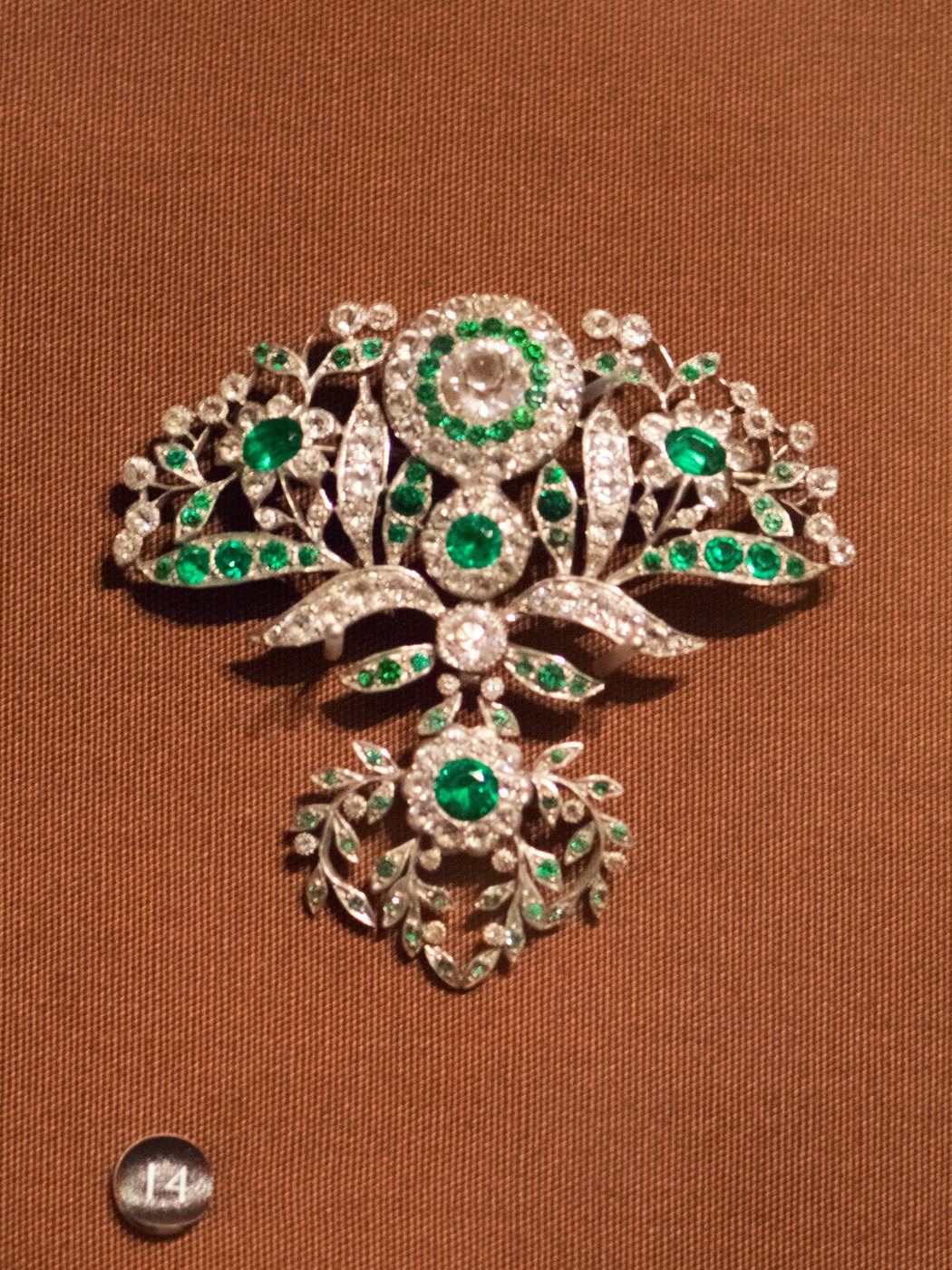
What paste jewellery is, from English lead glass and Georges Frédéric Strass in Paris to foiled closed settings, black-dot culets and later Bohemian stones, and why fine paste is collected today.
Materials
Platinum in Jewellery History
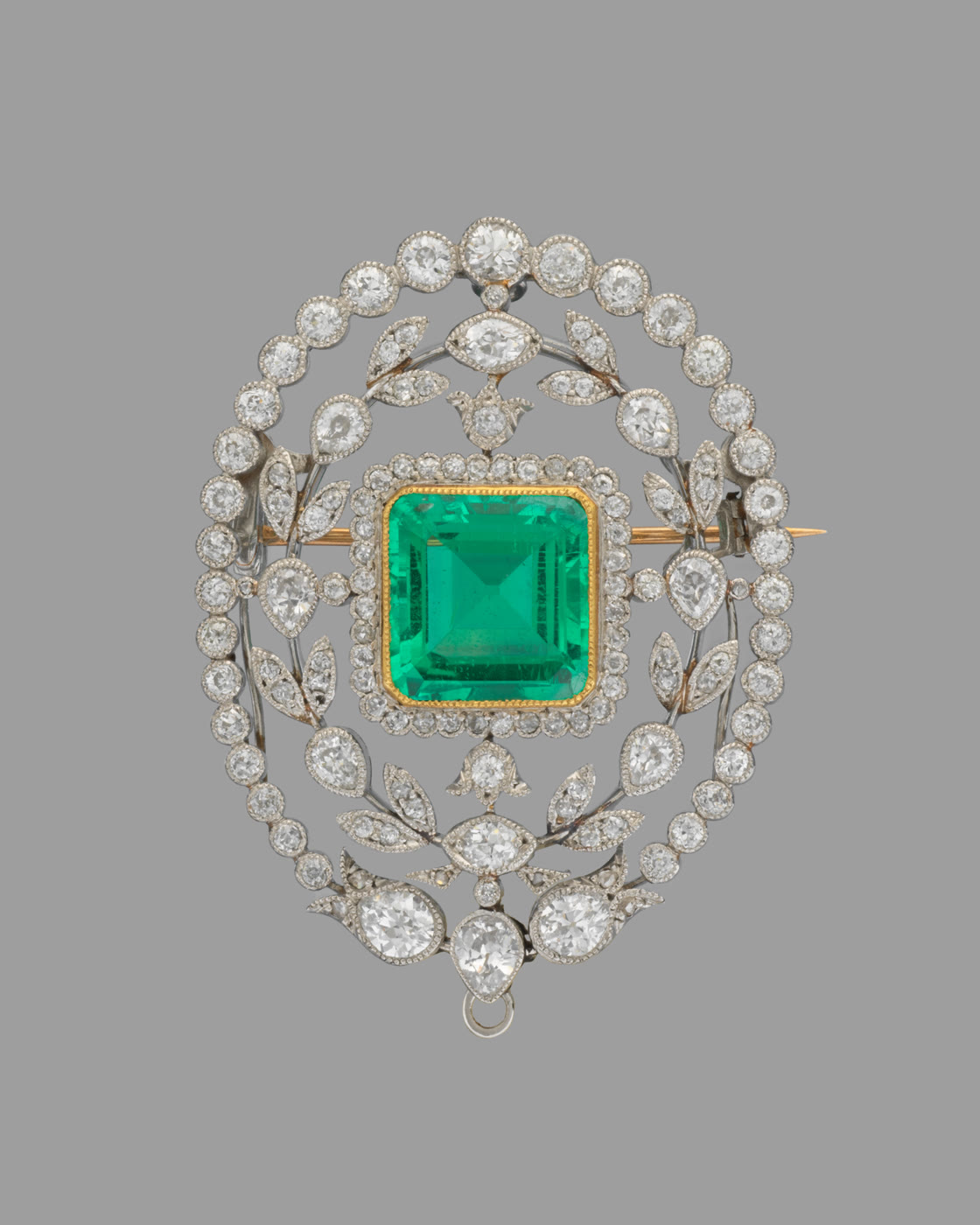
Why platinum only became practical for jewellery around 1900, Cartier and the Edwardian garland style, Art Deco settings, Russian and South African supply, wartime restrictions and platinum marks.
Techniques
What Is Pavé Setting?
What pavé setting is, how stones were seated and held by raised beads, its use from Victorian turquoise pavé to Edwardian platinum and Art Deco work, and how it differs from channel setting.