Amethyst in Historical Jewellery
How amethyst went from a costly stone, prized in its deep 'Siberian' colour from the Urals, to an affordable one after Brazilian supply grew, and its royal, ecclesiastical and mourning uses.
Amethyst is a purple variety of quartz, and its place in jewellery history is shaped by a real shift in supply and value: for much of the 18th and early 19th centuries amethyst was a comparatively scarce, costly stone, and its modern reputation as an affordable “semi-precious” gem is largely a later development.
From Scarce to Abundant
Through the 18th century and into the early 19th, amethyst was set and valued as a precious gemstone, ranked in period sources alongside other fine coloured stones rather than treated as a budget alternative to them. Queen Charlotte, wife of George III, is often said to have owned an amethyst necklace of exceptional value - a story repeated in many histories of the stone, though the figures attached to it are rarely sourced.
This changed as large deposits in Brazil and Uruguay were exploited during the 19th century. The volcanic rocks of Rio Grande do Sul in southern Brazil, and of the neighbouring Artigas region of Uruguay, contain geodes lined with amethyst crystals, some large enough to stand in. From the mid-19th century much of this material was shipped to Idar-Oberstein in Germany, whose agate-cutting workshops had turned to South American rough as their own local stone ran out. The result was a steady fall in amethyst’s relative price. A piece of Georgian amethyst jewellery therefore reflects a materially higher relative value at the time it was made than the same stone would represent today, even though amethyst itself did not change.
“Siberian” Amethyst
Before Brazilian material dominated, the most admired amethyst came from the Ural Mountains of Russia, around Mursinka north of Yekaterinburg, worked from the 18th century. Ural stones were known for a deep, saturated purple with flashes of red and blue, and “Siberian” became a trade term for the finest colour of amethyst - a grade description rather than a guarantee of where a stone was mined. Paler, more uniform Brazilian amethyst was by contrast the everyday material of the later 19th century.
Royal, Ecclesiastical and Mourning Associations
Amethyst’s rich purple has long carried associations with royalty and high status, echoing purple’s broader historical use as a colour tied to rank and rulership. The stone also has a long history in ecclesiastical jewellery, particularly in bishops’ rings, where an amethyst set in gold is the traditional choice. Its name comes from the Greek amethystos, “not intoxicated”, from an ancient belief that the stone guarded against drunkenness.
Within 19th-century mourning practice, amethyst’s purple placed it among the colours considered appropriate for half mourning - the later, less severe stage of Victorian mourning dress, when the strict black of full mourning gave way to muted colours including purple, grey and lilac. Amethyst was not exclusive to mourning use, but its colour made it a frequent choice for jewellery worn during this stage of bereavement. It was also one of the letters in acrostic jewellery: the A of REGARD and DEAREST.
Typical Georgian and Victorian Settings
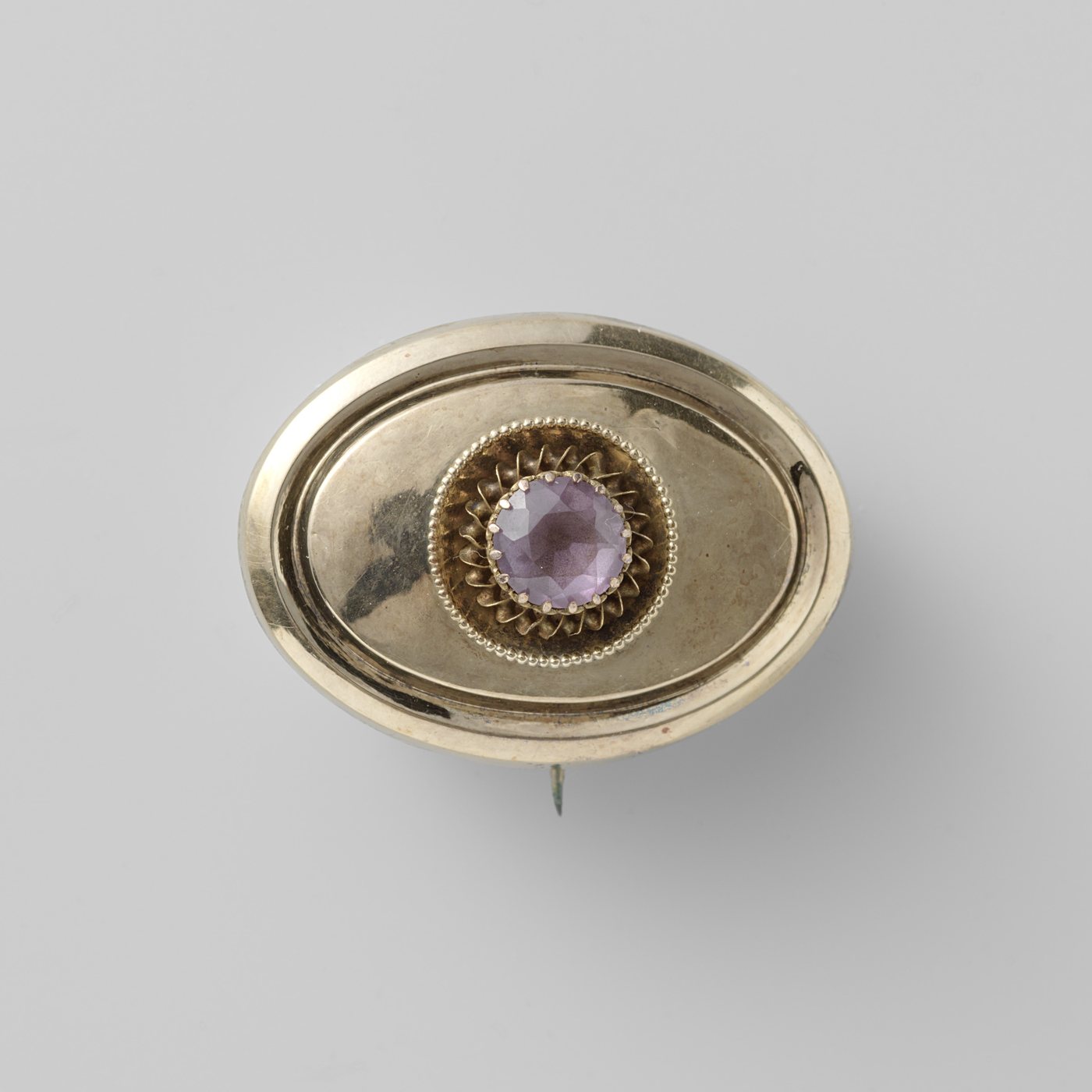
Earlier amethyst jewellery, particularly from the Georgian period, often used closed-back settings with a metal foil placed behind the stone to enhance its colour and brilliance - a technique widely used across coloured gemstones and paste imitation stones of the period, not unique to amethyst. Faceted step cuts and cushion cuts are the forms most commonly encountered in Georgian and Victorian jewellery, often set as a large single stone in a ring or pendant, or surrounded by smaller diamonds or seed pearls in more elaborate pieces.
In the 1820s and 1830s amethyst was a favourite stone for parures of necklace, earrings and brooch in cannetille - gold worked with coiled and twisted wire and granules - where large oval or cushion-cut amethysts sat in elaborate collets. Open, claw-set mounts became increasingly common through the Victorian period, in line with the wider trend away from closed foil-backed settings as the century progressed.
Amethyst After 1880
As the price fell, amethyst took on new roles. Arts and Crafts jewellers of the 1890s to the 1920s often used it as a cabochon in silver or hand-worked gold, valuing its colour over its cost. In the Edwardian years it was combined with pearls and green stones such as peridot in delicate pendants. Because the Women’s Social and Political Union adopted purple, white and green as its colours in 1908, such pieces are often sold today as “suffragette jewellery”; a few were marketed in those colours at the time, but most have no documented link to the movement. In the 1930s and 1940s large step-cut amethysts reappeared in bold gold cocktail rings alongside citrine and aquamarine.
Symbolism
Beyond its royal and ecclesiastical associations, amethyst carried a general Victorian sentimental association with sincerity and calm affection, fitting the wider 19th-century habit of assigning symbolic meanings to gemstones. As with much gemstone symbolism from this period, these associations were popularly repeated rather than fixed by any single authoritative source, and are best read as period sentiment rather than settled fact.
Heat and Colour
Amethyst’s colour comes from traces of iron in the quartz, activated by natural irradiation, and can fade with prolonged strong light or heat. Heating amethyst turns it yellow or brown, and much of the citrine sold since the 19th century was produced this way - see Citrine in Jewellery History.
No claim is made here about determining, from a description or photograph, whether a specific amethyst is natural, synthetic or treated - that requires specialist gemmological examination.
Read next
Compare
Georgian vs Victorian Jewellery
How Georgian and Victorian jewellery differ in settings, techniques and motifs, and why Victorian jewellery itself spans several distinct phases.
Eras
Georgian Jewellery
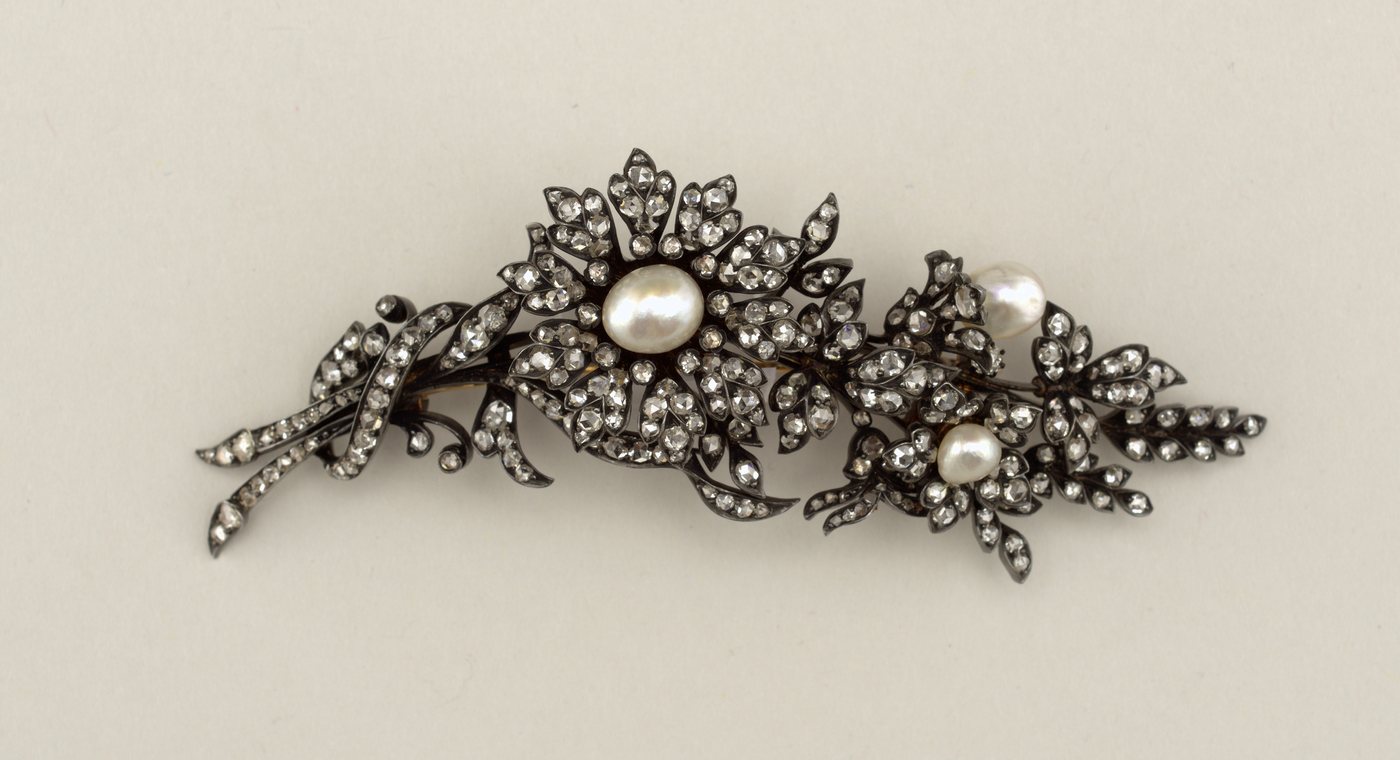
A guide to Georgian jewellery (1714-1837): Brazilian diamonds, closed-back foiled settings, rococo and Neoclassical styles, paste, cut steel and pinchbeck, sentimental miniatures, girandoles, rivières and Sévigné bows.
Eras
Victorian Jewellery
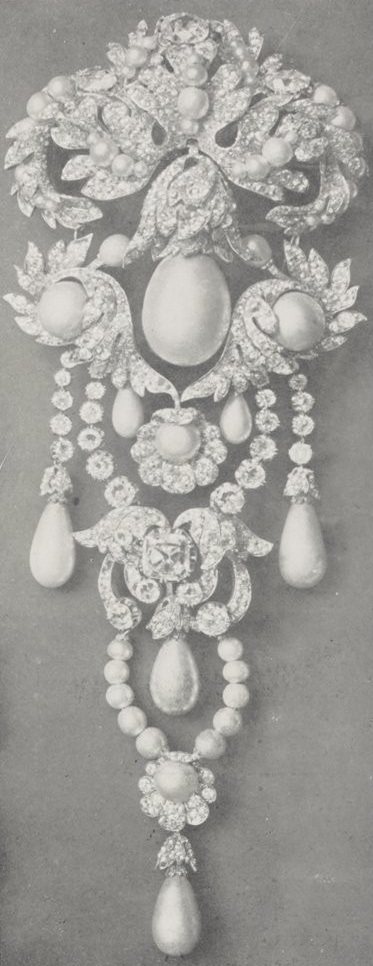
A guide to Victorian jewellery (1837-1901): the Romantic, Grand and Aesthetic periods, the Great Exhibition, gold rushes and 9ct gold, mourning and Whitby jet, archaeological revival, Scottish jewellery, and how to recognise each phase.
Gemstones
Garnets in Victorian Jewellery
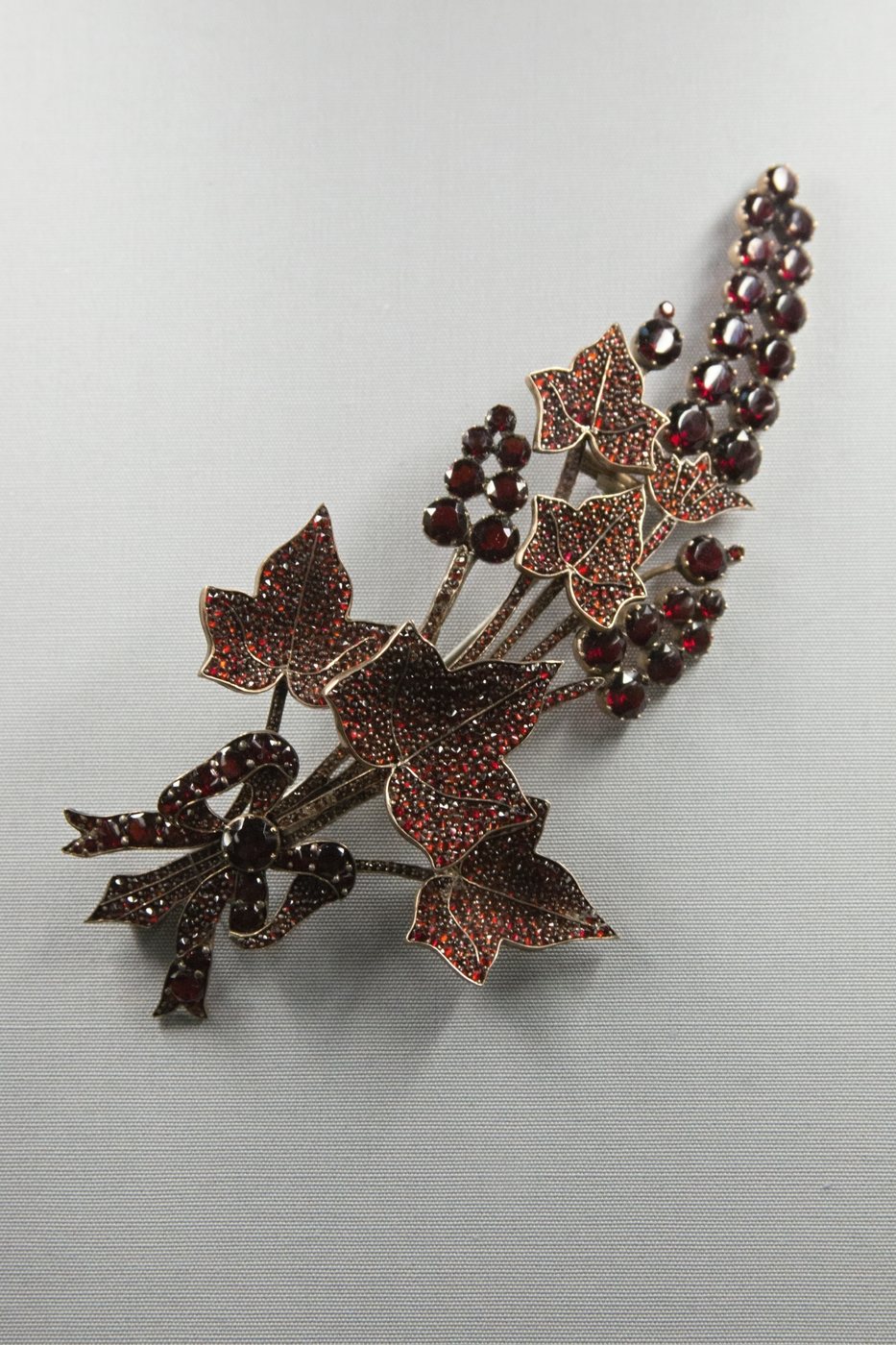
Why Bohemian pyrope garnets from Třebenice, cut and set in Turnov and Prague, became a hallmark of Victorian jewellery, with carbuncles, demantoids, cluster settings and their meanings.

Gemstones
Peridot in Edwardian Jewellery
Peridot from the Red Sea island of Zabargad and Burma, its older name 'chrysolite', and why its yellow-green colour was fashionable in Edwardian gold and platinum jewellery and Arts and Crafts work.
Materials
What Is Paste Jewellery?
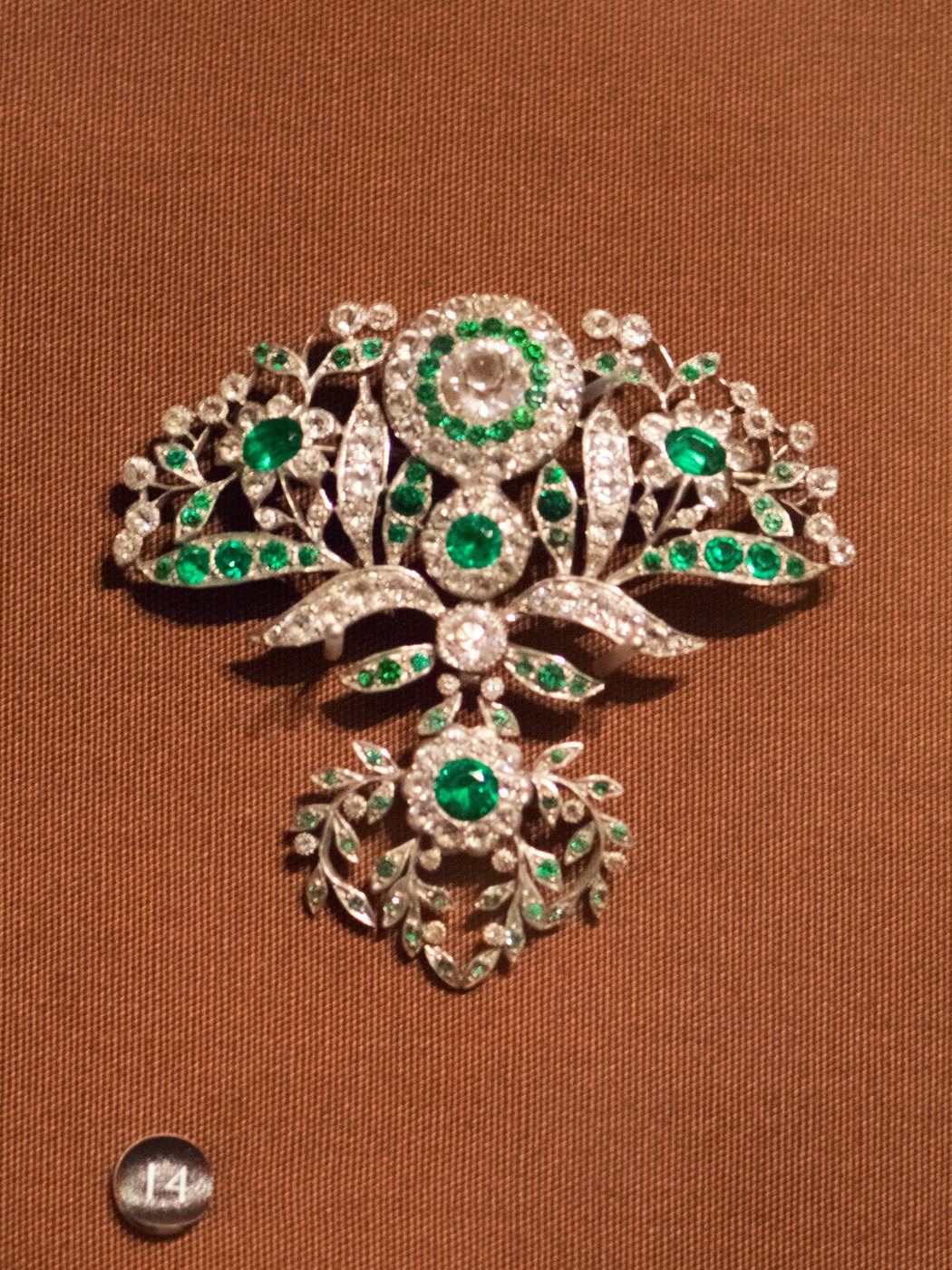
What paste jewellery is, from English lead glass and Georges Frédéric Strass in Paris to foiled closed settings, black-dot culets and later Bohemian stones, and why fine paste is collected today.