What Is Engraving?
What hand-engraving is, the gravers used, bright-cut engraving from the 1770s, inscriptions, signets and Aesthetic-style silver, and how engraving differs from chasing and underlies niello.
Engraving is a metalworking technique in which a sharp hand tool cuts fine lines directly into a metal surface, removing a narrow sliver of metal to create crisp, permanent linear designs, lettering and decorative patterns.

What Engraving Is Structurally
Hand-engraving is done with a graver, also called a burin - a short bar of hardened steel with a sharpened, angled point, set in a mushroom-shaped wooden handle that sits in the palm. The engraver pushes it through the surface of the metal to cut away a fine, continuous sliver, leaving a crisp groove with clean edges. Because the engraver controls the depth and angle by hand, lines can swell and taper, which suits both flowing ornament and legible lettering.
The Engraver’s Tools
Gravers are made in several sections, each giving a different line:
- Square and lozenge gravers cut V-shaped lines and are the standard tools for lettering and outlines.
- Flat and round gravers cut broad, flat-bottomed or rounded grooves and are used for clearing backgrounds and for bright-cutting.
- Spitstickers, with slightly curved sides, cut fine curving lines.
- Line or multiple-line gravers have a toothed face that cuts several parallel lines at once, used for shading and textured grounds.
The work was held in an engraver’s block or on a round leather sandbag, so that it could be turned smoothly against the tool as a curved line was cut. Engraving was often a separate trade: many Victorian jewellers sent rings, lockets and presentation pieces out to specialist engravers for lettering and crests.
Bright-Cut Engraving
Bright-cutting uses a polished graver held at an angle to cut faceted, bevelled grooves whose sides reflect light, so the pattern glitters. It became fashionable on English silver in the 1770s-1790s, where it suited Neoclassical swags and borders cut into thin sheet, and it returned in Victorian silver jewellery: bangles, lockets, collars and name brooches of the 1870s-1890s were often bright-cut with ferns, flowers and scrolls. The same method was used to finish the metal between stones in pavé setting.
Typical Jewellery Applications
Engraving is the technique behind personal inscriptions - monograms, initials, dates and mottoes - cut into rings, lockets and keepsake pieces. Two jewellery types depend on it particularly closely: the signet ring, whose flat bezel is engraved in reverse with a monogram, crest or device so that it prints correctly when pressed into wax, and the posy ring, whose short verse is engraved into the band, often on the inside.
Other characteristic uses include:
- Mourning rings. The name, date of death and age of the deceased were engraved around 18th-century mourning rings, often with the letters filled with black enamel.
- Heraldic engraving. Crests and coats of arms on signet rings and fob seals followed the conventions of heraldry, including hatching patterns that indicate colours in a single-colour engraving.
- Aesthetic movement silver. In the 1870s and 1880s, inspired by Japanese art, Birmingham and London makers produced silver brooches, lockets and bangles engraved with birds, fans, bamboo and blossom, often with applied gold details.
- Watch cases and lockets. Engraved foliate scrolls and cartouches surrounding a blank space for a monogram were standard on 19th-century pieces.
Gem engraving - carving seals and intaglios in hardstone - is a related but separate craft, done with rotating wheels and abrasives rather than a graver; see What Is an Intaglio?.
Engraving Versus Chasing
Engraving and chasing can produce similar fine-line effects on a finished piece. Engraving cuts into the metal with a sharp graver, removing a sliver along each line, while chasing uses blunt punches and a hammer to displace the surface metal, removing nothing. A skilled chaser can produce lines that resemble engraving without cutting the metal, so the distinction matters more to how a piece was made than to how it looks at a glance.
Engraving as the Basis for Niello
Niello usually begins as engraved lines cut in exactly the way described here; the recesses are then filled with a black sulphide compound that is fused in place and polished flush with the surrounding surface. Many niello pieces are therefore engraved pieces underneath their black fill.
Machine Engraving
Machine methods gradually took over routine work. Engine-turning on the rose engine, used on watch cases and boxes from the 18th century, cut regular geometric patterns mechanically; see What Is Guilloché Enamel?. From the early 20th century, pantograph engraving machines, which follow a master template with a stylus while a cutter reproduces it at reduced size, were widely used for lettering and monograms. By the mid-20th century much commercial lettering was machine-cut.
How to Recognise It
Hand-engraving typically shows a crisp, V-shaped or faceted groove with clean, sharp edges, and under magnification the line varies slightly in width and depth, often tapering at its ends where the graver was lifted out. Small curls of metal or slight overcuts where lines cross are also signs of hand work. Pantograph lettering tends to show lines of uniform width with rounded ends and identical repeated letters, though distinguishing the two reliably often benefits from close examination.
Frequently Asked Questions
Is engraving reversible? Not readily - because engraving removes metal, a badly engraved line generally cannot be corrected without removing metal from the surrounding surface. Old inscriptions are sometimes polished out to allow re-engraving, which leaves the area thinner or slightly dished.
Can engraving appear on cast or stamped jewellery? Yes - engraved detail, particularly personal inscriptions, was routinely added by hand to pieces that were otherwise cast or die-stamped, since the form and the lettering were usually made at separate stages.
Read next
Eras
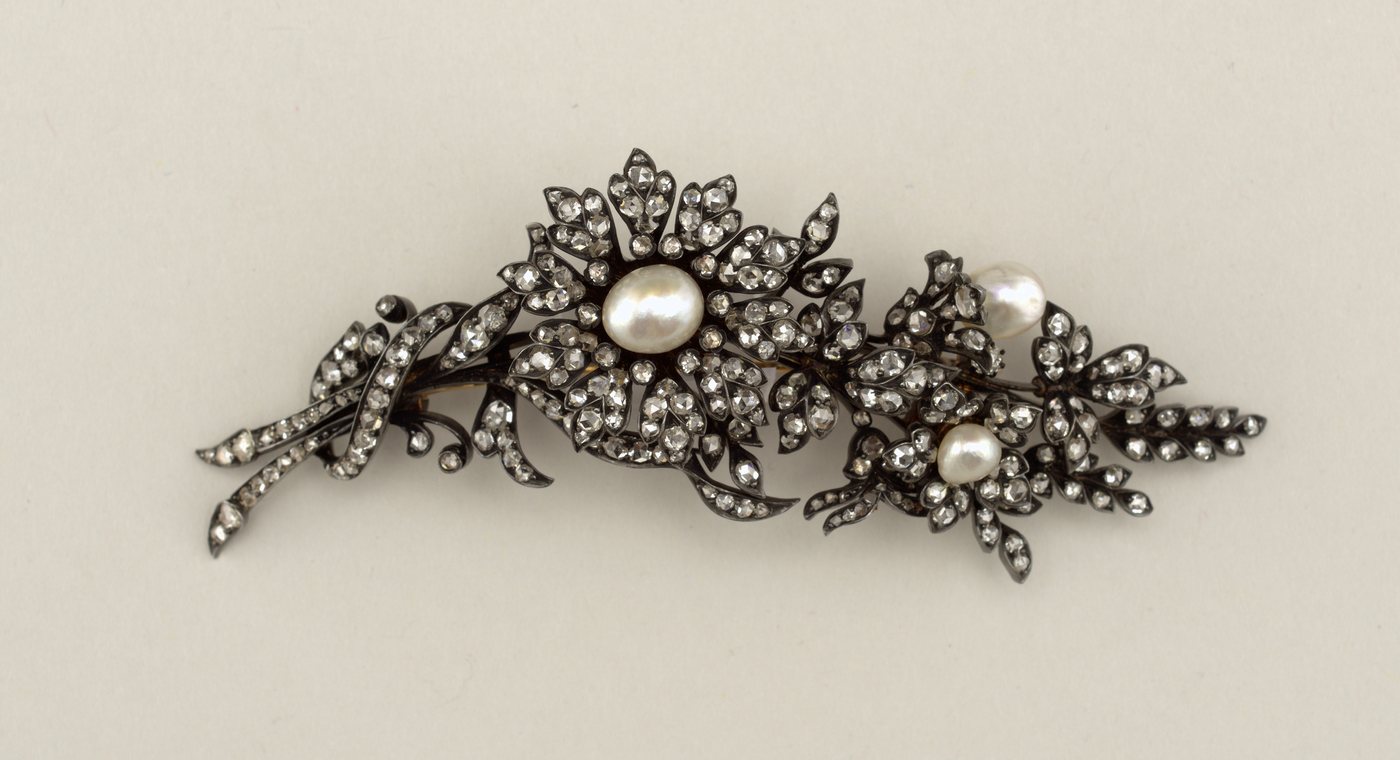
Georgian Jewellery
A guide to Georgian jewellery (1714-1837): Brazilian diamonds, closed-back foiled settings, rococo and Neoclassical styles, paste, cut steel and pinchbeck, sentimental miniatures, girandoles, rivières and Sévigné bows.
Eras
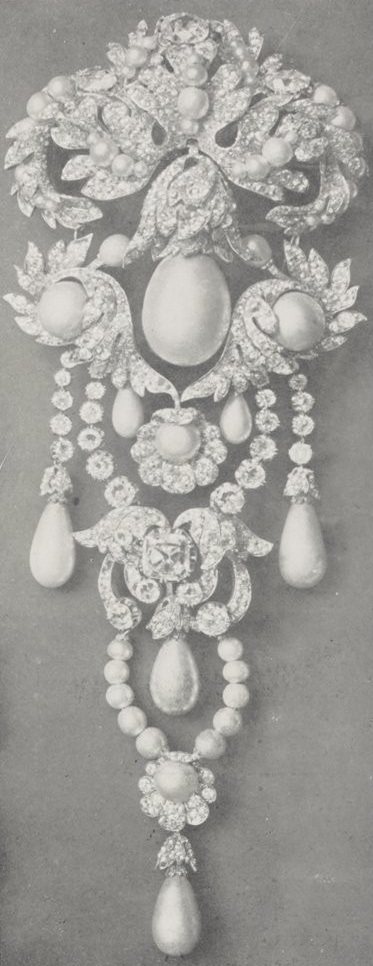
Victorian Jewellery
A guide to Victorian jewellery (1837-1901): the Romantic, Grand and Aesthetic periods, the Great Exhibition, gold rushes and 9ct gold, mourning and Whitby jet, archaeological revival, Scottish jewellery, and how to recognise each phase.

Jewellery
What Is a Posy Ring?
What a posy ring is, why its short engraved verse was often hidden on the inside of the band, and how the form declined from a common love token to a rarer survival by the Victorian era.
Jewellery
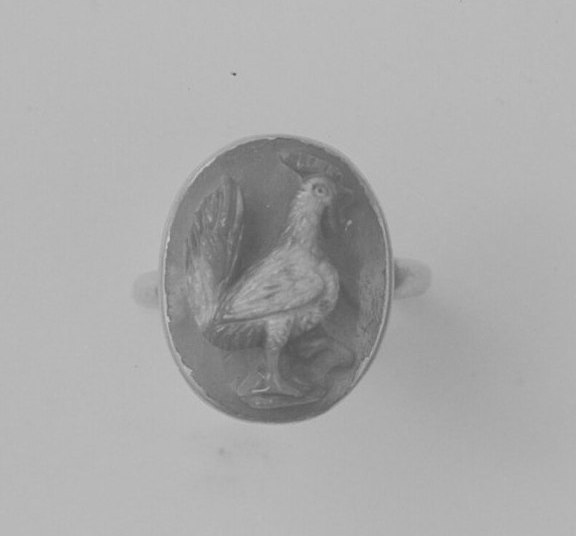
What Is a Signet Ring?
What a signet ring is, how its engraved bezel was historically used to seal documents in wax, and how it became a largely decorative, strongly male-associated accessory.

Techniques
What Is Chasing?
What chasing is, the punches, hammer and pitch bowl a chaser used, matted gold and 18th-century chased gold, and how chasing works alongside repoussé and differs from engraving.

Techniques
What Is Niello?
What niello is, how the black sulphide inlay was made and fused into silver, its history from Anglo-Saxon brooches to Tula silver, Victorian watch cases and Thai souvenirs, and how it differs from enamel.