What Is Berlin Iron Jewellery?
How the Royal Prussian Iron Foundry cast delicate black iron jewellery in the early 19th century, the 1813 'Gold gab ich für Eisen' campaign, Neoclassical and Gothic designs, and how to recognise Berlin iron today.
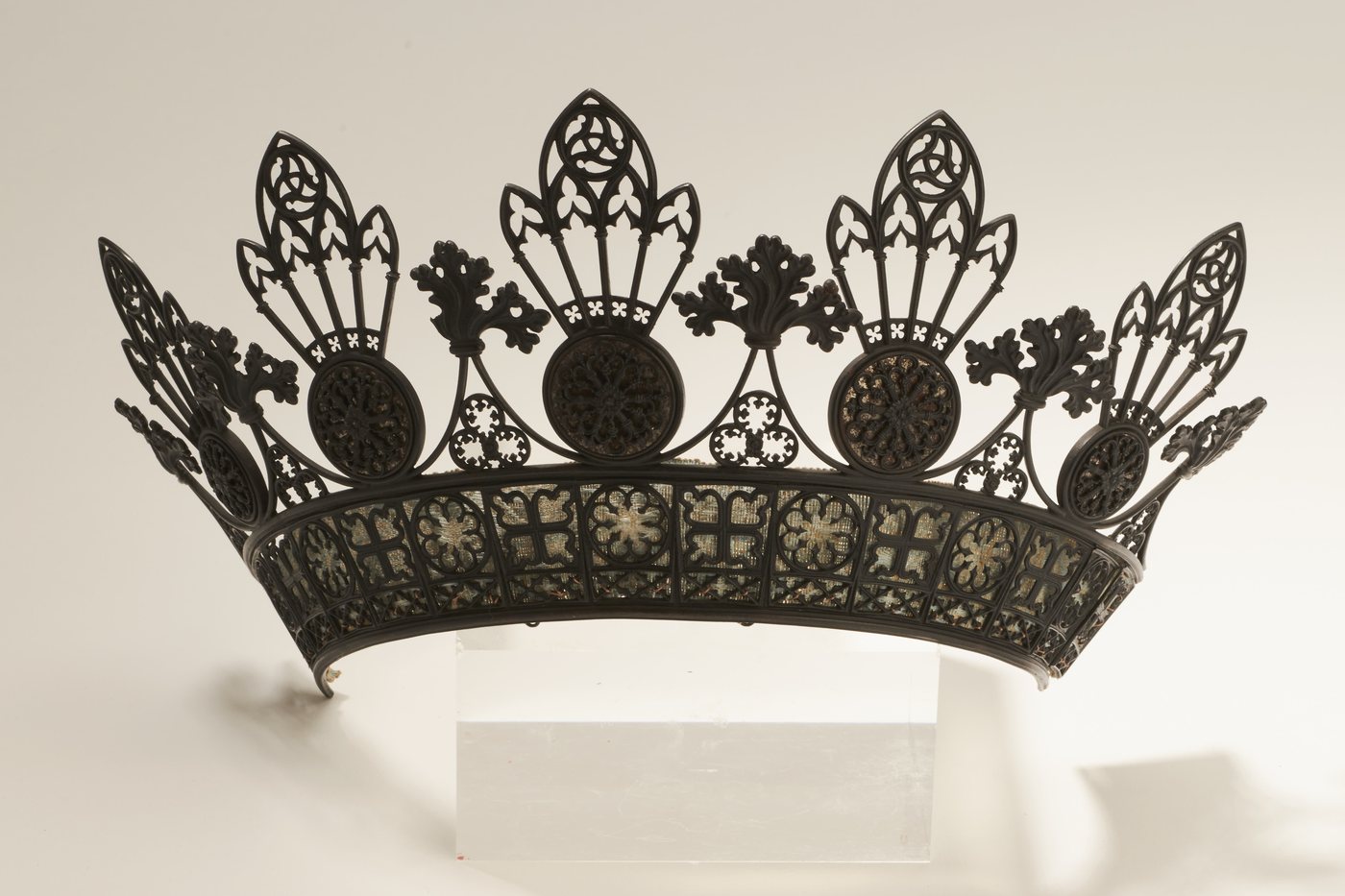
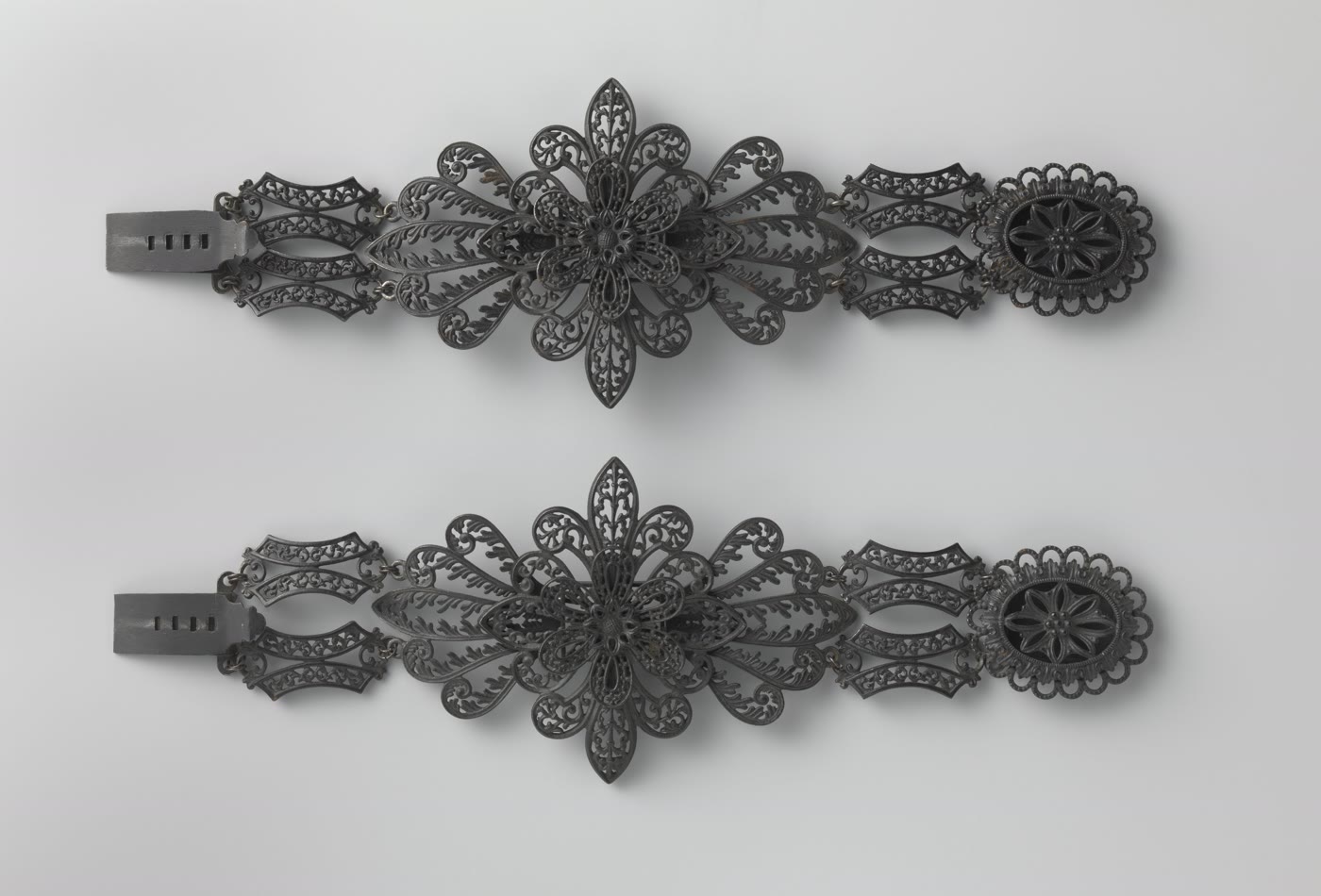
Berlin iron jewellery is delicate openwork jewellery cast in iron and finished in matt black lacquer, made mainly in Prussia between about 1806 and 1850. It is remarkable on two counts: the extraordinary fineness of its casting, and its role as a patriotic symbol during the wars against Napoleon, when Prussians exchanged their gold jewellery for iron.

The Royal Prussian Iron Foundries
The Royal Prussian Iron Foundry was established at Gleiwitz in Silesia in the 1790s, and a second foundry opened in Berlin in 1804. Both produced decorative castings - medallions, plaques and statuettes - as well as industrial work. The foundries perfected a technique of sand-casting very fine iron, which could reproduce lacy, filigree-like detail. After casting, pieces were coated with a black lacquer, traditionally made with linseed oil, to protect the iron from rust and give it an even dark finish. See What Is Casting?.
“Gold gab ich für Eisen”
In 1813, as Prussia prepared to rise against Napoleon, Princess Marianne of Prussia appealed to women to give their gold jewellery to fund the war. Donors received iron jewellery in exchange, often a ring or brooch inscribed “Gold gab ich für Eisen” (“I gave gold for iron”) or “Eingetauscht zum Wohl des Vaterlandes” (“Exchanged for the good of the Fatherland”). Wearing iron became a visible sign of patriotism and sacrifice, and iron jewellery remained fashionable in Prussia for decades after the war.
Designs
- Neoclassical: medallions with classical heads in relief, often imitating cameos, linked by fine chains; wreaths and palmettes.
- Gothic revival: from the 1820s and 1830s, pointed arches, tracery and rosettes inspired by medieval architecture. The architect Karl Friedrich Schinkel designed decorative work for the Berlin foundry, and Gothic tracery became a hallmark of the style.
- Naturalistic: vines, leaves and flowers in fine openwork.
Berlin iron was made as necklaces, bracelets, brooches, earrings, combs and full parures, and pieces were sometimes mounted in gold or combined with polished steel. Private workshops also produced iron jewellery; makers such as Johann Conrad Geiss and Siméon Pierre Devaranne sometimes marked their work.
Fashion Beyond Prussia
Iron jewellery was also made in France, Austria and elsewhere, and was bought by visitors to Berlin. Its sober black colour suited half-mourning, and it can be found alongside cut steel and jet in early 19th-century collections. By the 1850s the fashion had faded.
How to Recognise Berlin Iron Jewellery
- Colour and finish: matt or slightly satin black lacquer; worn areas may show grey metal or small spots of rust.
- Weight: surprisingly light for its size, because the castings are so thin.
- Detail: fine, lace-like openwork with crisp detail. Cameo-like medallions are often set in polished steel frames.
- Magnet: iron is attracted to a magnet, which immediately separates Berlin iron from jet, vulcanite, French jet (glass) and bog oak; see What Is Jet Jewellery?.
- Construction: links often joined with small iron or steel jump rings; clasps in gilt metal or steel.
Read next
Eras
Georgian Jewellery
A guide to Georgian jewellery (1714-1837): Brazilian diamonds, closed-back foiled settings, rococo and Neoclassical styles, paste, cut steel and pinchbeck, sentimental miniatures, girandoles, rivières and Sévigné bows.
Eras
Regency Jewellery
A guide to Regency jewellery (c.1795-1837): Empire fashion, cameos and Neoclassical parures at Napoleon's court, coloured gold and cannetille, Berlin iron and cut steel, acrostic rings, and memorial jewellery for Nelson and Princess Charlotte.
Materials
What Is Cut Steel Jewellery?
What cut steel jewellery is, from Woodstock and Matthew Boulton's Soho works to French and late Victorian work, how its faceted studs were made and set, and how to tell it from paste and marcasite.
Mourning & Sentimental
What Is Mourning Jewellery?
What mourning jewellery is, how it developed from Stuart and Georgian memorial rings, why it peaked in Victorian Britain after Prince Albert's death in 1861, and the etiquette and materials behind it.
Techniques
What Is Casting?
What casting is, how lost-wax, sand and cuttlebone casting worked, Berlin iron, centrifugal casting and rubber moulds, and how cast jewellery differs from stamped and repoussé work.

Eras
Gothic Revival Jewellery
How medieval architecture and romance shaped 19th-century jewellery: French 'cathedral style' of the 1820s-30s, Berlin iron tracery, A.W.N. Pugin's jewellery for the 1851 Great Exhibition, and the quatrefoils, crosses and black-letter inscriptions to look for.