Paste vs Rhinestone: What's the Difference?
Why paste and rhinestone describe glass simulants from different periods and manufacturing contexts, and why the two words are nonetheless often used interchangeably today.
“Paste” and “rhinestone” are both glass gemstone simulants, and both are casually called “diamante” or lumped together as “fake diamonds” today, but they belong to different periods, different manufacturing traditions, and, historically, rather different levels of craft investment.
Short Answer
Paste is a specific, typically leaded, cut and foiled glass used from the 18th century onward, hand-cut and set with considerable skill, often in closed-back settings designed to maximise its sparkle. Rhinestone (or diamante) generally refers to the far cheaper, industrially produced glass or, later, acrylic simulants that became widespread in 20th-century costume jewellery, made possible by mass manufacturing rather than individual hand-cutting.
What Is Paste?
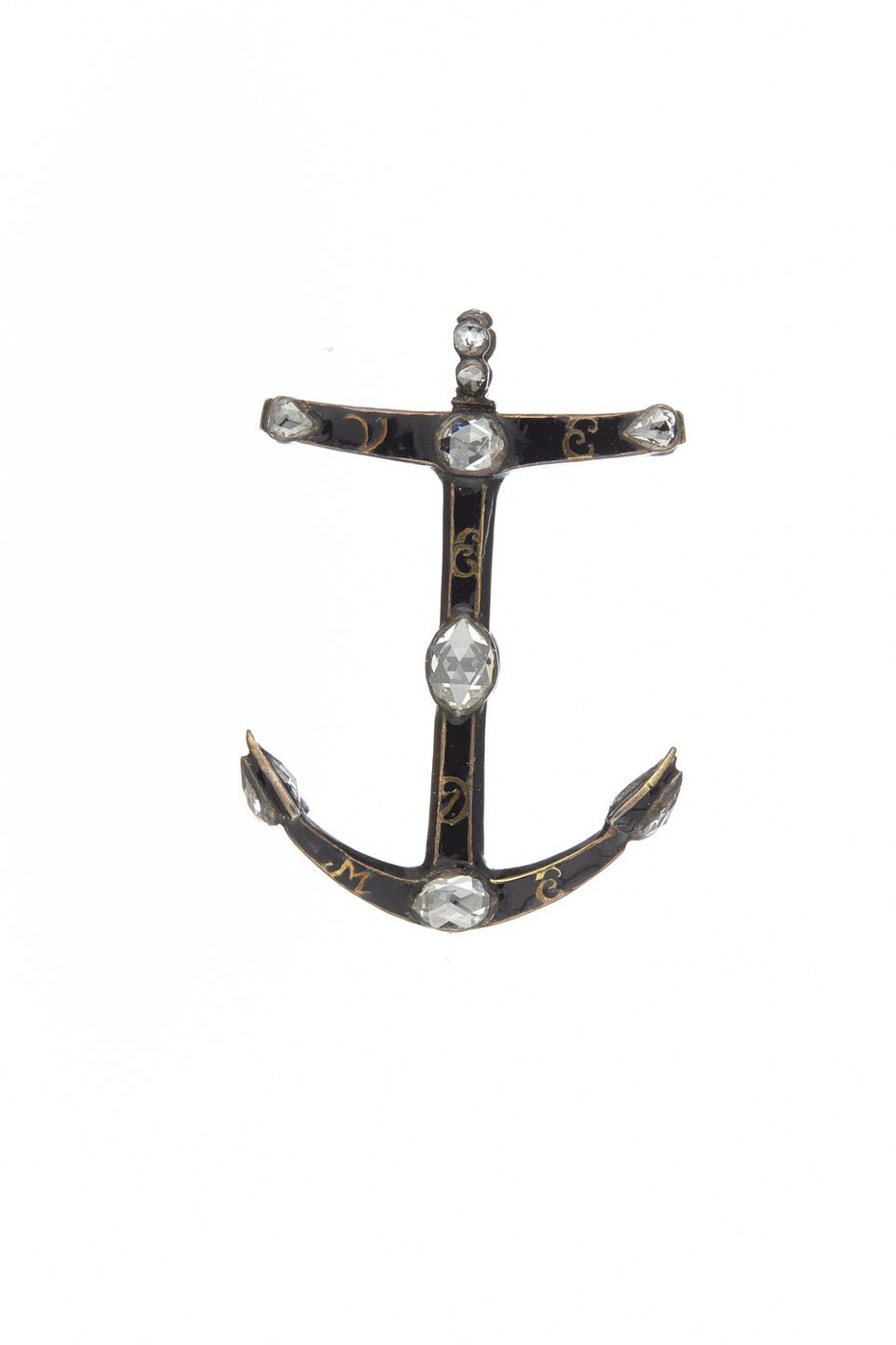
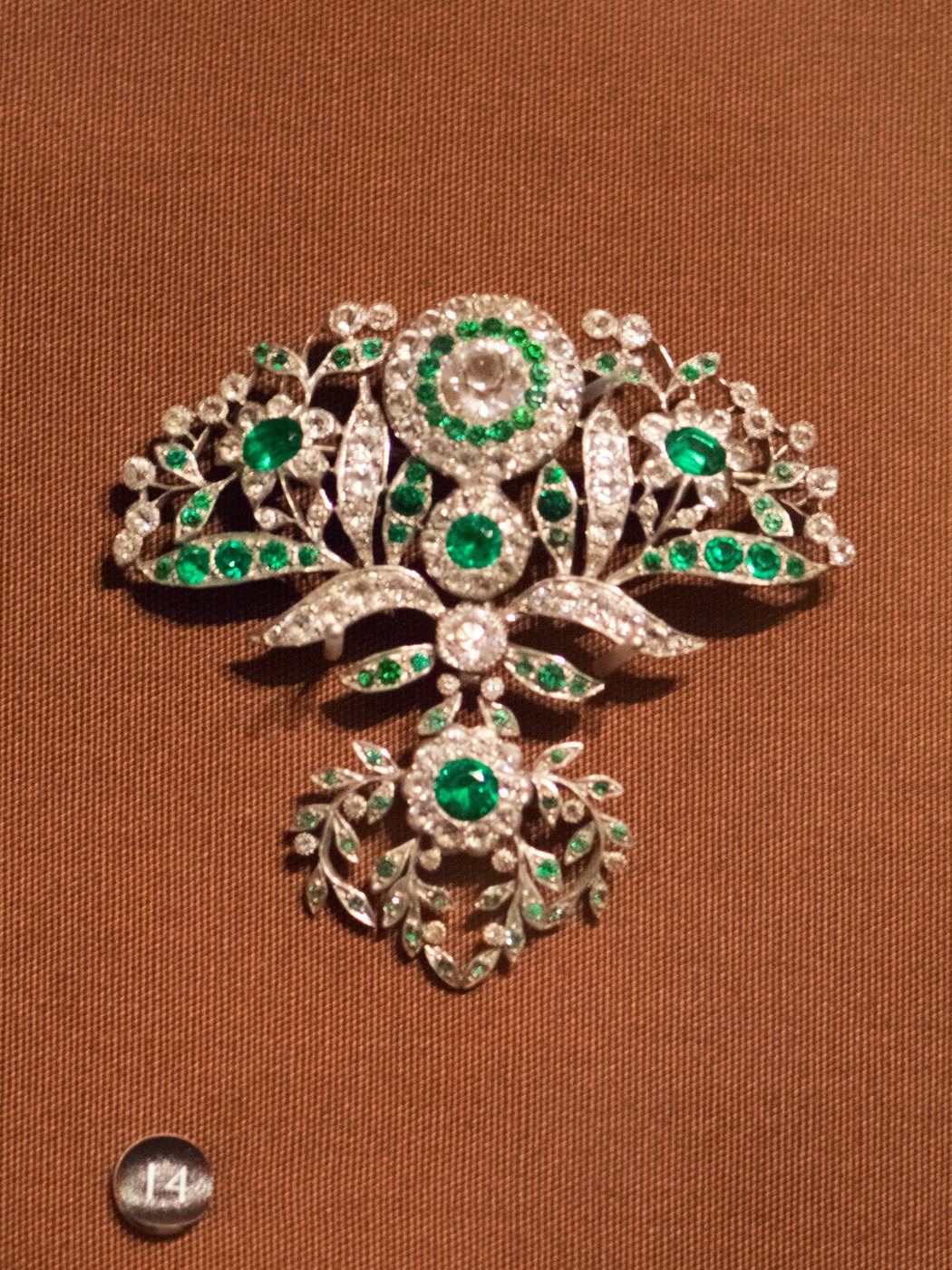
Paste is a leaded glass, formulated to be denser and more refractive than ordinary glass, historically cut by hand to imitate the brilliance of diamonds and other gemstones. From the 18th century onward, paste stones were set with real skill and care - often foiled on the back to enhance colour and sparkle, and mounted in closed-back settings similar to those used for genuine gemstones of the period. Fine paste jewellery was worn openly and valued in its own right by buyers who could not afford, or chose not to buy, gem-set jewellery, and well-made Georgian and early Victorian paste pieces are respected by collectors today as accomplished jewellery in their own right rather than mere imitation.
What Is a Rhinestone?
“Rhinestone” and “diamante” describe glass or, later, plastic and acrylic stones produced at industrial scale, typically less finely cut than paste and manufactured for volume rather than individual craftsmanship. The term’s roots trace to naturally occurring rock crystal once gathered along the Rhine, but by the 20th century it had come to mean mass-produced glass simulants generally. A major, well-documented development in this later story is the Swarovski company, which developed precision-cut crystal from the 1890s onward and went on to become a dominant supplier of machine-cut glass stones to the costume-jewellery trade across the 20th century, making finely faceted glass affordable and available at a scale earlier hand-cut paste could never match.
Key Differences
| Property | Paste | Rhinestone / Diamante |
|---|---|---|
| Typical period | Predominantly 18th-19th century | Predominantly 20th century onward |
| Material | Leaded glass, hand-cut | Glass (often unleaded or less finely cut) or acrylic/plastic, machine-cut |
| Production | Individually hand-cut and foiled by skilled workers | Mass-produced at industrial scale |
| Typical setting | Foiled, closed-back settings resembling fine gem-set work | Often open, prong or glue-set, in cast costume-jewellery mounts |
| Market context | Worn openly as respected jewellery in its own right | Mass-market costume jewellery, generally lower cost |
Historical Usage
Paste’s popularity ran through the 18th and into the 19th century, a period in which even wealthy buyers sometimes chose fine paste for its brilliance, its lighter weight compared with large gemstones, or simply as a practical, less valuable alternative for travel or everyday wear. Rhinestone and diamante belong to a distinctly later story, tied to the rise of costume jewellery as its own industry from the early to mid-20th century onward - a trade driven by mass production, changing fashion cycles, and designers who treated inexpensive glass stones as a legitimate design material rather than only a diamond substitute. Swarovski’s precision-cut crystal became a significant, sought-after component within that later costume-jewellery industry.
Where the Terms Overlap
In practice, non-specialists - and even some dealers - use “paste,” “rhinestone” and “diamante” more or less interchangeably to mean any glass gemstone simulant, regardless of its actual age or manufacturing method. This looseness causes genuine confusion, since a piece correctly identified as “paste” should generally point toward earlier, hand-worked construction, while “rhinestone” more properly signals later, mass-produced work - two different objects with different histories, even when the visual effect (bright, faceted, colourless or coloured glass standing in for gemstones) looks broadly similar to the eye. Careful cataloguing and research benefit from keeping the terms distinct where the piece’s actual construction supports it, rather than treating them as synonyms.
Related Reading
For the fuller material entry, see What Is Paste?, and for the wider category of glass used in historical jewellery, see Glass in Historical Jewellery.
Read next
Compare
Georgian vs Victorian Jewellery
How Georgian and Victorian jewellery differ in settings, techniques and motifs, and why Victorian jewellery itself spans several distinct phases.
Eras
Jewellery in the 1930s
A guide to 1930s jewellery: all-white diamond and platinum, dress clips and double clips, Van Cleef & Arpels' Mystery Set, Belperron and Boivin, Chanel and Schiaparelli, Hollywood, Bakelite and marcasite, and the move towards Retro.

Eras
Art Deco Jewellery
A guide to Art Deco jewellery (c.1915-1935): geometric symmetry, the 1925 Paris Exposition, Cartier's Tutti Frutti and Van Cleef & Arpels' Mystery Set, the modernist jewellers, new stone cuts, Egyptian and Indian influences, and costume jewellery.
Gemstones
Diamonds in Jewellery History
From Indian and Brazilian diamonds to the 1867 South African discoveries and Kimberley, famous stones such as the Regent, Hope and Cullinan, and how diamond cutting and setting changed 1700-1950.

Materials
Glass in Historical Jewellery
The roles of glass in jewellery 1700-1950: paste, Tassie's glass gems, French jet, Venetian and Bohemian beads, micromosaic, Lalique and pâte de verre - and why glass is not simply a synonym for fake.
Materials
What Is Paste Jewellery?
What paste jewellery is, from English lead glass and Georges Frédéric Strass in Paris to foiled closed settings, black-dot culets and later Bohemian stones, and why fine paste is collected today.