What Is Marcasite Jewellery?
What marcasite jewellery is (usually pyrite set in silver), its use as an affordable diamond substitute from the 18th century, the great marcasite boom of the 1920s and 1930s, and how to recognise and care for it.
Marcasite jewellery is set with many tiny faceted pieces of a brassy, metallic mineral, usually in silver, to give a glittering effect at low cost. Despite the name, almost all “marcasite” in jewellery is actually pyrite (iron sulphide, also called fool’s gold). True marcasite is a related mineral with the same chemical composition but a different crystal structure; it is unstable and crumbles over time, so it is unsuitable for jewellery. The jewellery trade has used “marcasite” for cut pyrite for centuries.

An 18th-Century Diamond Substitute
Polished pyrite was used in jewellery long before the 20th century. In the 18th century it was one of several sparkling substitutes for diamonds, alongside paste and cut steel, and it was set in silver in France, Switzerland and Britain in buckles, brooches, earrings and rings. Georgian marcasite pieces are typically set in closed-back silver with each stone held in its own collet.
The 1920s and 1930s Boom
Marcasite reached its height of popularity between the two world wars. Silver set with marcasite suited the geometric lines of Art Deco and the bolder forms of the 1930s, and it was affordable at a time of economic depression. Brooches, clips, earrings, bracelets and especially cocktail watches with marcasite-set cases and bracelets were made in enormous numbers. German manufacturers in Pforzheim, including Theodor Fahrner, combined marcasite with silver, enamel and coloured stones such as chrysoprase, onyx and amethyst; British, French and Austrian makers produced similar work. Marcasite was often combined with enamel or set around a central coloured stone or imitation pearl.
How It Is Set
Better-quality marcasite jewellery is pavé-set - each stone held in its own small hole by tiny beads of silver raised from the surrounding metal, as with diamonds. See What Is Pavé Setting?. Cheaper pieces, especially from the mid-20th century onward, often have their stones glued into place. A loupe will show the difference: set stones have small grains of metal around their edges, while glued stones sit in plain recesses.
How to Recognise Marcasite
- Small, slightly brassy grey stones with a metallic lustre, rather than the clear sparkle of glass or diamond.
- Usually set in silver, often marked “Sterling”, “925”, “935” or a continental silver standard.
- Stones are typically rose-cut or simply faceted, with flat backs.
- Pavé settings with raised grains on better pieces.
Care
Pyrite can tarnish and react with moisture, and stones can loosen or fall out. Keep marcasite jewellery dry, clean it gently with a soft brush, and avoid ultrasonic cleaners and silver dips, which can damage the stones and any glue. Missing stones are common and can be replaced by a jeweller.
Read next
Eras
Jewellery in the 1930s
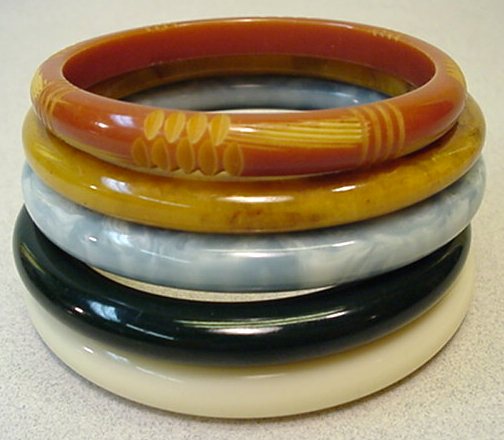
A guide to 1930s jewellery: all-white diamond and platinum, dress clips and double clips, Van Cleef & Arpels' Mystery Set, Belperron and Boivin, Chanel and Schiaparelli, Hollywood, Bakelite and marcasite, and the move towards Retro.

Eras
Art Deco Jewellery
A guide to Art Deco jewellery (c.1915-1935): geometric symmetry, the 1925 Paris Exposition, Cartier's Tutti Frutti and Van Cleef & Arpels' Mystery Set, the modernist jewellers, new stone cuts, Egyptian and Indian influences, and costume jewellery.
Materials
What Is Cut Steel Jewellery?
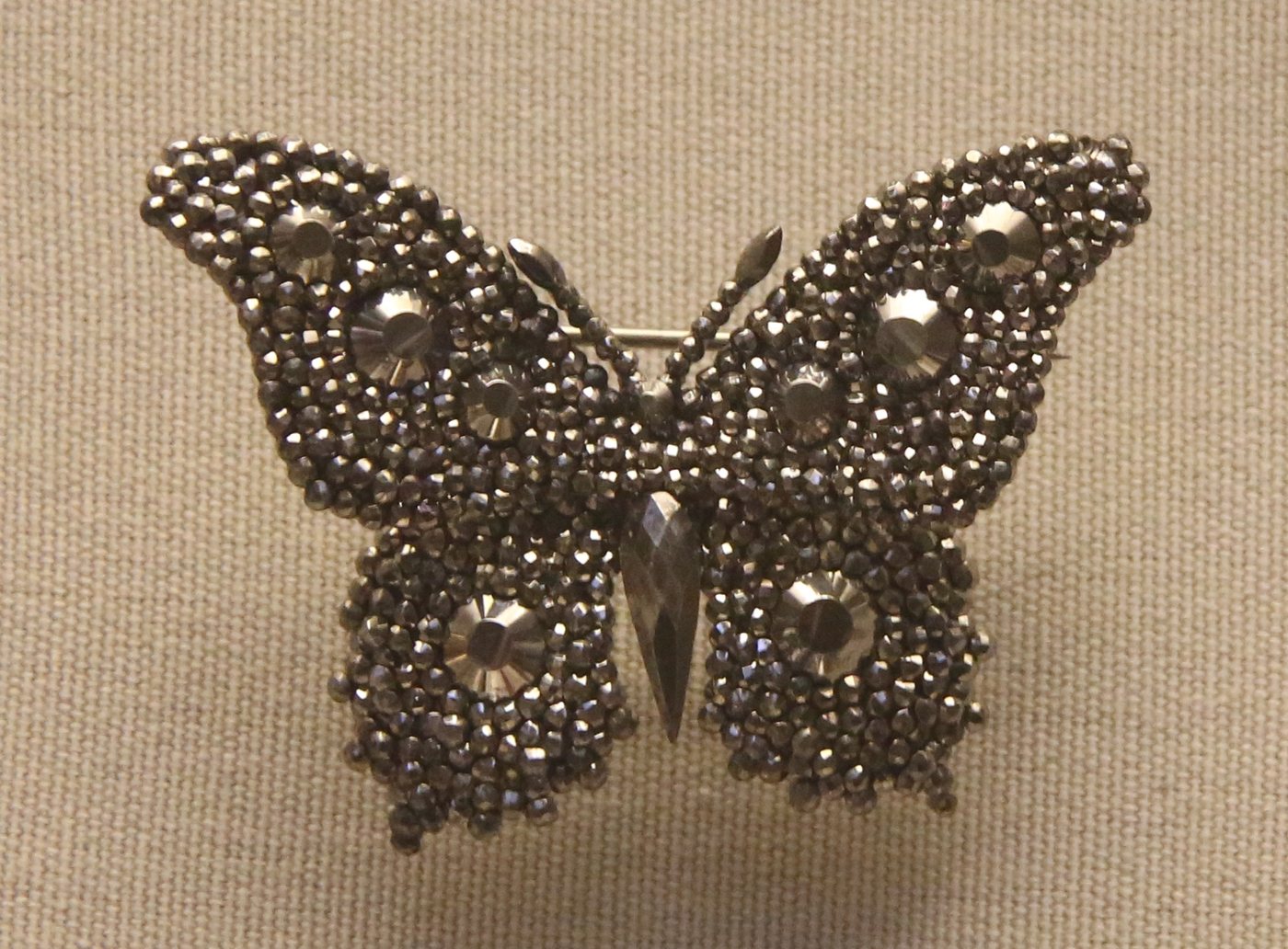
What cut steel jewellery is, from Woodstock and Matthew Boulton's Soho works to French and late Victorian work, how its faceted studs were made and set, and how to tell it from paste and marcasite.
Materials
What Is Paste Jewellery?
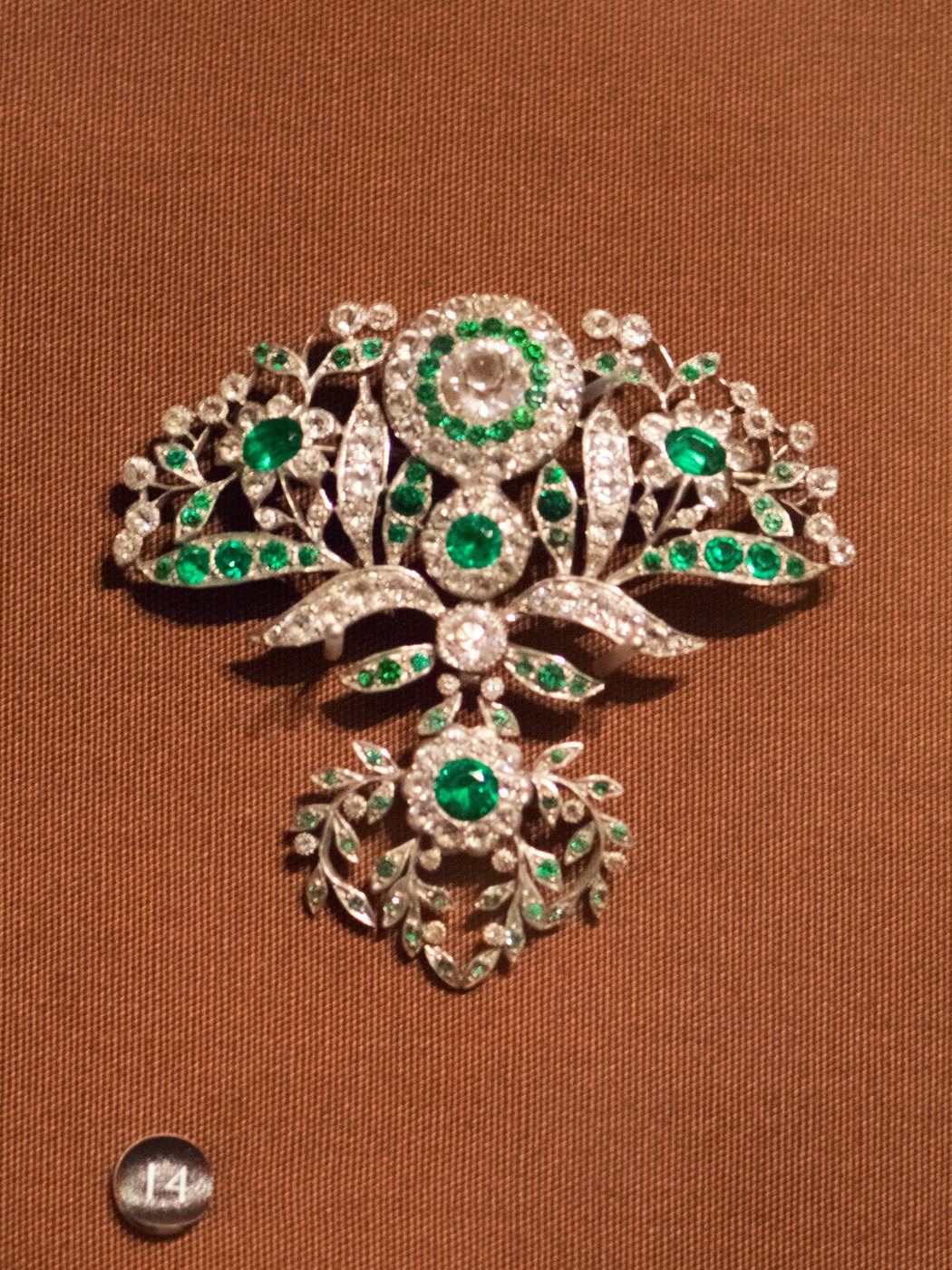
What paste jewellery is, from English lead glass and Georges Frédéric Strass in Paris to foiled closed settings, black-dot culets and later Bohemian stones, and why fine paste is collected today.

Materials
Silver in Historical Jewellery
Silver as gold's cheaper alternative, silver-topped gold settings, the Victorian silver fashion of the 1870s-80s, Birmingham's Jewellery Quarter, and Arts and Crafts silver from Ashbee to Liberty and Jensen.
Techniques
What Is Pavé Setting?
What pavé setting is, how stones were seated and held by raised beads, its use from Victorian turquoise pavé to Edwardian platinum and Art Deco work, and how it differs from channel setting.