Gold in Historical Jewellery
How gold standards, supply, colour and working methods changed from Georgian to 1940s jewellery - the 1854 standards, the gold rushes, bloomed and coloured gold, rolled gold - and gold's imitations.
Gold was the standard “real” precious metal against which historical jewellery was measured, but what counted as gold jewellery - its purity, its colour, and even how much actual gold it contained - varied considerably between 1700 and 1950.

Purity: Carats and Standards
Gold jewellery is described by carat (or karat), a measure of purity out of 24 parts, with 24-carat gold being effectively pure and lower carats indicating gold alloyed with other metals for strength, colour or cost. Fine Georgian and Victorian jewellery commonly used relatively high-carat gold, typically in the 18-22 carat range, giving it a rich, deep colour but also a softer, more easily worn or dented metal than lower-carat alloys.
In Britain the legal standards changed in a few clear steps: 22 carat was the only hallmarked gold standard until 1798, when 18 carat was added; legislation of 1854 introduced 15, 12 and 9 carat; and in 1932 the 15 and 12 carat standards were replaced by 14 carat. The 1854 change made gold jewellery affordable to a much wider market, and 9-carat gold became the everyday standard for Victorian and later British jewellery. The marks for each standard and the dates they were used are set out in British Gold Hallmarks Explained. Much Georgian and Victorian gold jewellery is unmarked, because the Plate Offences Act of 1738 exempted many small items from hallmarking.
Other countries used different standards. France marked 18 carat gold with an eagle’s head from 1838, and American jewellers mostly worked in 14 and 10 karat gold.
Gold Supply and the Gold Rushes
For most of the 18th century Europe’s gold came largely from Brazil, where major gold strikes in Minas Gerais in the 1690s produced a flood of gold through Portugal. In the 19th century a series of gold rushes changed the scale of supply:
- California, 1848 - gold found at Sutter’s Mill set off the Californian gold rush of 1849.
- Australia, 1851 - gold discoveries in New South Wales and Victoria, with Victoria’s goldfields around Ballarat and Bendigo among the richest in the world.
- South Africa, 1886 - the Witwatersrand goldfields near what became Johannesburg, which became the world’s largest source.
- Klondike, 1896 - gold in Canada’s Yukon, which drew prospectors in 1897-98.
The Californian and Australian discoveries came just before Britain’s 1854 standards, and together they turned gold from a luxury into a middle-class material. Gold rushes also left their own jewellery: Australian goldfields brooches of the 1850s and 1860s, made in Melbourne and Sydney, show miniature picks, shovels, buckets and nuggets in local gold.
Colour
Pure gold has a warm yellow colour, but alloying shifts it considerably. Rose or pink gold, produced by alloying gold with a higher proportion of copper, had periods of particular popularity - notably in parts of 19th-century Victorian jewellery and again strongly in the 1940s, when rose gold became closely associated with the jewellery styles of that decade. Green gold (alloyed with a higher proportion of silver) and white gold (alloyed with metals like nickel or palladium, and increasingly used from the early 20th century, especially through the Edwardian and Art Deco periods as platinum-look jewellery grew fashionable) both also appear across the period, though less prominently than yellow and rose gold overall.
Coloured gold was used most inventively in the 18th century. French goldsmiths combined several alloys on one object - known as quatre-couleurs (four-colour) gold - for flowers and leaves on snuffboxes, chatelaines and watch cases, and English Regency jewellers used yellow, red and green golds side by side in flower and leaf brooches.
How Gold Was Worked, Decade by Decade
- 18th century: gold was cast, chased and engraved, and gem settings were usually closed-backed and foiled, and diamonds were normally set in silver, often backed with gold, so that the white metal suited the stones.
- 1820s-1840s: gold was expensive, so jewellers made it go further. Thin sheet was stamped and embossed in repoussé, and fine coiled and twisted wire was used in cannetille and other filigree work, giving large-looking pieces that used little metal.
- 1850s-1870s: larger, heavier gold jewellery followed the new supply. “Bloomed” gold, given a soft matt, finely pitted surface by dipping it in acid that removed the alloy metals at the surface, was fashionable, as was archaeological-revival work with granulation and fine wire inspired by the Castellani firm in Rome.
- 1870s-1900: Birmingham’s Jewellery Quarter mass-produced machine-stamped 9 and 15 carat brooches, bangles and lockets, often with engraved or applied decoration.
- 1900-1930s: for fine jewellery, platinum replaced gold in the setting of diamonds, though 18 carat gold shanks and backs remained common; see Platinum in Jewellery History.
- 1940s: with platinum restricted, gold returned as the main fine-jewellery metal in the bold, sculptural Retro style, often in rose and two-colour gold.
Rolled Gold and Gold-Filled Alternatives
From the mid-19th century onward, manufacturers developed techniques for bonding a layer of genuine gold onto a base-metal core under heat and pressure, producing rolled gold and, in slightly different processes, gold-filled items. These offered the look and, to a meaningful degree, the durability of solid gold at a fraction of the material cost, since only a thin outer layer was actual gold. Rolled gold and gold-filled jewellery became increasingly common through the later 19th and into the 20th century, gradually taking over much of the market that earlier lower-cost alternatives like pinchbeck had served, though pinchbeck itself had already gone out of fashion by the time rolled gold became dominant. Birmingham was the main British centre of rolled-gold manufacture, and in the United States Providence, Rhode Island, and Attleboro, Massachusetts, became the centres of the gold-filled trade, marking pieces with the gold content as a fraction, such as “1/20 12K GF”. Electrogilding, patented by Elkington in Birmingham in 1840, gave a thinner coat of gold by electrolysis; see What Is Gilt Jewellery?.
Gold as the Benchmark for Imitations
Gold’s status as the genuine, valuable standard is precisely what gave rise to its historical imitations. Pinchbeck, a copper-zinc alloy popularised in early 18th-century London, was developed specifically to resemble gold’s colour closely enough to serve as an honest lower-cost substitute in jewellery and watch cases. In a related but distinct way, paste jewellery addressed the imitation of gemstones rather than gold itself, but it was very often set into gold or gilt-metal mounts, so the two forms of imitation - imitation gold and imitation gemstone - frequently appeared together in the same affordable pieces aimed at buyers who wanted the appearance of fine jewellery without its full cost.
How to Recognise Gold Jewellery’s Period
Carat standard alone is not a reliable dating tool on its own - since the same standards have remained legal for well over a century in Britain - but hallmarks, where present, can help narrow a date and origin considerably, and the overall colour, construction technique and style of a gold piece often give a stronger sense of its period than the metal alone. Hallmark reading and metal testing by a qualified jeweller offer more reliable answers than visual inspection alone, particularly for pieces without a legible mark.
Frequently Asked Questions
Is higher-carat gold always older? Not necessarily - high-carat gold remained in use throughout the period for finer jewellery even as lower-carat standards became legal and common for more affordable pieces, so carat alone does not reliably date a piece.
How can I tell rolled gold from solid gold? Rolled gold typically shows base metal where the gold layer has worn through at edges, hinges or high-contact points, a wear pattern solid gold does not show in the same way; a jeweller can confirm this more reliably than visual inspection alone.
Read next

Eras
Art Deco Jewellery
A guide to Art Deco jewellery (c.1915-1935): geometric symmetry, the 1925 Paris Exposition, Cartier's Tutti Frutti and Van Cleef & Arpels' Mystery Set, the modernist jewellers, new stone cuts, Egyptian and Indian influences, and costume jewellery.

Eras
Edwardian Jewellery
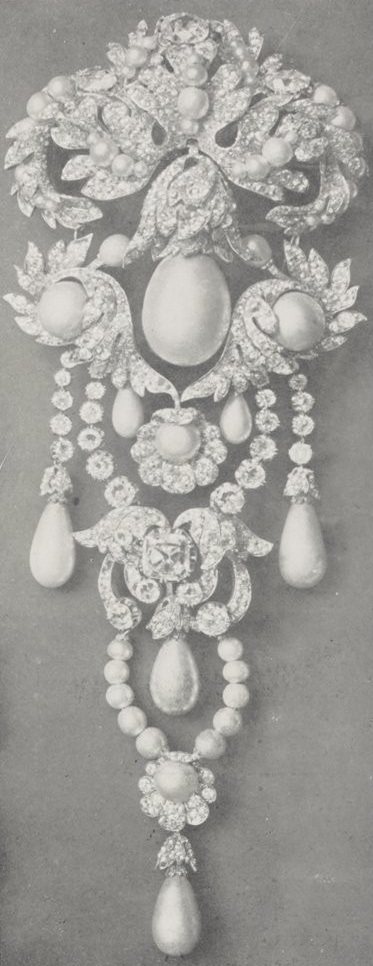
A guide to Edwardian jewellery (1901-1915): platinum and the garland style, Queen Alexandra's dog collars, Cartier, Boucheron and Fabergé in London, the Cullinan diamond, lavaliers, milgrain settings and day jewellery.
Eras
Georgian Jewellery
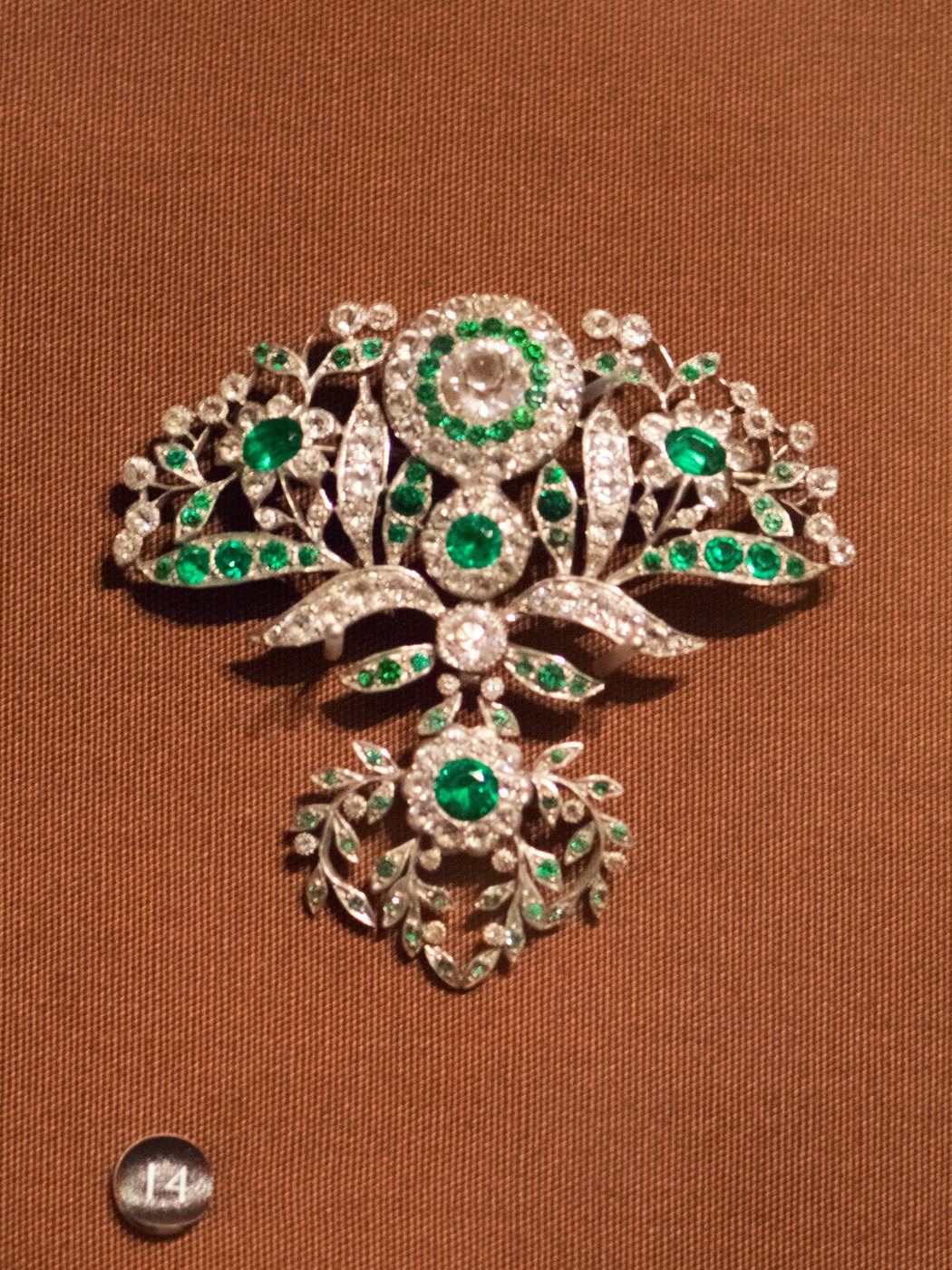
A guide to Georgian jewellery (1714-1837): Brazilian diamonds, closed-back foiled settings, rococo and Neoclassical styles, paste, cut steel and pinchbeck, sentimental miniatures, girandoles, rivières and Sévigné bows.
Eras
Victorian Jewellery
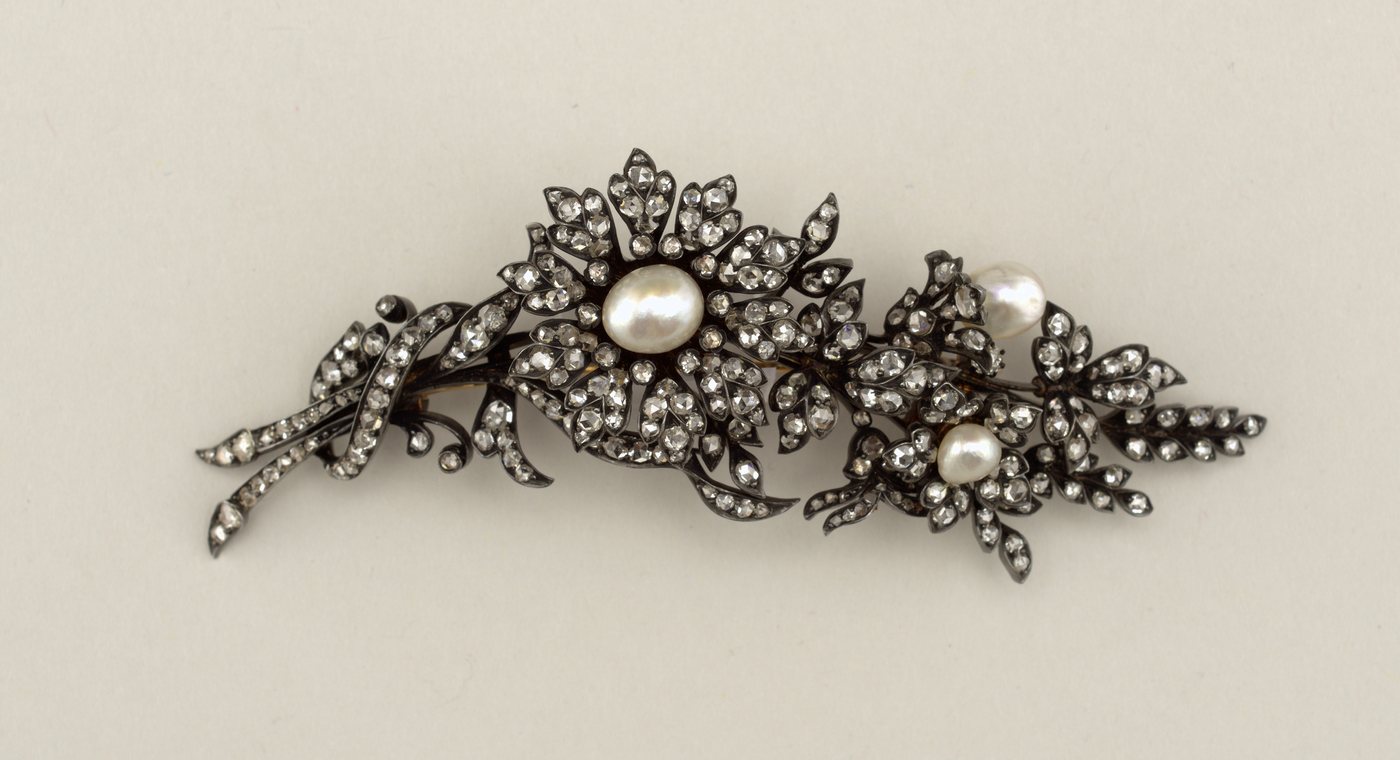
A guide to Victorian jewellery (1837-1901): the Romantic, Grand and Aesthetic periods, the Great Exhibition, gold rushes and 9ct gold, mourning and Whitby jet, archaeological revival, Scottish jewellery, and how to recognise each phase.
Materials
What Is Paste Jewellery?
What paste jewellery is, from English lead glass and Georges Frédéric Strass in Paris to foiled closed settings, black-dot culets and later Bohemian stones, and why fine paste is collected today.

Materials
What Is Pinchbeck?
What pinchbeck is, how Christopher Pinchbeck's gold-coloured alloy imitated gold in Georgian jewellery and watch cases, why it declined after 1854, and how it is collected today.