What Is a Locket?
What a locket is, how its hinged compartment was used to hold a photograph, portrait or hair, and how the form evolved from plain Georgian cases to elaborate Victorian mourning lockets.
A locket is a pendant that opens on a hinge to reveal a small compartment, most often used to hold a photograph, a portrait miniature or a lock of hair.
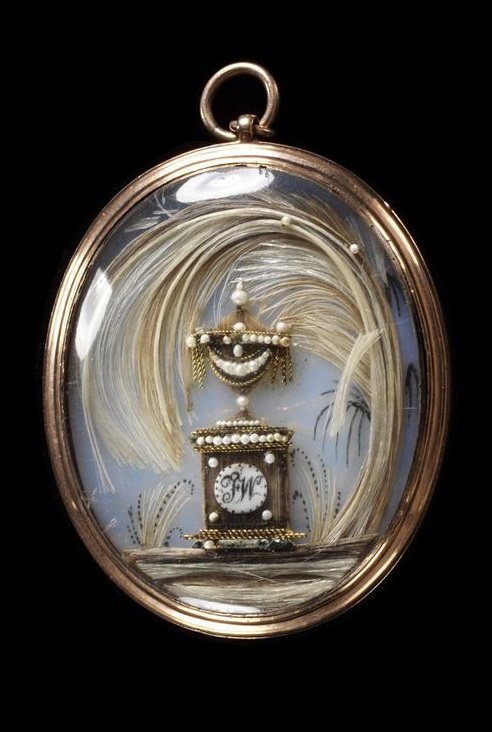
What Is a Locket?
A locket is defined by its opening mechanism rather than its outward shape: beneath a decorated front, a hinged back or a front-and-back pair of glazed or plain compartments swings open to reveal a space for keeping something close to the body and hidden from casual view. That combination of concealment and sentiment made the locket one of the most enduring vehicles for personal, rather than purely decorative, jewellery from 1700 to 1950.
How to Recognise It
Look for a visible hinge along one edge and a small catch, clasp or simple friction fit holding the two halves closed on the opposite side; a genuine antique locket usually shows some wear around the hinge and catch from repeated opening. Inside, a glazed compartment (a small pane of glass protecting a photograph or hairwork) is common throughout the period, holding hairwork or a miniature in Georgian lockets and, from the mid-19th century, a photograph.
When Was It Worn?
Lockets were worn at the neckline on a chain throughout the period, with particular intensity during the mid-to-late Victorian era, when the custom of keeping a photograph or hair of a loved one, living or deceased, close to the body was especially widespread.
Origins
Small hinged cases for holding a keepsake or a dose of scent or medicine predate the specifically photographic and sentimental lockets of the 19th century; Georgian lockets often held a portrait miniature, a woven-hair device, or a written or painted sentiment rather than a photograph, since photography itself did not exist until the late 1830s and did not become widely affordable until decades later.
How It Changed Over Time
Georgian lockets tended to be relatively plain gold or gilt-metal cases, often holding a portrait miniature, a sentimental inscription, or an early hairwork device under glass. As photography spread from the mid-19th century, lockets increasingly held a small photographic portrait, and the mid-Victorian mourning period produced large numbers of lockets combining a photograph compartment with a separate space for hair, frequently finished in black enamel or set with jet. Later Victorian and Edwardian lockets grew more decorative on the outside, in repoussé gold, engraved patterns or set gemstones, while the functional compartment inside changed comparatively little.
Materials
Gold was the standard material for finer lockets, with silver and gilt base metals common for less expensive versions. Black enamel, jet and other mourning materials appear frequently on lockets made to commemorate a death, and the compartment itself sometimes incorporated woven or plaited hair as a lasting keepsake; see What Is Hair Jewellery? for more on this practice.
Construction
A locket body is typically formed from two shallow, matching sections joined by a hinge on one side, with a catch or simple friction closure on the other. Compartments may be plain, velvet-lined, or fitted with a thin glass pane held by a metal bezel to protect a photograph or hairwork from handling.
How It Was Worn
Suspended from a chain at the neckline, much like any other pendant, though a locket’s sentimental content meant it was also commonly kept out of sight beneath clothing rather than displayed purely for effect.
Who Wore It?
Lockets were worn overwhelmingly by women across the period, though men also wore lockets, particularly mourning lockets and lockets containing a portrait of a wife, mother or sweetheart, often on a watch chain or separate neck chain.
Notable Variations
- Mourning locket - a locket made or adapted specifically to commemorate a death, often combining a photograph compartment with a hair compartment; see Mourning Jewellery.
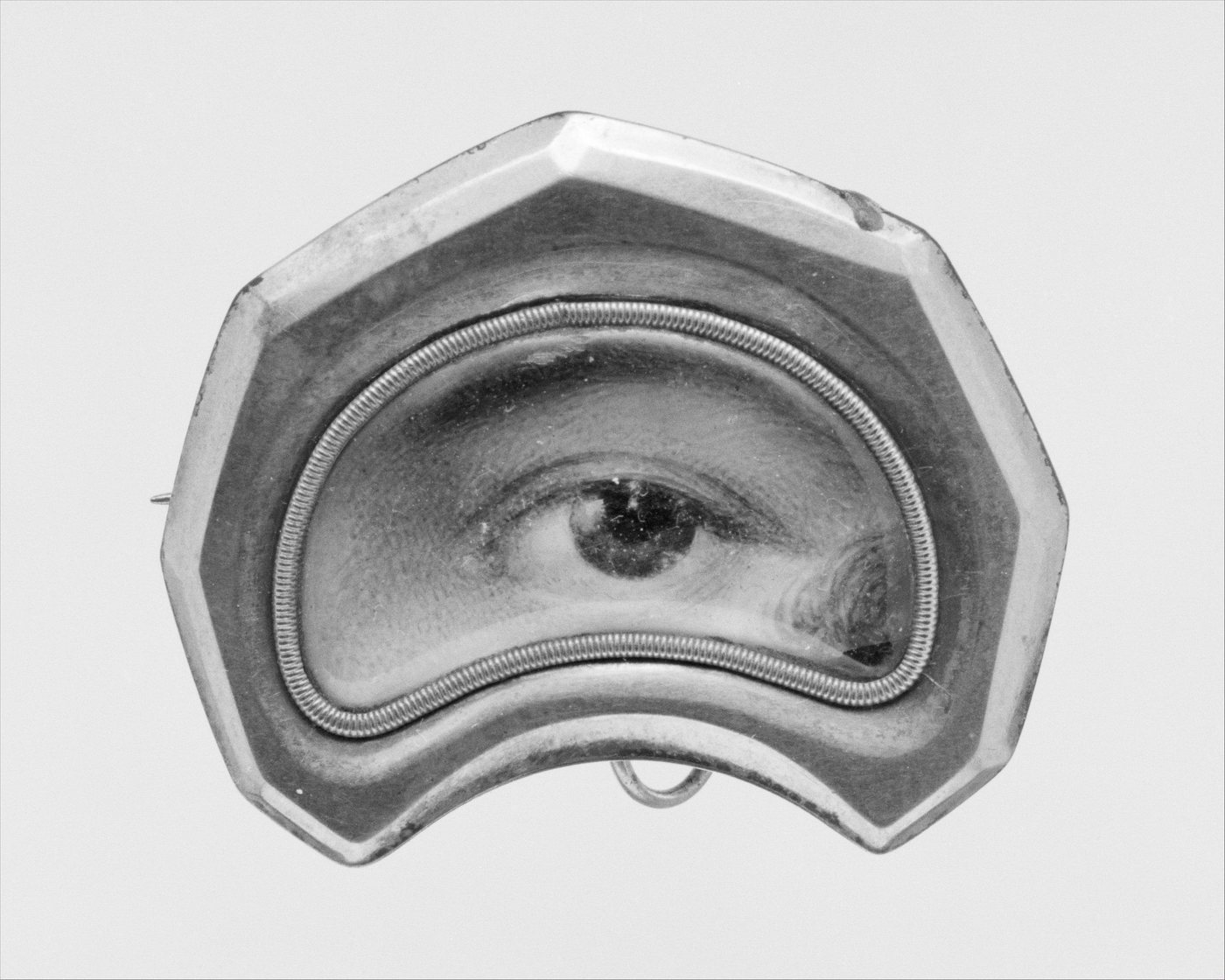
- Lover’s eye locket - a rarer, highly personal form set with a painted miniature of a single eye rather than a full portrait, intended to be recognisable only to the intended recipient.
- Photograph locket - the most common later Victorian and Edwardian form, holding one or two small photographic portraits under glass.
Terminology
“Locket” is sometimes used loosely for any hinged pendant, but the term is most accurately reserved for pieces with a genuine internal compartment, distinguishing it from a solid pendant that merely resembles one from the front.
Similar Jewellery
Lockets are easily confused with solid pendants of similar outward shape; checking for a hinge and an internal compartment is the most reliable way to tell them apart. They also overlap with mourning brooches that incorporate a similar hidden compartment for hair or a photograph.
Examples in Museum Collections
- Memorial locket for L.B.F., English, 1871-72. Victoria and Albert Museum, London, M.11-1972. Gold, diamonds and enamel. It still holds a photograph of a young woman on one side and a lock of hair on the other, and is inscribed “In remembrance of L.B.F. Oct 7th 1871”.
- Locket for Louisa and Frances Bohun, 1816. Victoria and Albert Museum, London, M.117-1962. Enamelled gold with a miniature of Louisa on the front and her sister Frances’s hair under glass on the back; both girls died in 1816. See What Is Hair Jewellery?.
- Locket with photographs of Princess May of Teck and the Duke of Clarence, Birmingham, 1891-92. Victoria and Albert Museum, London, M.10-1992. A double-sided silver locket with photographs behind glass, probably made for the couple’s engagement - the inexpensive late Victorian photograph locket.
Read next
Jewellery
What Is a Pendant?
What a pendant is, how it differs from an integrated necklace centrepiece, and how forms like the locket, lavalier and negligee pendant developed within the broader category.

Mourning & Sentimental
What Is Hair Jewellery?
What hair jewellery is, how table-work and palette-work hairwork were made, the hairworkers and manuals behind the craft, and why it served sentimental as well as mourning purposes.
Mourning & Sentimental
What Is Lover's Eye Jewellery?
What lover's eye jewellery is, the Prince of Wales, Maria Fitzherbert and Richard Cosway story behind it, how eye miniatures were painted and mounted c.1785-1830, and why they are rare.

Mourning & Sentimental
What Is a Memorial Brooch?
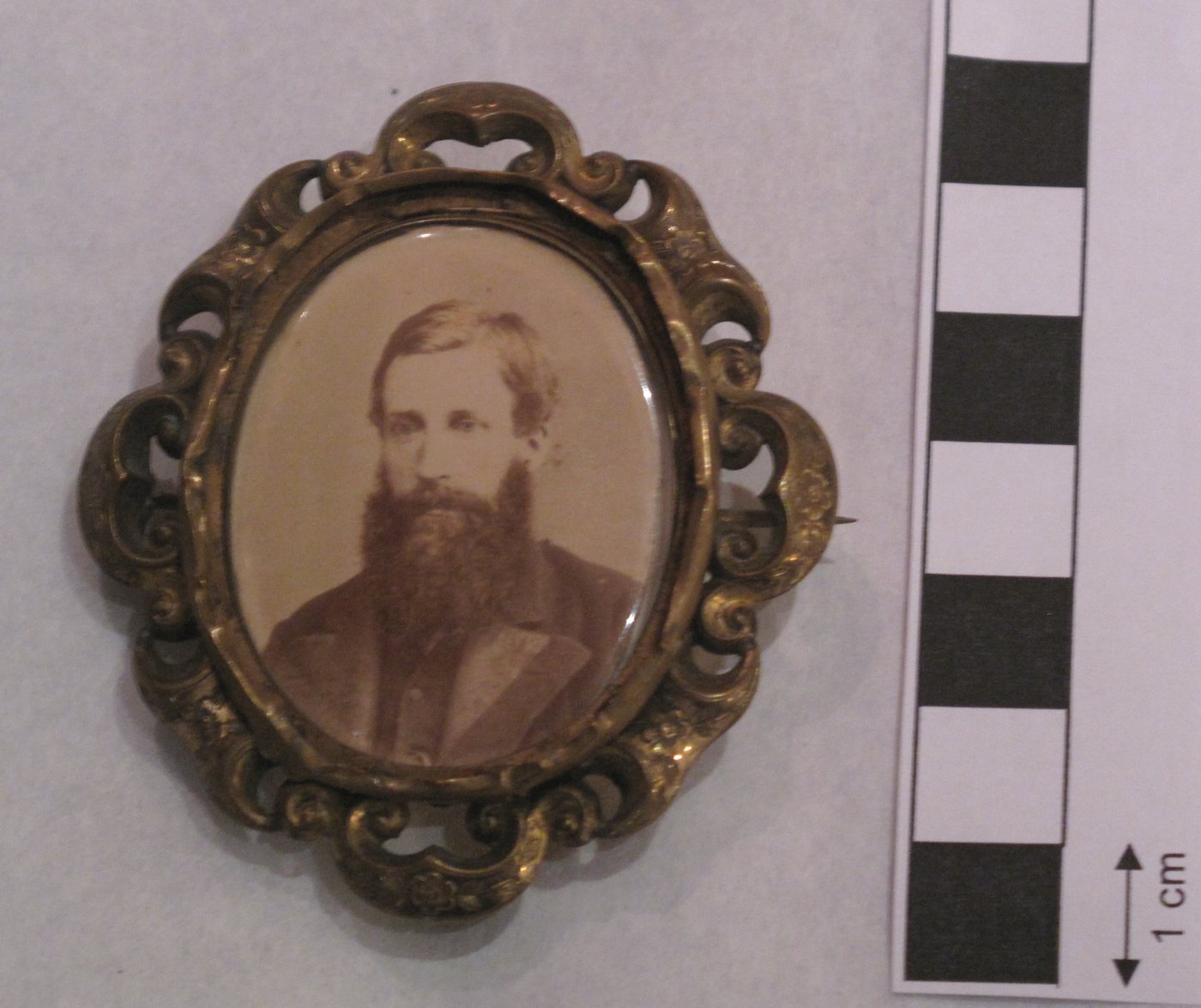
What a memorial brooch is, how its design changed from Georgian sepia-and-hair brooches to Victorian black-enamel and photographic brooches, and how it differs from general mourning jewellery.
Mourning & Sentimental
What Is Mourning Jewellery?
What mourning jewellery is, how it developed from Stuart and Georgian memorial rings, why it peaked in Victorian Britain after Prince Albert's death in 1861, and the etiquette and materials behind it.