What Is Granulation?
What granulation is, how granules were made and fixed, its Etruscan origins, the Castellani and Giuliano revival, and Littledale's 1930s reconstruction of the ancient method.
Granulation is a goldsmithing technique in which tiny spheres of metal, known as granules, are fixed onto a metal surface in patterns, ideally without any solder being visible on the finished piece.
What Granulation Is Structurally
A granulated surface is built from large numbers of very small metal spheres - sometimes only fractions of a millimetre across - arranged on a background sheet to form lines, triangles, lozenges, rosettes, borders or whole figures. Unlike engraving or stamping, which alter or remove metal from an existing surface, granulation adds material, building up a raised texture from many separate units. Fixing the granules so that they hold firmly without melting, slumping or leaving pools of solder depends on precise control of granule size and heat.
How Granules Were Made and Fixed
Granules were made by cutting gold wire or sheet into tiny snippets of equal size, laying them in a crucible between layers of powdered charcoal, and heating it. Each snippet melted and drew itself into a sphere, kept apart from its neighbours by the charcoal. After cooling, the charcoal was washed away and the granules were sorted by size through sieves.
The granules were then picked up with a fine brush or tweezers and placed on the gold surface, held temporarily with an organic glue. There are three broad ways to fix them:
- Conventional soldering. Tiny amounts of solder are applied and the piece is heated until the solder flows. This works but tends to leave visible fillets of solder and can flood the spaces between grains. Most 19th-century revival work used variants of this method.
- Colloidal (diffusion) hard soldering. A copper compound is mixed into the glue. On heating, the glue carbonises and reduces the copper compound to metallic copper, which alloys with the gold only at the tiny points of contact, bonding each granule with almost no visible joint. This is now accepted as the essence of the ancient method.
- Fusing. Heating the work to just below the melting point so that granule and ground fuse directly - very hard to control without melting the granules.
Ancient Origins
Granulation was practised in Mesopotamia, Egypt and the eastern Mediterranean from the third millennium BC and reached Greece and Italy through Phoenician and Greek contact. Etruscan goldsmiths of the 7th and 6th centuries BC took it furthest. Their finest work used grains so small that they look like a frosting of gold dust, a style known in Italian as pulviscolo (“dust”). Rich examples came from Etruscan tombs excavated in the 19th century, including the Regolini-Galassi tomb at Cerveteri, found in 1836, whose contents are now in the Vatican’s Gregorian Etruscan Museum.
A Lost and Rediscovered Technique
Coarser granulation survived in folk and regional goldsmithing in parts of Europe, India and the Middle East, but the very fine, solder-free Etruscan standard did not. When excavated Etruscan gold began reaching collections in the 1820s and 1830s, jewellers who handled it could not explain how it had been made.
The Castellani Revival
The Castellani firm in Rome, founded by Fortunato Pio Castellani in 1814 and continued by his sons Alessandro and Augusto, made granulation central to its archaeological-revival jewellery from the 1830s onwards. Alessandro Castellani later wrote that the family had looked for surviving traditional methods among goldsmiths in the Marche region of central Italy, in the small town of Sant’Angelo in Vado, and had trained craftsmen there. He also acknowledged that the firm had not fully recovered the ancient technique, and Castellani granulation, though very fine, generally shows slightly larger and less even grains than the best Etruscan work.
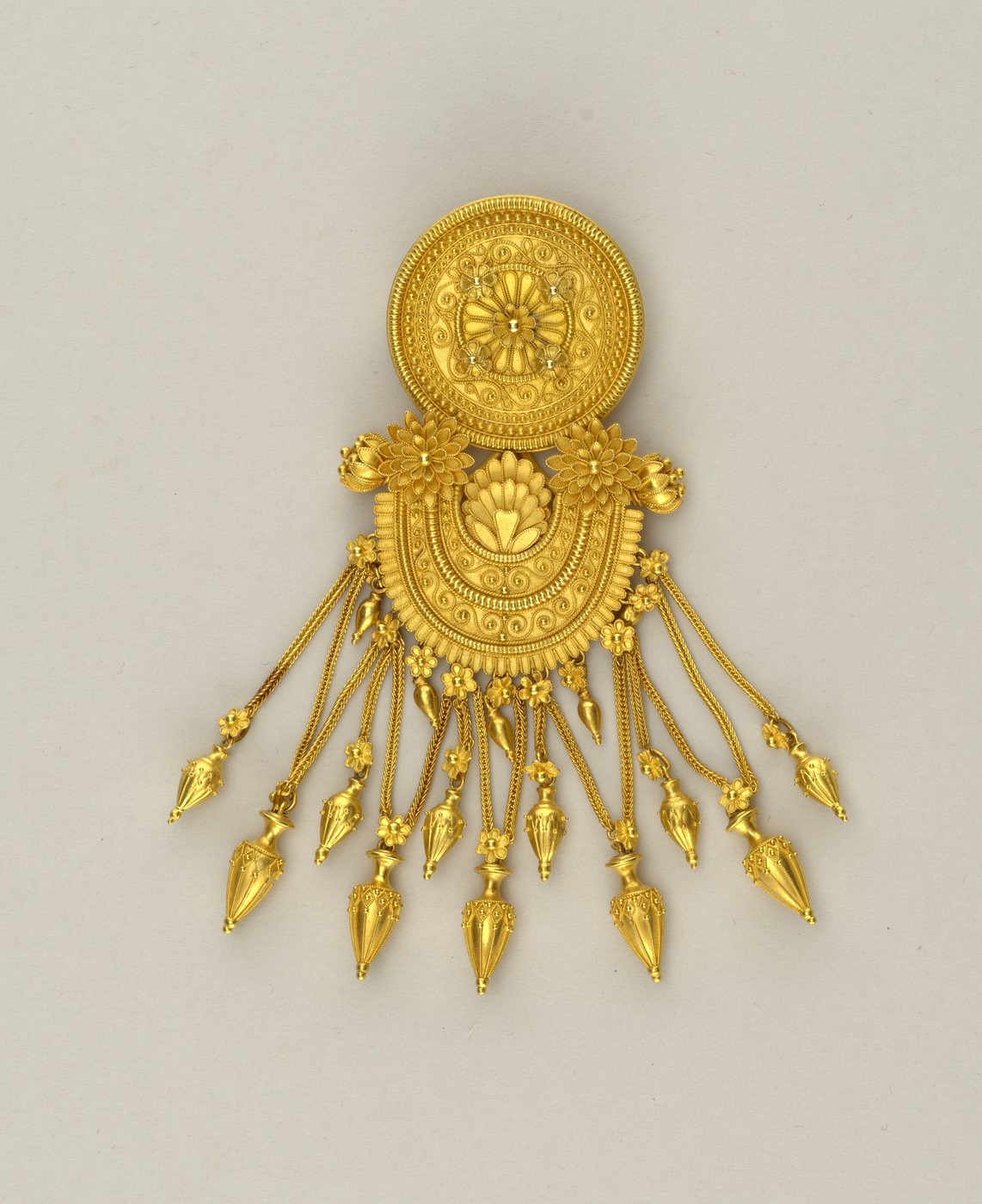
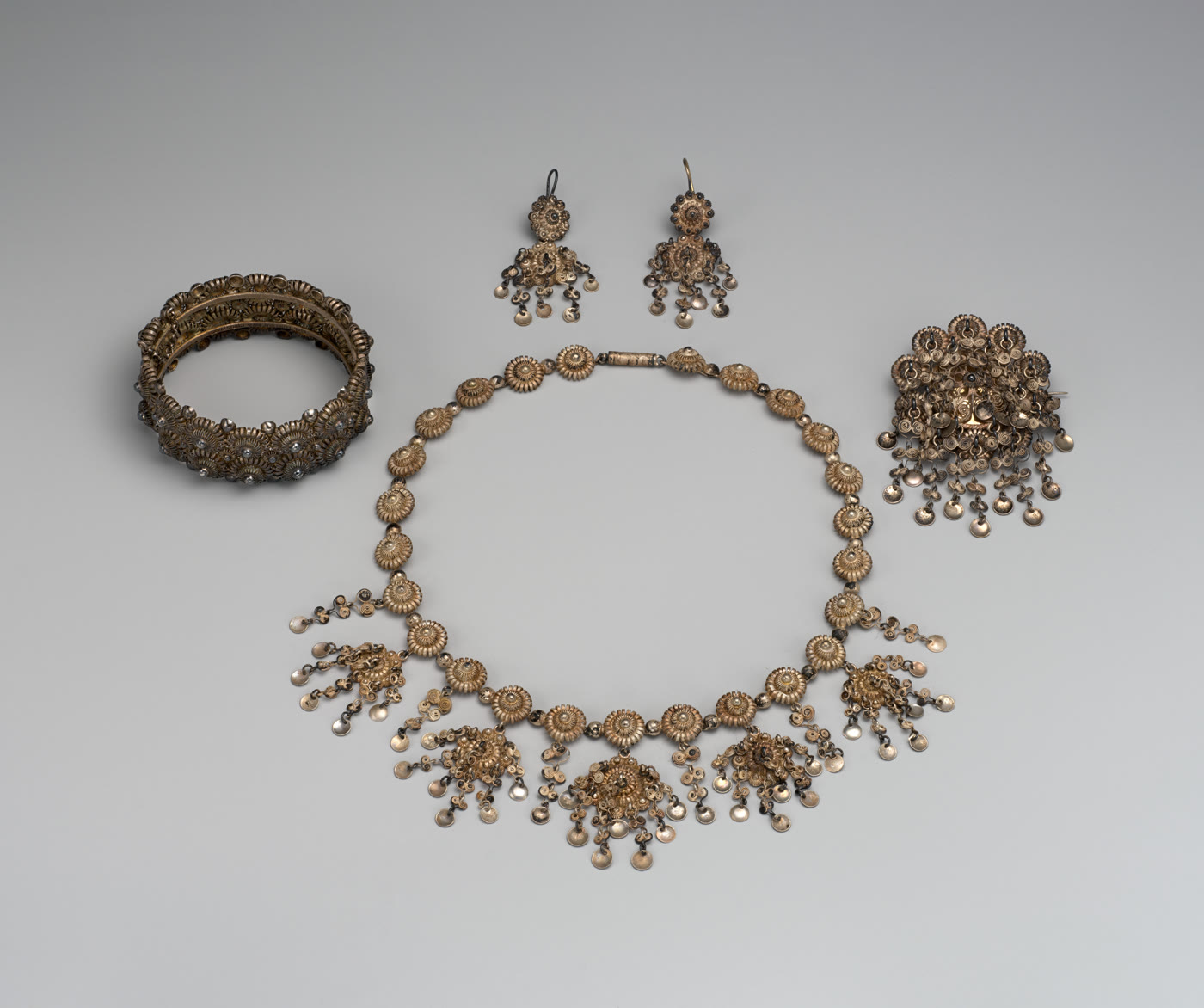
The style spread through Castellani’s pupils and rivals. Giacinto Melillo ran the firm’s workshop in Naples and continued it under his own name; Carlo Giuliano, also from Naples, brought it to London around 1860; John Brogden worked in a similar style in London; and Eugène Fontenay produced granulated Etruscan-style jewellery in Paris. It became fashionable well beyond Italy during the mid-Victorian period, helped by the Castellani displays at the international exhibitions of the 1860s. The Kul Oba-style brooch shown above draws on Greek gold found in 1830 in a Scythian burial mound at Kul Oba in the Crimea.
The 20th-Century Reconstruction
In the 1930s the Englishman H.A.P. Littledale demonstrated and patented the colloidal hard-soldering method described above, the first convincing reconstruction of how ancient granulation was done. In Germany around the same time Elisabeth Treskow, working in Essen and later Cologne, also achieved very fine granulation and made it a feature of her own jewellery. Since then fine granulation has been taught as a studio technique.
Granulation Versus Filigree
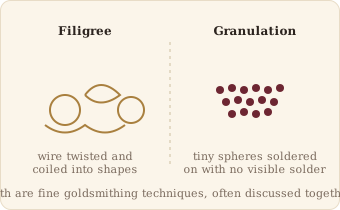
Granulation is often found alongside filigree, and the two are easily confused since both appear on elaborate archaeological-revival and earlier jewellery. Filigree is built from twisted or plaited wire bent into pattern, while granulation is built from tiny spheres with no wire structure. Many pieces combine both, using wire for a framework and granules for texture or fill within it.
How to Recognise It
Look for a surface built from many tiny, individually distinct round beads of metal, evenly sized and densely packed, rather than a continuous wire pattern or a cast or stamped relief surface. Under magnification, well-executed granulation shows crisp, separate spheres with little or no solder between them; 19th-century revival work often shows small fillets of solder at the base of each grain. Mass-produced Victorian “Etruscan” jewellery, much of it made in Birmingham, imitated granulation with stamped beading on thin sheet gold, which shows hollow half-spheres from the back and perfectly regular spacing.
Frequently Asked Questions
Is all granulated jewellery ancient? No - fine granulation was produced from the mid-19th-century revival onward, and archaeological-revival granulated jewellery is a recognised and collected category of 19th-century, not ancient, jewellery.
Can granulation be told apart from stamped imitation beading without magnification? Not always reliably - close examination, ideally with magnification and a look at the back of the piece, is generally needed to distinguish applied granules from stamped or cast beading.
Read next
Eras
Georgian Jewellery
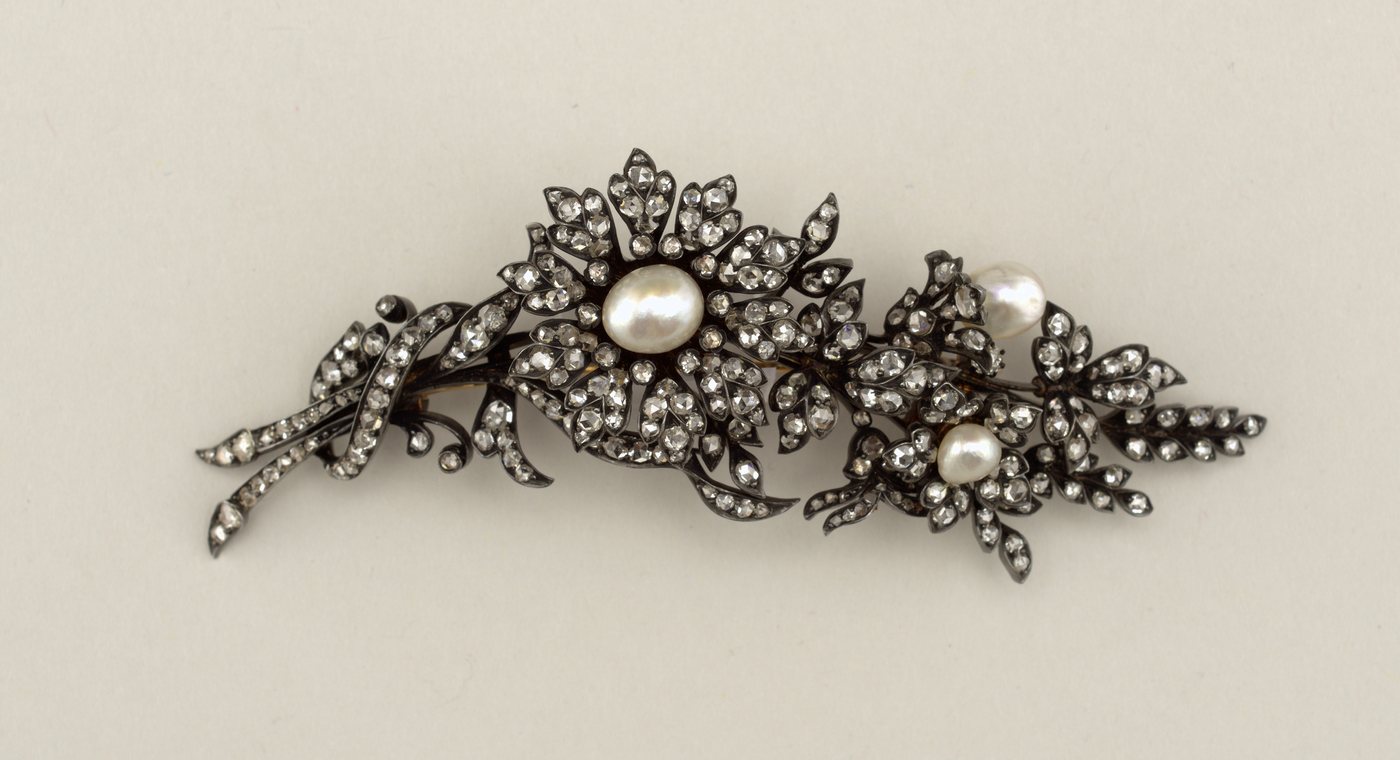
A guide to Georgian jewellery (1714-1837): Brazilian diamonds, closed-back foiled settings, rococo and Neoclassical styles, paste, cut steel and pinchbeck, sentimental miniatures, girandoles, rivières and Sévigné bows.
Eras
Victorian Jewellery
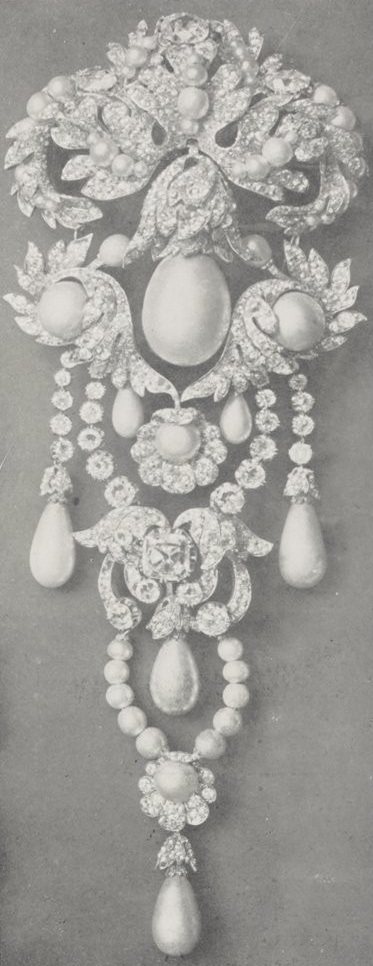
A guide to Victorian jewellery (1837-1901): the Romantic, Grand and Aesthetic periods, the Great Exhibition, gold rushes and 9ct gold, mourning and Whitby jet, archaeological revival, Scottish jewellery, and how to recognise each phase.
Techniques
What Is Filigree?
What filigree is, how the wire was drawn and soldered, cannetille c.1815-40, Genoese, Maltese and Portuguese filigree, Castellani revival work and die-struck 1920s 'filigree' rings.

Techniques
What Is Micromosaic Jewellery?
How Roman micromosaic was made from smalti filati, its roots in the Vatican Mosaic Studio, the makers who led it, and how it became a Grand Tour souvenir from the 1770s to the 1870s.

Eras
Archaeological Revival Jewellery
How the Castellani of Rome, Carlo Giuliano in London and others revived Etruscan, Greek and Roman goldwork in the 19th century - granulation, filigree, mounted coins and scarabs - and how to recognise revival jewellery and its mass-produced imitations.