Tiara vs Diadem: What's the Difference?
The strict distinction between a tiara and a diadem, and why the two words are used so interchangeably in practice.
“Tiara” and “diadem” both describe an ornament worn on the head, and in everyday and even much jewellery-trade usage they are treated as synonyms - but there is a stricter historical distinction between them worth knowing, even if practice rarely observes it consistently.
Short Answer
In the strictest sense, a diadem is a full closed circlet that encircles the entire head, while a tiara is an arc or band, typically open or lower at the back, that sits across the front and top of the head - but the two terms are used loosely and interchangeably across most general and even some specialist writing.
What Is a Tiara?
A tiara is a head ornament, usually arc-shaped, mounted on a frame that sits over the front of the head and tapers down or leaves a gap toward the back, often secured with combs, pins or a fitted band. It became a defining piece of formal and ceremonial female dress among the European aristocracy and, later, wealthy society more broadly, from the early 19th century onward, and remains the standard English word for a bridal or formal-occasion head ornament today.
What Is a Diadem?
A diadem, in its strictest sense, is a complete closed circlet running all the way around the head, with no open back. The word carries older, more ceremonial associations, tracing back to ancient crowns and rulers’ headbands used as marks of authority. In jewellery-trade and museum usage, “diadem” is sometimes reserved for this closed, crown-adjacent form, or used for pieces with a specifically classical or archaeological-revival character, while “tiara” is used for the more common open, arc-shaped social ornament.
Key Differences
| Property | Tiara | Diadem |
|---|---|---|
| Form | Arc or band, typically open or lower at the back | Full closed circlet encircling the head |
| Historical association | Aristocratic and later wealthy formal/bridal wear | Ceremonial and regalia-adjacent, tracing to ancient rulers' headbands |
| Typical construction | Frame-mounted, often convertible into a necklace or brooches | Continuous band, less commonly designed to convert |
| Common era of production | 19th century onward, especially Victorian and Edwardian | Referenced across a much longer span, including classical revival pieces |
| Everyday usage | Standard modern word for a bridal or formal head ornament | Used more selectively, often for closed or ceremonial forms |
Historical Usage
The diadem’s association with rulership goes back to antiquity, where a plain band worn around the head signified royal or sacred authority in various ancient Mediterranean and Near Eastern contexts. That older, weightier sense carried into later European jewellery, where “diadem” could describe a ceremonial or state ornament with a closed or near-closed form.
The tiara, by contrast, rose to prominence as a fashionable jewellery type in the early 19th century, worn by aristocratic women at court and formal occasions, often designed with a removable frame so that the stones could be reset into a necklace, brooches or a bracelet - a practical feature that made the tiara a versatile, valuable investment piece for a family rather than a single-purpose ornament. Tiaras remained closely associated with formal and court dress through the Victorian and Edwardian periods, and later became strongly associated with bridal wear as court presentation customs declined in the 20th century.
Where the Terms Overlap
In practice, the strict form-based distinction between an open tiara and a closed diadem is not consistently observed. Many pieces described historically, and today, as “diadems” are not fully closed circlets, and many arc-shaped ornaments have been called diadems in period sources, auction catalogues and museum labelling. The two words have been used interchangeably in English for a very long time, and a given piece’s label often reflects the convention of the country, period or institution describing it rather than a strict measurement of its form. Readers researching a specific piece should treat the tiara/diadem label in any single source as a starting point rather than a definitive classification.
Related Reading
For the fuller jewellery-type entry on the more common form, see What Is a Tiara?. For the broader stylistic context in which tiaras rose to prominence, see the era guides for the Georgian and Edwardian periods.
Read next
Compare
Georgian vs Victorian Jewellery
How Georgian and Victorian jewellery differ in settings, techniques and motifs, and why Victorian jewellery itself spans several distinct phases.

Eras
Edwardian Jewellery
A guide to Edwardian jewellery (1901-1915): platinum and the garland style, Queen Alexandra's dog collars, Cartier, Boucheron and Fabergé in London, the Cullinan diamond, lavaliers, milgrain settings and day jewellery.
Gemstones
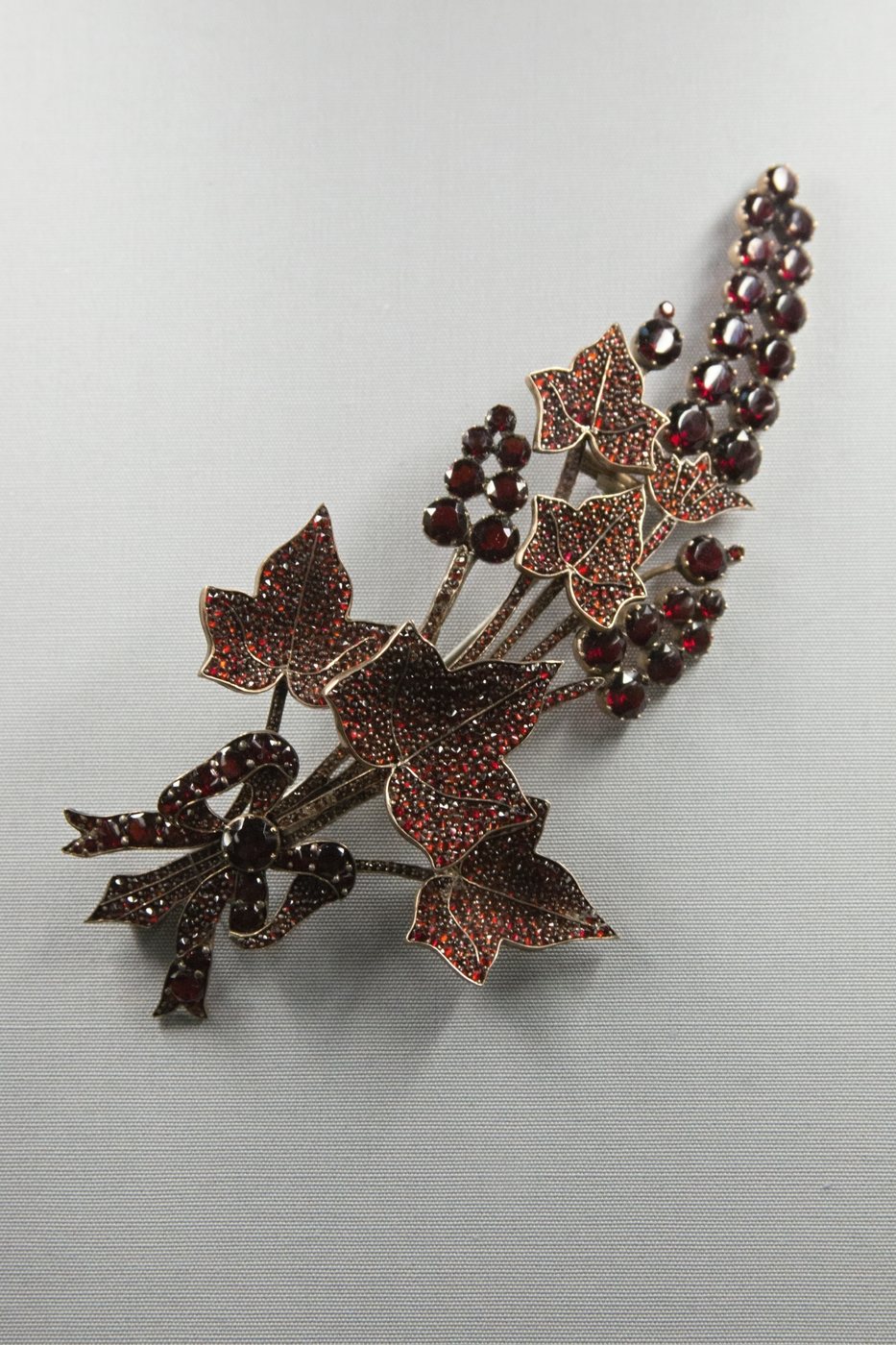
Garnets in Victorian Jewellery
Why Bohemian pyrope garnets from Třebenice, cut and set in Turnov and Prague, became a hallmark of Victorian jewellery, with carbuncles, demantoids, cluster settings and their meanings.
Jewellery
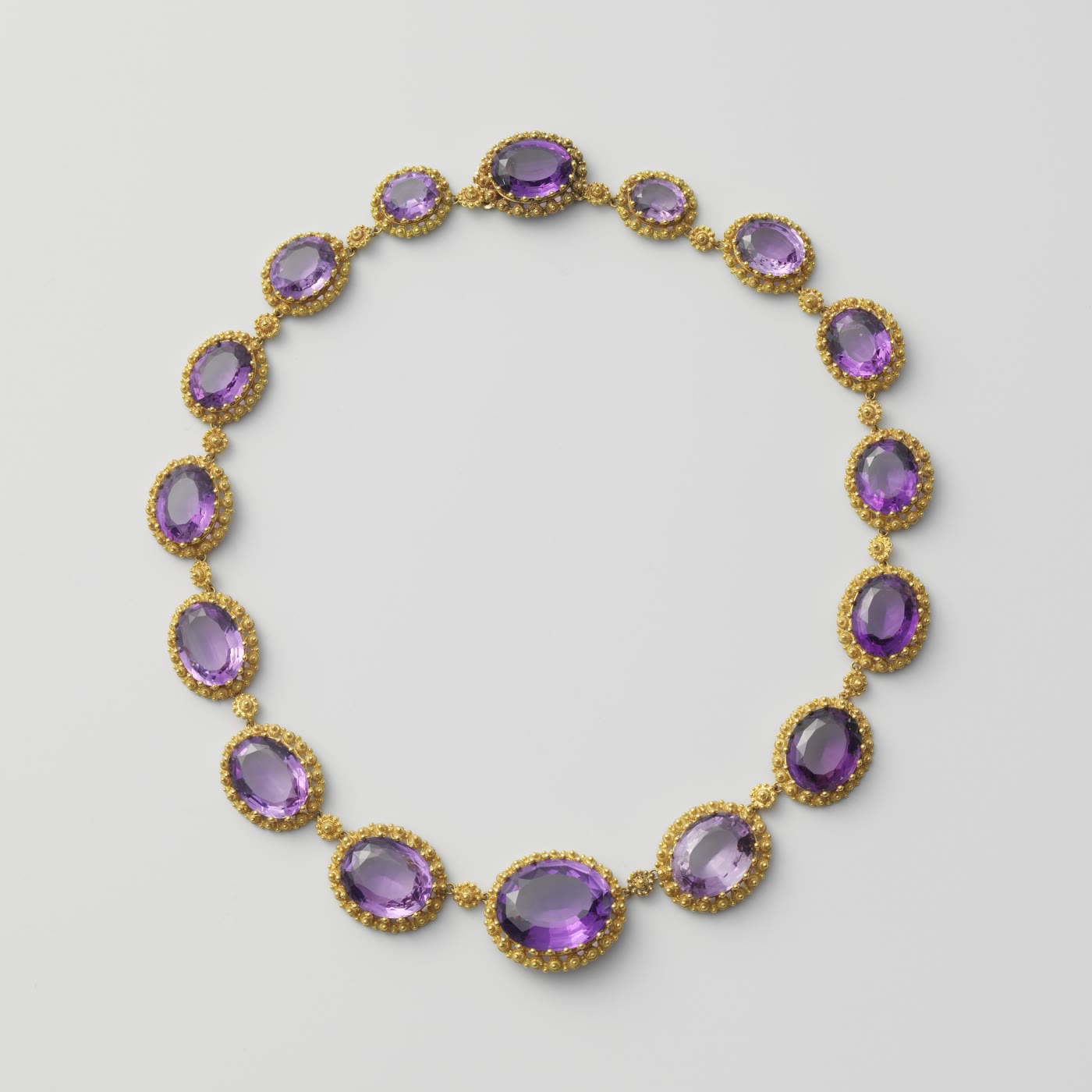
What Is a Rivière Necklace?
What a riviere necklace is, why its unbroken line of individually set stones made it one of the most enduring necklace forms, and how it differs from a festoon or fringe necklace.
Jewellery
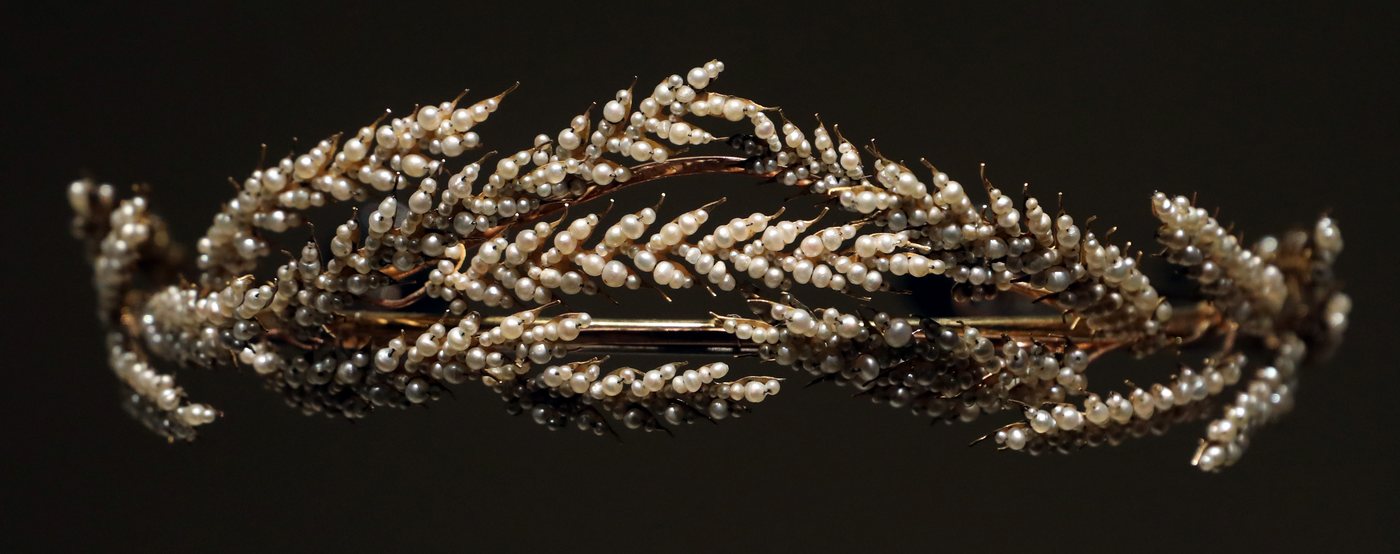
What Is a Tiara?
What a tiara is, how it differs from a full diadem, and how bandeau and convertible tiara styles developed alongside aristocratic and fashionable wear.