What Is a Coronet?
What a coronet is, its documented heraldic role indicating rank in the British peerage, and its broader use as a general term for a small, low, crown-shaped head ornament.
A coronet is a small, crown-like head ornament, a term used both in a specific heraldic sense to denote a rank within the peerage and, more loosely in jewellery, for any small, low, crown-shaped ornament worn without formal rank significance.
What Is a Coronet?
The word “coronet” covers two related but distinct things. In its formal, heraldic sense, a coronet is a specific type of small crown historically associated with a particular rank of nobility - most familiarly within the British peerage, where different ranks have carried their own documented traditional forms. In its broader, more general jewellery sense, “coronet” is simply used for any small, low, crown-shaped head ornament, worn as fashionable or ceremonial jewellery without any claim to formal rank. Both senses appear in period sources, and the word’s meaning generally has to be judged from context.
How to Recognise It
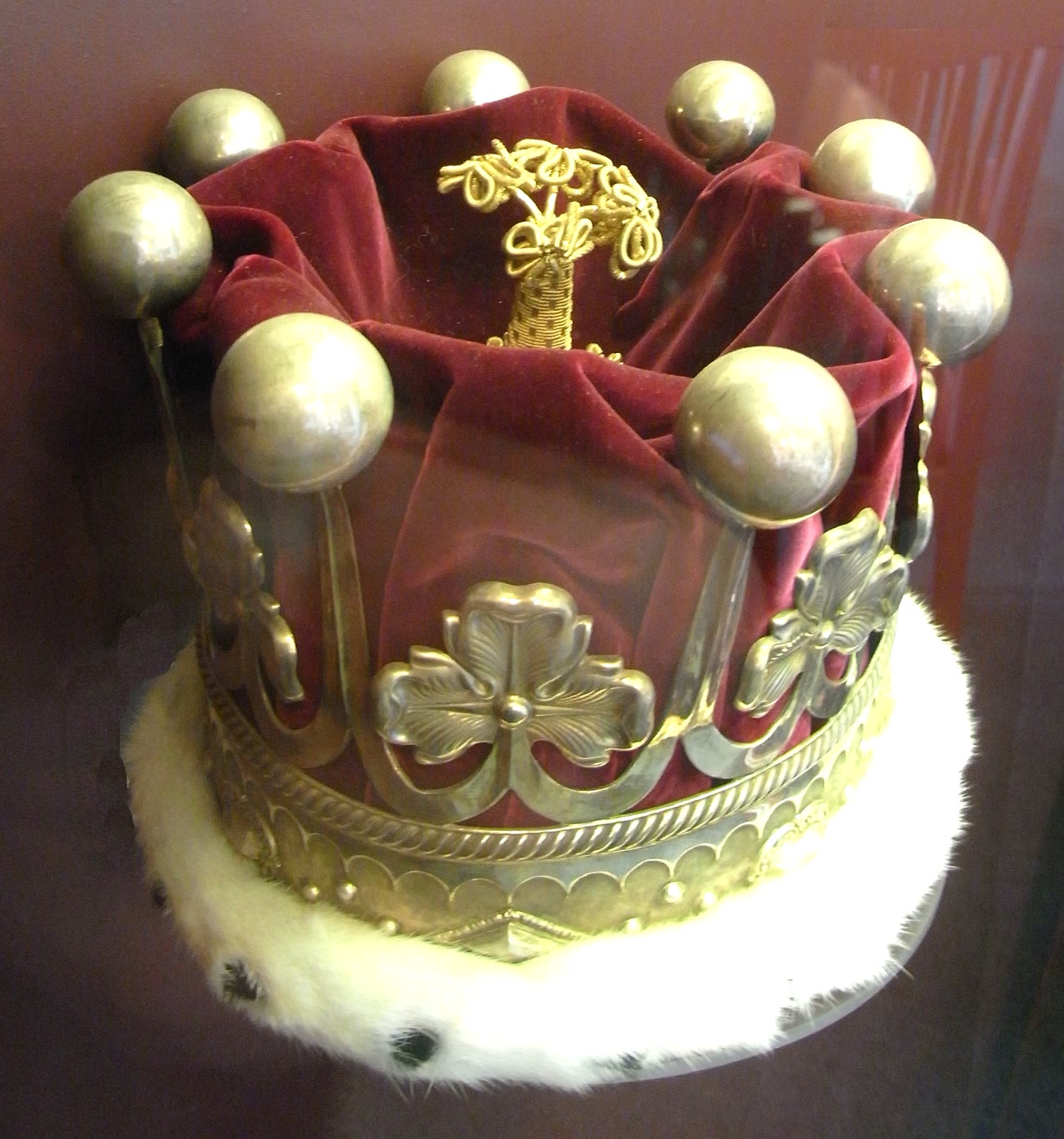
A coronet, in the general jewellery sense, is typically smaller, lower and less elaborate than a full tiara or diadem, often close to encircling the head fully rather than spanning only the front. A heraldic coronet associated with a specific peerage rank follows established conventions of form - the arrangement and number of decorative points, and their treatment, have historically varied by rank - though this site does not attempt to give a definitive, exhaustive account of every rank’s current correct design, since heraldic conventions are a specialist subject in their own right.
When Was It Worn?
A heraldic coronet was, and in ceremonial contexts remains, associated with formal occasions of state, such as a coronation, where peers have historically worn coronets indicating their rank. A general jewellery coronet was worn, like a tiara, for formal evening and ceremonial occasions, though on a smaller and generally less costly scale.
Origins
The coronet as a mark of rank has a long heraldic history in Britain and elsewhere in Europe, developing as part of the broader visual language of peerage and nobility, in which specific forms of headwear became conventionally tied to specific ranks. The coronet as a general decorative jewellery form, distinct from any heraldic claim, grew alongside the wider 18th and 19th-century fashion for tiaras and other head ornaments, offering a smaller and more widely affordable alternative to a full tiara.
How It Changed Over Time
Georgian coronets, in the general jewellery sense, followed the period’s taste for gold set with faceted paste or gemstones, worn as a smaller, more affordable alternative to a full tiara. Victorian coronets, particularly in the second half of the century, were made in finer materials by wealthier households, sometimes as part of a matching parure, and continued alongside the era’s strong overall fashion for tiaras and other formal head ornaments. Genuine heraldic peerage coronets, worn specifically to indicate rank at state occasions, followed established conventions separate from ordinary fashion and are not treated in detail on this jewellery-history site.
Materials
Gold and silver were used for the metal base of a coronet, with gemstones or paste set along its band or points depending on the wearer’s means. Diamonds and pearls appear on the finer examples, particularly those made for aristocratic or wealthy households in the 19th century.
Construction
A coronet was typically built as a low, curved or fully circular metal band, decorated along its length with a repeating pattern of points, scrolls or set stones, and fitted to sit securely on the head, often with an interior band or comb fitting for extra security.
How It Was Worn
Worn on the head, generally sitting lower and closer to the head than a rising tiara, for formal or ceremonial occasions appropriate to its status as a smaller, more contained head ornament.
Who Wore It?
In its heraldic sense, a coronet was worn by peers of specific ranks at formal state occasions. In its general jewellery sense, a coronet was worn more broadly by women of means as a smaller alternative or complement to a full tiara.
Terminology
“Coronet” is used loosely enough in period and modern sources that it can refer to a specific rank-bearing heraldic form, a general jewellery form with no rank claim at all, or, informally, to any small crown-shaped head ornament; the safest approach when researching a specific piece is to establish which sense a given source intends rather than assuming one meaning throughout.
Similar Jewellery
A coronet is closely related to, and sometimes difficult to distinguish from, a small tiara or diadem; see Tiara vs Diadem for a closer look at how these related head-ornament terms compare, though a coronet is generally the smallest and lowest of the three forms.
Examples in Museum Collections
- The Prince of Wales’s Coronet, 1728. Royal Collection Trust, RCIN 31709. Gold, velvet and ermine, made for Frederick, Prince of Wales. Its crosses, fleurs-de-lis and single arch follow a form fixed by royal warrant in 1677, showing how coronet design signalled rank.
- Queen Victoria’s sapphire and diamond coronet, designed by Prince Albert and made by Joseph Kitching, 1840-42. Victoria and Albert Museum, London, M.20:1, 2-2017. Twenty-three articulated sections of diamonds and step-cut sapphires, worn around the queen’s chignon - a jewelled coronet in the fashionable rather than the heraldic sense.
- Coronet, 1937. London Museum, 64.64/1c. A countess’s coronation coronet in silver-gilt with eight strawberry leaves alternating with eight silver balls, the arrangement for an earl’s rank - evidence that these long-established conventions continued well into the 20th century.
Read next
Compare
Tiara vs Diadem: What's the Difference?
The strict distinction between a tiara and a diadem, and why the two words are used so interchangeably in practice.
Eras
Georgian Jewellery
A guide to Georgian jewellery (1714-1837): Brazilian diamonds, closed-back foiled settings, rococo and Neoclassical styles, paste, cut steel and pinchbeck, sentimental miniatures, girandoles, rivières and Sévigné bows.
Eras
Victorian Jewellery
A guide to Victorian jewellery (1837-1901): the Romantic, Grand and Aesthetic periods, the Great Exhibition, gold rushes and 9ct gold, mourning and Whitby jet, archaeological revival, Scottish jewellery, and how to recognise each phase.
Jewellery
What Is a Diadem?
What a diadem is in the strict sense, its classical and ceremonial associations, and how the term is used alongside - and often interchangeably with - tiara.
Jewellery
What Is a Tiara?
What a tiara is, how it differs from a full diadem, and how bandeau and convertible tiara styles developed alongside aristocratic and fashionable wear.