How to Recognise Repaired or Altered Jewellery
General signs that a piece of jewellery has been repaired, altered or reworked over its lifetime, and why this is normal jewellery history rather than deception.
Very few pieces of antique jewellery have survived a century or more entirely untouched. Repairs, adjustments and outright reworking are ordinary parts of a piece’s working life, and recognising the general signs of them is a useful skill separate from, and broader than, reading any single mechanism like a clasp or a ring shank.
What to Look At
Step back from any one feature and look at the piece as a whole: whether the metal colour is consistent throughout or noticeably different in places, whether any solder marks are visible, whether a stone setting looks structurally different from the surrounding metalwork, whether the piece is symmetrical where its design implies it should be, and whether its overall proportions and construction feel entirely coherent or slightly patched-together. None of these observations proves anything on its own - see How to Date an Antique Brooch by Its Clasp and Understanding Antique Necklace and Bracelet Clasps for detailed treatment of fastening mechanisms specifically, and How to Recognise Ring Alterations and Resizing for shank-specific detail - this page instead covers the broader signs that apply across jewellery types generally.
Mismatched Metal and Solder Marks
A visible solder line, a seam that doesn’t quite align with the rest of the piece’s construction, or a subtle but noticeable difference in metal colour between one section and the rest, all suggest that a component has been added, removed or replaced at some point. This kind of evidence is often easiest to spot on the reverse of a piece, away from its polished, publicly visible front, where repair work was less likely to be finished to the same visual standard as the original manufacture.
Settings That Look Structurally Different
A stone setting that appears noticeably more modern, more crudely finished, or simply built differently from the metalwork surrounding it can suggest that the stone has been reset at some point after the piece was originally made - whether because the original stone was lost or damaged, because the setting itself needed repair, or because a stone was deliberately upgraded or replaced by a later owner. A setting style that seems stylistically inconsistent with the rest of the piece is worth noting as a clue, though, as with every other feature discussed here, it suggests rather than proves a later intervention.
Asymmetry and Misalignment
Where a piece’s design implies symmetry - matching scrollwork on either side of a brooch, for instance, or evenly spaced elements around a bracelet - a slight but genuine asymmetry or misalignment can indicate that the piece was broken and rejoined at some point in its history. This kind of damage and repair is especially plausible in delicate filigree or openwork pieces, which were more vulnerable to breakage during ordinary wear than solid, more robust construction.
Pieces Reworked Into Something Else
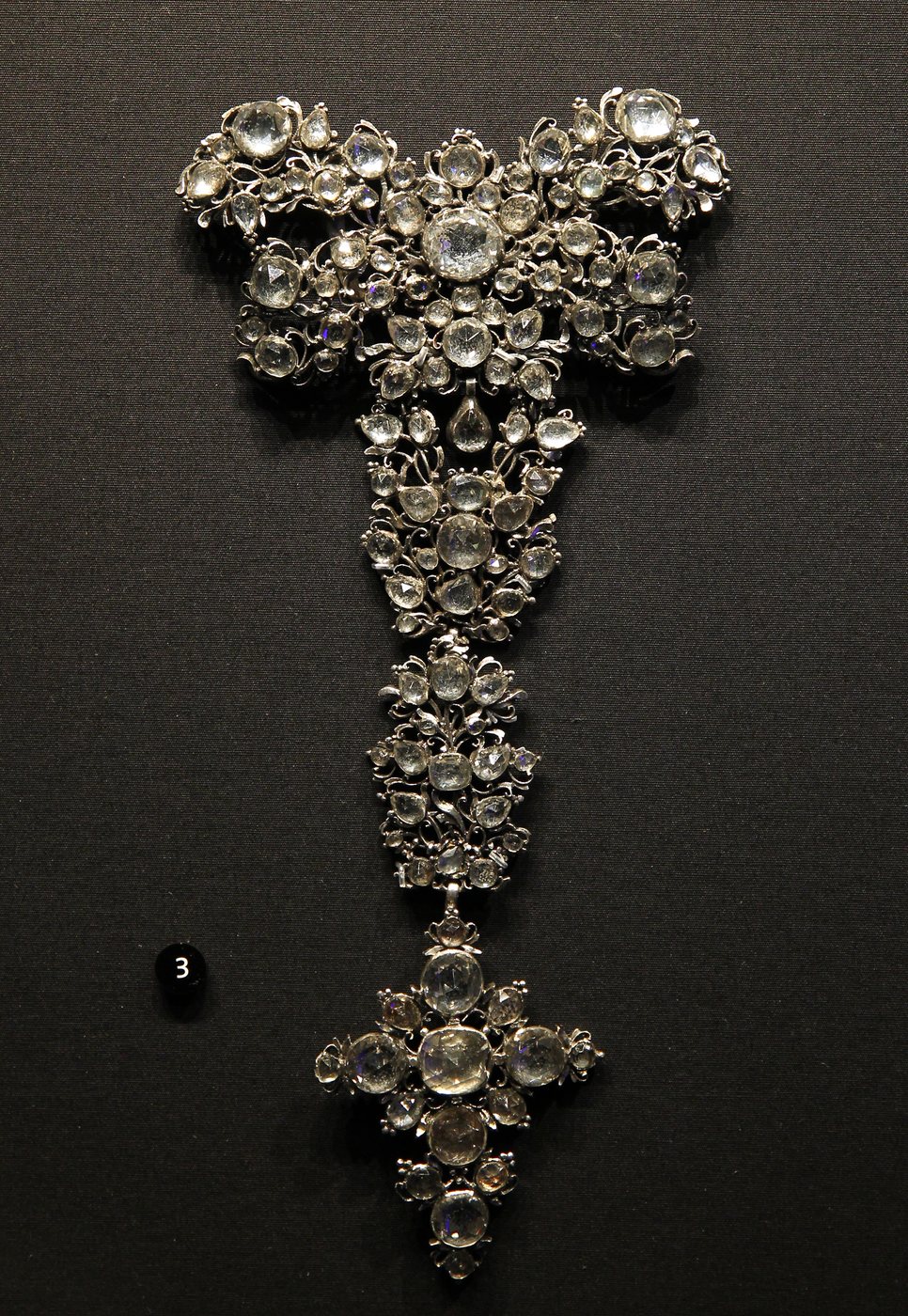
Jewellery was very often deliberately reworked into a different form entirely, rather than simply repaired to its original state, and this practice should be understood as a normal part of jewellery history rather than a sign of deception. A Georgian brooch might be fitted with a pendant loop to double as a pendant; a large stomacher, a substantial piece of body ornament that had fallen out of fashion, was quite often broken up by a later owner or jeweller and reset as several smaller, more wearable brooches - a well-documented historical practice rather than an unusual one. A piece that shows signs of having been reworked in this way has simply had a longer, more eventful history than one that has not, and this does not in itself diminish its interest or historical value.
Where to Go From Here
For fastening-specific detail, see How to Date an Antique Brooch by Its Clasp, Understanding Antique Necklace and Bracelet Clasps and How to Recognise Ring Alterations and Resizing. For a broader approach to researching a specific piece, see How to Research an Inherited Piece of Jewellery, and for a firmer opinion on any individual piece, consult a qualified antique jewellery dealer, appraiser or auction house specialist.
Read next
Identify
How to Date an Antique Brooch by Its Clasp
What clasp and catch styles can suggest about a brooch's likely period, and why the catch alone can never confirm a date.
Identify
How to Recognise Ring Alterations and Resizing
How to spot a resized ring shank, why resizing is normal rather than a warning sign, and how it can complicate reading a ring's hallmark.
Identify
How to Research an Inherited Piece of Jewellery
A practical starting process for researching an inherited piece of jewellery, from family history and construction clues to when to consult a specialist.
Identify
Understanding Antique Necklace and Bracelet Clasps
How clasp mechanisms on necklaces and bracelets changed over time, and why a clasp is one of the least reliable dating clues on a piece that saw regular wear.
Jewellery
What Is a Brooch?
What a brooch is, how its pin-and-catch fastening works, and how brooch styles moved from naturalistic Victorian sprays through mourning brooches to Art Deco geometry.
Jewellery
What Is a Stomacher?
What a jewelled stomacher is, how it covered the front of an 18th-century bodice, and why so few survive intact once dress styles changed.