Understanding Antique Necklace and Bracelet Clasps
How clasp mechanisms on necklaces and bracelets changed over time, and why a clasp is one of the least reliable dating clues on a piece that saw regular wear.
The clasp on a necklace or bracelet, like the catch on a brooch discussed in How to Date an Antique Brooch by Its Clasp, followed a general trend toward more secure mechanical engineering over time - but a necklace or bracelet clasp bears constant strain and repeated handling in a way a brooch catch generally does not, which makes it, if anything, an even more frequently replaced part, and an even weaker piece of dating evidence on its own.
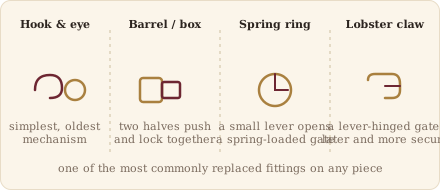
What to Look At
Look at the mechanism itself: whether it is a simple hook-and-eye or ring arrangement, a hinged box or barrel that snaps or slides shut, or a spring-loaded ring or lobster-claw catch, and whether it appears original to the piece or shows signs of having been added or swapped - mismatched metal colour, solder marks, or a fit that sits awkwardly against the rest of the piece’s construction. As with brooch catches, the general principle applies here too: clasp type is a suggestive clue toward a likely period, not proof of one, and is best weighed alongside the piece’s overall style, materials and construction rather than read in isolation.
The Hook-and-Eye and Ring Clasp
A simple hook-and-eye, or a plain ring closure where one end of the piece simply hooks through or around the other, is among the oldest and most basic clasp forms seen on necklaces and bracelets from 1700 to 1950. It requires little in the way of specialised hardware and appears consistently on earlier pieces, though - much like the brooch’s C-catch - its simplicity meant it also remained in occasional use on later, more modest pieces long after more secure alternatives existed.
The Barrel and Box Clasp
The barrel clasp, a small cylindrical fitting that screws or twists closed, and the box clasp, a hinged box-and-tongue mechanism that snaps shut and is often held by a safety catch or figure-eight tongue, represent a generally later, more deliberately engineered stage of clasp design. Both offered a noticeably more secure closure than a simple hook, and their increasing use through the Victorian period reflects the same broader trend toward safer, more reliable fastenings seen in brooch catches over the same span.
Spring-Ring and Lobster-Claw Clasps
The spring-ring clasp, a small hollow ring with an internal spring-loaded gate, and the lobster-claw clasp, a hinged, spring-loaded hook shaped somewhat like a claw, are generally later mechanical developments still, and remain in standard use on jewellery made today. Their presence on an antique piece can suggest a later date, or a later replacement of an earlier fastening, though both types have been manufactured for long enough that neither can pin down a narrow date range by itself.
Reading the Clasp Alongside the Rest of the Piece
Because clasps are replaced so routinely, they are best read as one of the weaker data points in the overall picture, well behind the piece’s stones, metalwork, motifs and any hallmarks present. A clasp that looks obviously modern on an otherwise consistent antique piece is far more likely to represent a sensible repair than evidence that the whole piece is a later reproduction, and conversely an old-looking clasp on a piece with clearly later stones or settings should raise a question rather than settle one, since older clasps were sometimes reused or salvaged onto later work.
Where to Go From Here
For the equivalent discussion of brooch catches, see How to Date an Antique Brooch by Its Clasp, and for a broader approach to researching a specific piece, see How to Research an Inherited Piece of Jewellery. For a firmer opinion on any individual necklace or bracelet, consult a qualified antique jewellery dealer, appraiser or auction house specialist.
Read next
Compare
Bangle vs Bracelet: What's the Difference?
Why every bangle is a bracelet, but not every bracelet is a bangle - the rigid, clasp-free construction that sets bangles apart.
Compare
Georgian vs Victorian Jewellery
How Georgian and Victorian jewellery differ in settings, techniques and motifs, and why Victorian jewellery itself spans several distinct phases.
Identify
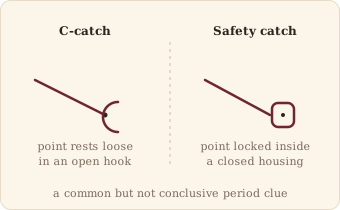
How to Date an Antique Brooch by Its Clasp
What clasp and catch styles can suggest about a brooch's likely period, and why the catch alone can never confirm a date.
Identify
How to Research an Inherited Piece of Jewellery
A practical starting process for researching an inherited piece of jewellery, from family history and construction clues to when to consult a specialist.
Jewellery
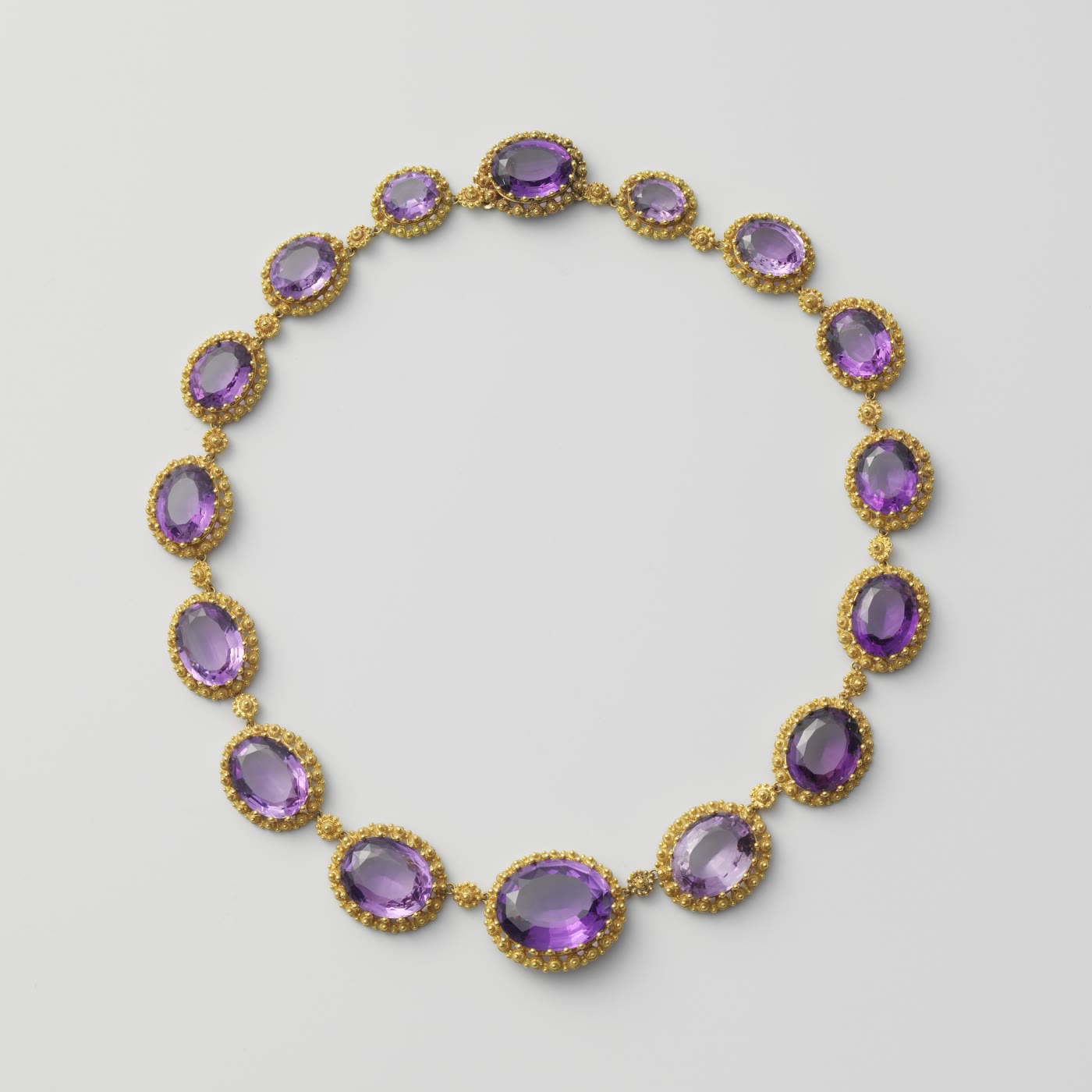
What Is a Rivière Necklace?
What a riviere necklace is, why its unbroken line of individually set stones made it one of the most enduring necklace forms, and how it differs from a festoon or fringe necklace.
Jewellery
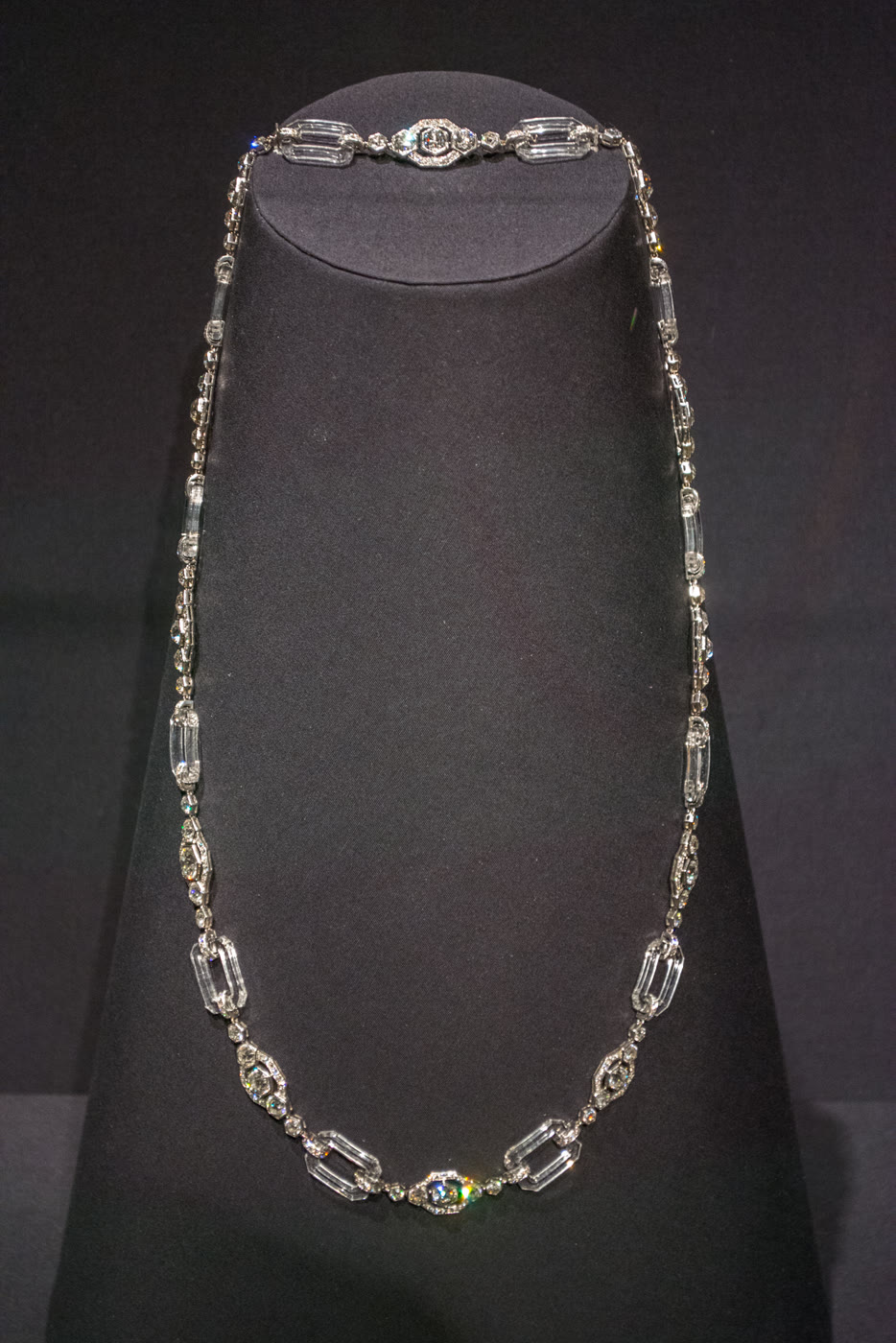
What Is a Sautoir?
What a sautoir is, why its very long chain suited the flat-fronted, dropped-waist silhouette of the 1920s, and how it differs from a negligee necklace or riviere.