Anchor Jewellery
The anchor as a jewellery motif for hope and steadfastness: its early Christian roots, the Faith, Hope and Charity trio, the naval fouled anchor and sweetheart brooches.
The anchor is a widely used jewellery motif with a fairly consistent core meaning between 1700 and 1950 - hope, steadfastness and safe return - drawing on both an old Christian symbolic tradition and a more secular association with sailors, sea voyages and safe homecoming.

A Christian Symbol of Hope
The anchor’s use as a symbol of hope rests on a New Testament passage describing hope as “an anchor of the soul, both sure and stedfast” (Hebrews 6:19, in the King James wording). Anchors are among the earliest Christian symbols, carved and painted on 2nd- and 3rd-century tombs and epitaphs in the catacombs of Rome; its upright shank and crossbar are often interpreted as a discreet form of the cross. That scriptural and funerary background underlies the anchor’s settled place as the emblem of hope in later jewellery.
Hope in Allegory
By the 18th century the anchor had become the standard attribute of Hope personified. In neoclassical art of the 1770s to 1800s, Hope appears as a draped female figure leaning on or holding an anchor, and she turns up in this form on painted ivory miniatures in late Georgian sentimental and mourning jewellery, and on cameos and glass-paste medallions of the same years. A woman with an anchor in a Georgian brooch or ring is therefore usually Hope, not a sailor’s sweetheart.
Faith, Hope and Charity
One of the most widely used symbolic groupings in 19th-century sentimental jewellery pairs three motifs, each standing for one of the theological virtues named in St Paul’s First Epistle to the Corinthians (13:13): a cross for Faith, an anchor for Hope, and a heart for Charity, understood here as love. Pieces combining all three - a set of three separate charms, three motifs within a single brooch, or a trio of pendant drops from a bar - are deliberately drawing on this grouping rather than assembling the motifs by coincidence. The trio was made in gold, silver and cheaper gilt metal, and in mourning materials such as black enamel and jet. See heart jewellery for the third element of the trio.
The Maritime and Naval Anchor
Alongside its Christian symbolism, the anchor carried a more secular meaning tied to the sea - it is the instrument that secures a ship and lets it return safely to harbour. Anchor jewellery was a natural sentimental gift at a sailor’s departure or return, or before a sea voyage more generally, with the anchor standing for hope and steadfastness during an absence. The two readings reinforce rather than compete with one another.
A specific naval variant is the fouled anchor - an anchor with a rope or cable wound around its shank. It has long been the badge of the Lord High Admiral and the Admiralty - traditionally since the late 16th century - and is still used by the Royal Navy and other navies. A fouled anchor, especially beneath a crown, points to a naval connection rather than generic sentiment. In both world wars, sailors gave wives, mothers and girlfriends “sweetheart” brooches based on their service badge, so a fouled anchor and crown in enamel, silver or mother-of-pearl is the commonest form of naval sweetheart jewellery from 1914-18 and 1939-45.
Era and Typical Use
Anchor motifs appear across the Georgian and Victorian periods, with particular popularity in Victorian sentimental jewellery. The motif is most often found in brooches, in charms worn on a bracelet or watch chain, and in rings, where a small anchor might be engraved or set into the shoulders or bezel. It also appears often as a stickpin subject, where the anchor’s compact silhouette suited the small scale of the form; anchor stickpins were worn by men with naval, yachting or simply sentimental associations. The fashion for sailor suits, which spread after Franz Xaver Winterhalter painted the young Prince of Wales (later Edward VII) in one in 1846, and the growth of yachting as a fashionable pastime later in the century, made anchors a fashion motif in their own right as well as a symbol.
Materials and Construction
Gold anchors, sometimes with a wrapped rope or chain around the shank and a small gem at the crown or ring, represent the finer end of the form, while gilt base-metal and silver versions made the motif accessible more broadly. Anchors also appear in mourning and hairwork jewellery, where the meaning of enduring hope - often the hope of resurrection - suited memorial pieces as readily as romantic or nautical keepsakes.
Related Sentimental Motifs
Anchor jewellery sits within the same Victorian tradition of sentimental jewellery bearing legible meanings as the mizpah brooch, which encoded a message about absence and hoped-for reunion through an inscribed word rather than a pictorial symbol. The swallow, another emblem of safe return, is often found alongside the anchor in sailors’ imagery.
Reading Anchor Motifs Today
An anchor alongside a cross and a heart, whether combined in one piece or as a matched set, is a strong indicator of the Faith, Hope and Charity tradition. A female figure holding an anchor is the allegory of Hope. A fouled anchor under a crown suggests a naval or sweetheart piece. A plain anchor on its own is more ambiguous, and could reflect general hope-and-steadfastness symbolism, nautical fashion or a specific maritime gift; inscriptions, rope detailing and any regimental or naval device are the most useful further clues.
Read next
Eras
Georgian Jewellery
A guide to Georgian jewellery (1714-1837): Brazilian diamonds, closed-back foiled settings, rococo and Neoclassical styles, paste, cut steel and pinchbeck, sentimental miniatures, girandoles, rivières and Sévigné bows.
Eras
Victorian Jewellery
A guide to Victorian jewellery (1837-1901): the Romantic, Grand and Aesthetic periods, the Great Exhibition, gold rushes and 9ct gold, mourning and Whitby jet, archaeological revival, Scottish jewellery, and how to recognise each phase.

Jewellery
What Is a Bar Brooch?
What a bar brooch is, why its narrow horizontal form suited late Victorian and Edwardian dress, and how it compares with fuller, more elaborate brooch styles.
Jewellery
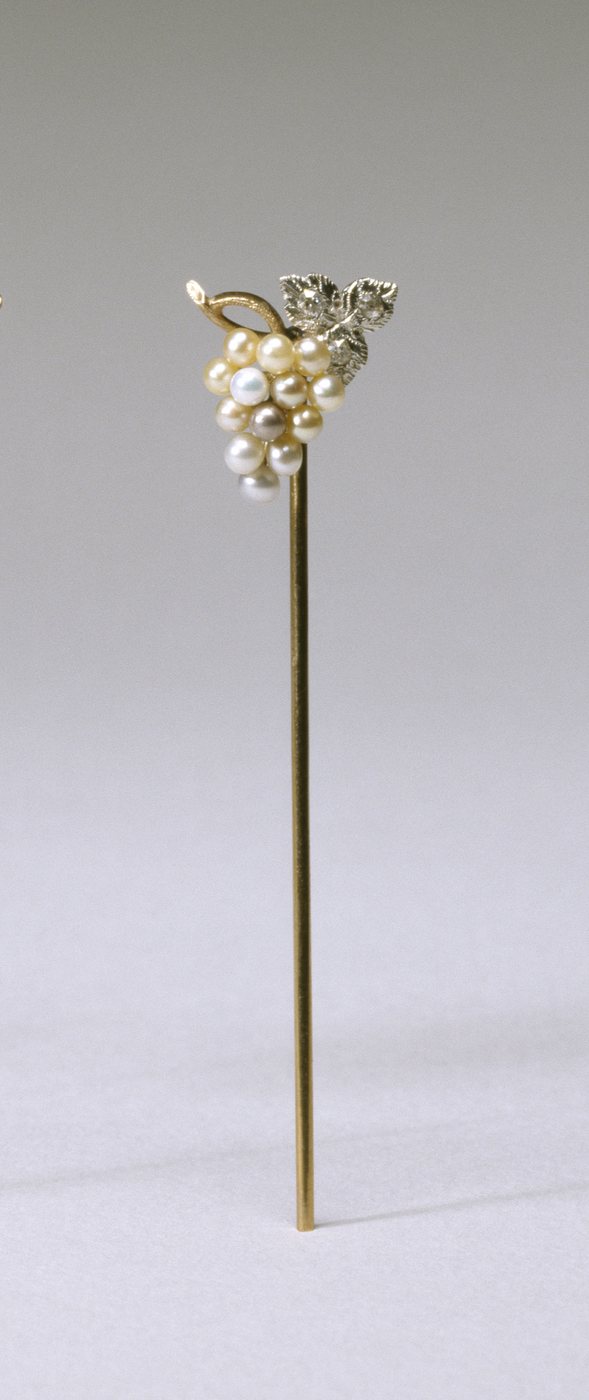
What Is a Stickpin?
What a stickpin is, how its simple push-through pin differs structurally from a hinged brooch, and why it became a leading form of men's jewellery in this period.
Mourning & Sentimental
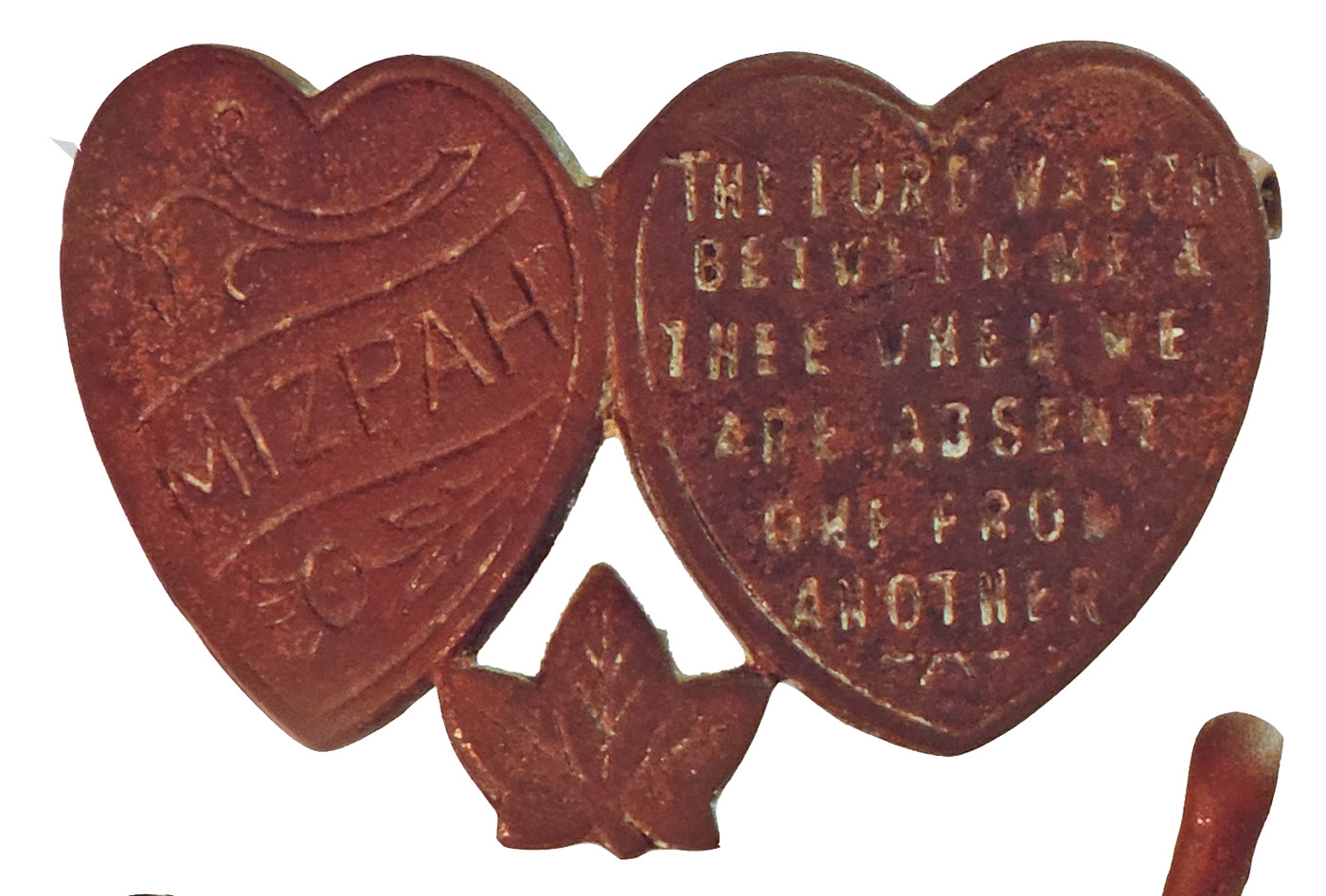
What Is a Mizpah Brooch?
What a Mizpah brooch is, the Genesis 31:49 verse behind the word, its mass production in Birmingham c.1880-1915, and why it was a token of parting rather than a mourning piece.

Symbols
Heart Jewellery Through History
The heart in jewellery from 1700 to 1950: crowned hearts, Scottish luckenbooth brooches, Sacred Heart pendants, padlock-and-key pendants, Claddagh rings and wartime sweetheart brooches.