What Is a Mizpah Brooch?
What a Mizpah brooch is, the Genesis 31:49 verse behind the word, its mass production in Birmingham c.1880-1915, and why it was a token of parting rather than a mourning piece.
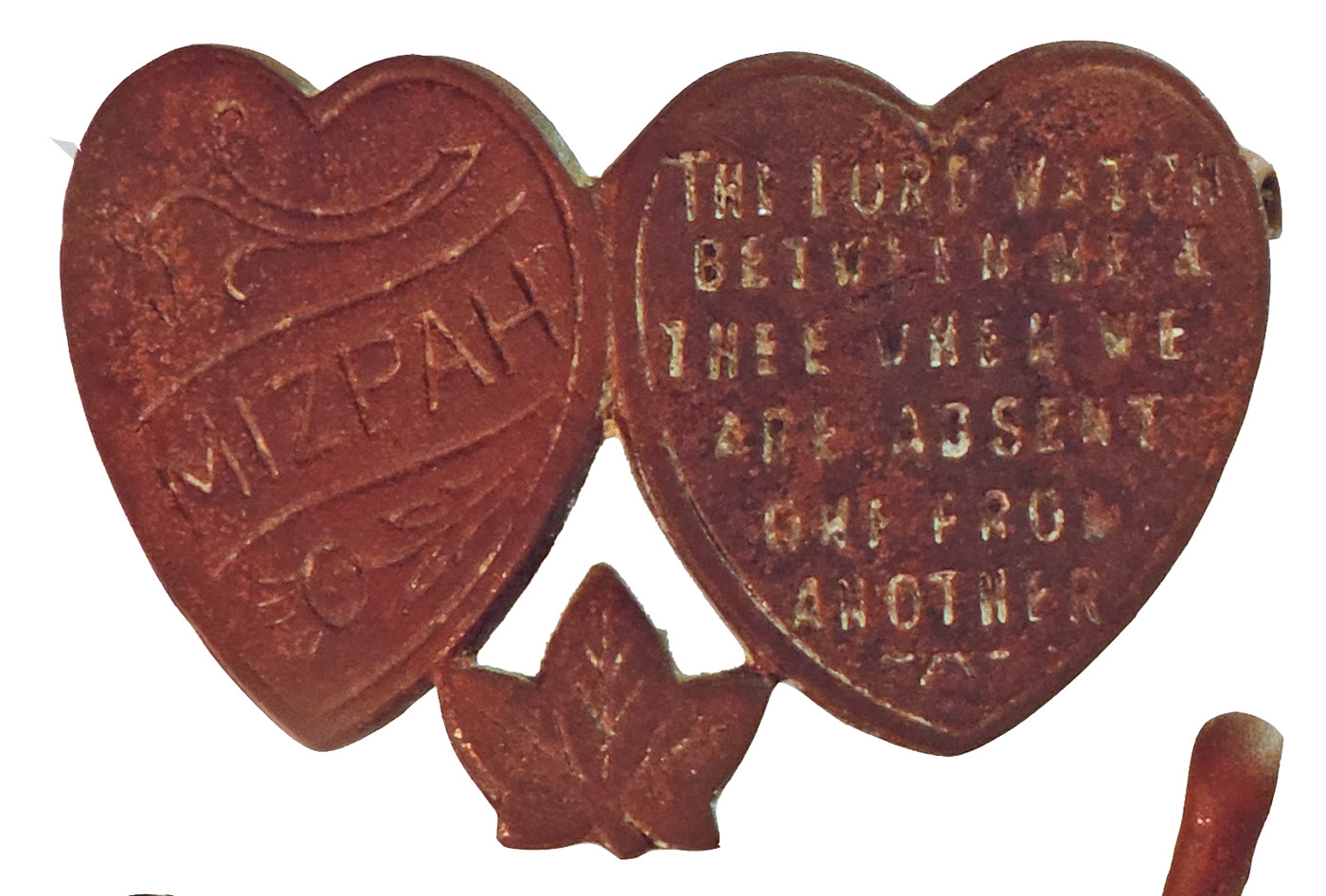
A Mizpah brooch is a brooch inscribed with the word “MIZPAH,” given as a token to mark a parting between two people who cared for one another - sweethearts, spouses, family members, or friends - rather than as a response to a death.
The Word and Its Source
“Mizpah” is a Hebrew word usually translated as “watchtower” or “look-out post”, and the brooches take their inscription from Genesis 31:49, in which Laban says to Jacob, “The Lord watch between me and thee, when we are absent one from another.” In the Biblical narrative the word names the cairn of stones that Jacob and Laban raise to mark a boundary and a parting between two men who no longer fully trust each other. By the time it reached Victorian jewellery counters its meaning had softened into a blessing: a wish that two people who care for each other, and who are about to be apart, remain watched over and connected until they meet again. The verse was widely known from the King James Bible, which is the wording the jewellery quotes when it gives the verse in full.
Where and When It Was Made
Mizpah jewellery was made in large numbers in Britain from about the 1880s to the First World War, and most of it came from the workshops of Birmingham’s Jewellery Quarter, which mass-produced inexpensive sentimental jewellery by die-stamping and machine-cutting. Many pieces carry Birmingham hallmarks - the anchor - with 9ct gold or sterling silver standard marks and a date letter, which can date a brooch to a specific year. The legalisation of 9ct gold in 1854 made a small gold Mizpah brooch affordable to a wide market; see What Does 9ct Mean?. Similar pieces were made in the United States and elsewhere, but the word is most closely tied to late Victorian and Edwardian British jewellery.
Typical Construction
Most Mizpah brooches spell the word out directly across the face of the piece, in raised, pierced or applied lettering. The commonest form is the narrow bar brooch or a small round or oval brooch in gold or silver, the lettering in a scroll or a band across the centre. Decoration was drawn from the stock vocabulary of late Victorian sentimental jewellery: clasped hands, hearts, ivy leaves (for clinging attachment), forget-me-nots, horseshoes, swallows and lovers’ knots. Silver brooches were often engraved with flowers and foliage, and some gold examples were set with a small turquoise, garnet or seed pearl. Mizpah rings - usually broad gold bands with the word in raised letters - were made alongside the brooches, as were lockets, pendants and bangles.
Some examples were made as matching pairs, a brooch for one person and a ring or second brooch for the other. Pendants in the form of a heart or coin cut into two interlocking halves, each half carrying part of the verse, are mostly 20th-century; they belong to the same idea of a token divided between two people.
When and Why They Were Given
The period of Mizpah jewellery’s popularity was one in which long separations were common: emigration to the colonies and the United States, service with the army and navy, work away from home, and the long sea voyages that went with all of these. A Mizpah brooch was a portable expression of that experience, given at a station platform or dockside farewell and meant to be worn until reunion. The Boer War (1899-1902) and the First World War both prompted brooches given by departing soldiers and sailors to wives, mothers and sweethearts. Its popularity as a sentimental token, rather than a religious one, meant it was worn openly as ordinary jewellery rather than reserved for solemn occasions.
How Mizpah Jewellery Differs From Mourning Jewellery
Mizpah brooches are sometimes grouped loosely with mourning jewellery in casual writing and dealer listings. Mourning jewellery responds specifically to a death, typically incorporates black materials or a memorial inscription naming the deceased, and follows the etiquette conventions of formal grief. A Mizpah brooch, by contrast, is forward-looking rather than commemorative - it anticipates reunion rather than marking a loss, and it carries no inherent connection to death. The sentiment behind the verse - a wish for protection during an absence - meant Mizpah jewellery could also be given or kept in circumstances involving illness, military service or other separations where the outcome was uncertain, and a brooch given to a soldier’s family might later be kept in his memory, which is likely part of why the two categories are sometimes conflated.
Decline
Like much sentimental jewellery of its kind, the Mizpah brooch’s popularity faded after the First World War as tastes shifted and the verbal-sentiment jewellery fashion of the late Victorian period gave way to other styles. Mizpah pendants and charms continued to be made in smaller numbers through the 20th century, including during the Second World War. The brooch remains a recognisable and collectible form today, valued as much for its social history as for its material worth.
Frequently Asked Questions
Does a Mizpah brooch always mean someone died? No - it marks parting or separation generally, not death specifically, and most surviving examples were exchanged between living people expecting to be reunited.
Are Mizpah brooches religious jewellery? Not typically in intent, despite the Biblical source of the word; by the time they were popular as jewellery, the word functioned as a widely understood sentimental phrase rather than a specifically devotional symbol.
Read next

Eras
Edwardian Jewellery
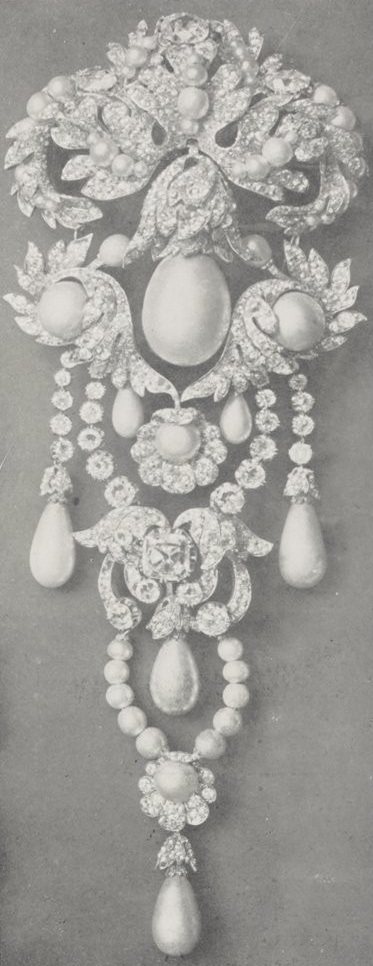
A guide to Edwardian jewellery (1901-1915): platinum and the garland style, Queen Alexandra's dog collars, Cartier, Boucheron and Fabergé in London, the Cullinan diamond, lavaliers, milgrain settings and day jewellery.
Eras
Victorian Jewellery
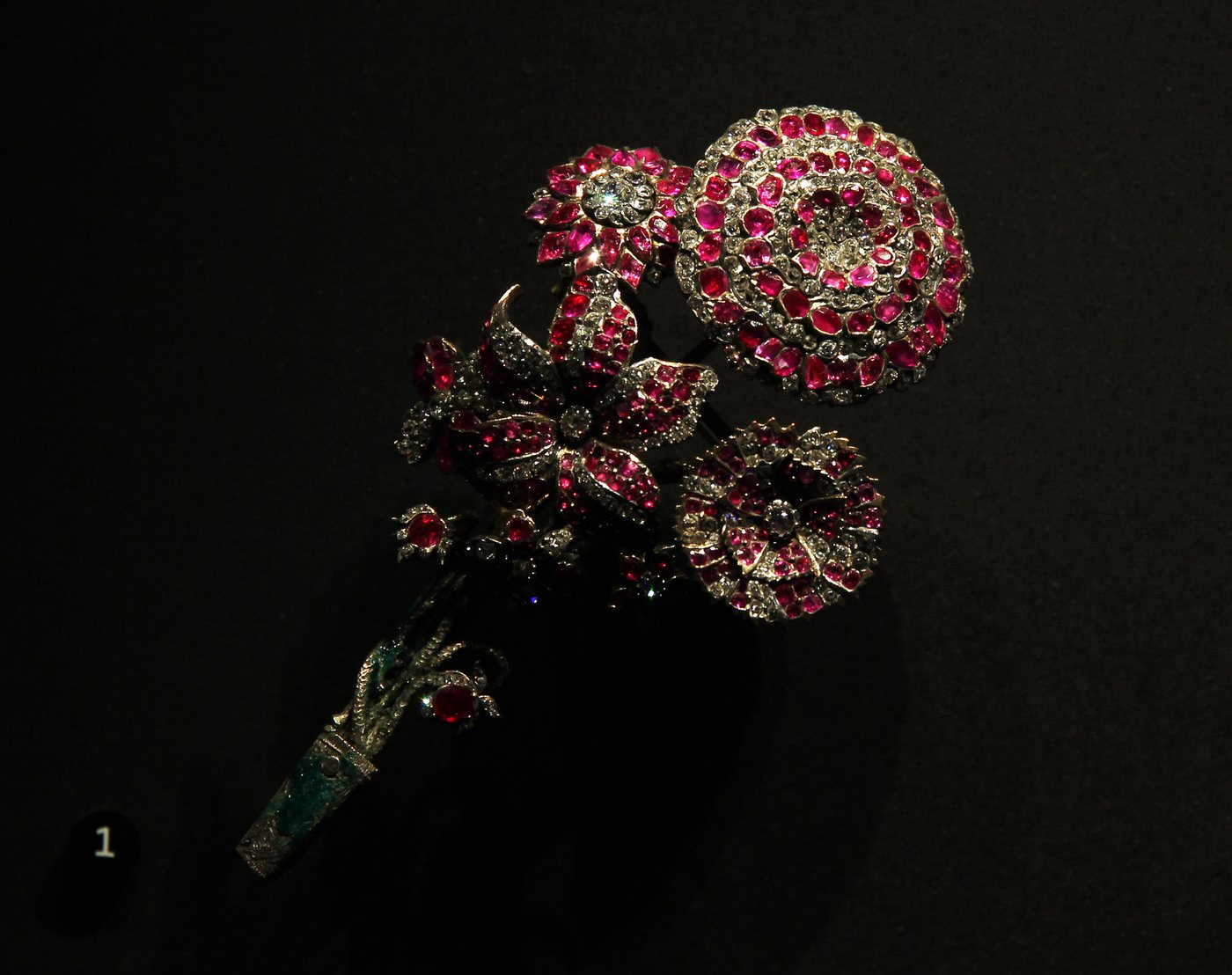
A guide to Victorian jewellery (1837-1901): the Romantic, Grand and Aesthetic periods, the Great Exhibition, gold rushes and 9ct gold, mourning and Whitby jet, archaeological revival, Scottish jewellery, and how to recognise each phase.
Jewellery
What Is a Brooch?
What a brooch is, how its pin-and-catch fastening works, and how brooch styles moved from naturalistic Victorian sprays through mourning brooches to Art Deco geometry.
Mourning & Sentimental
What Is Acrostic Jewellery?
What acrostic jewellery is, how REGARD and DEAREST rings spell words in gemstones, the Paris jewellers who popularised it, and why it is sentimental rather than mourning jewellery.
Mourning & Sentimental
What Is Lover's Eye Jewellery?
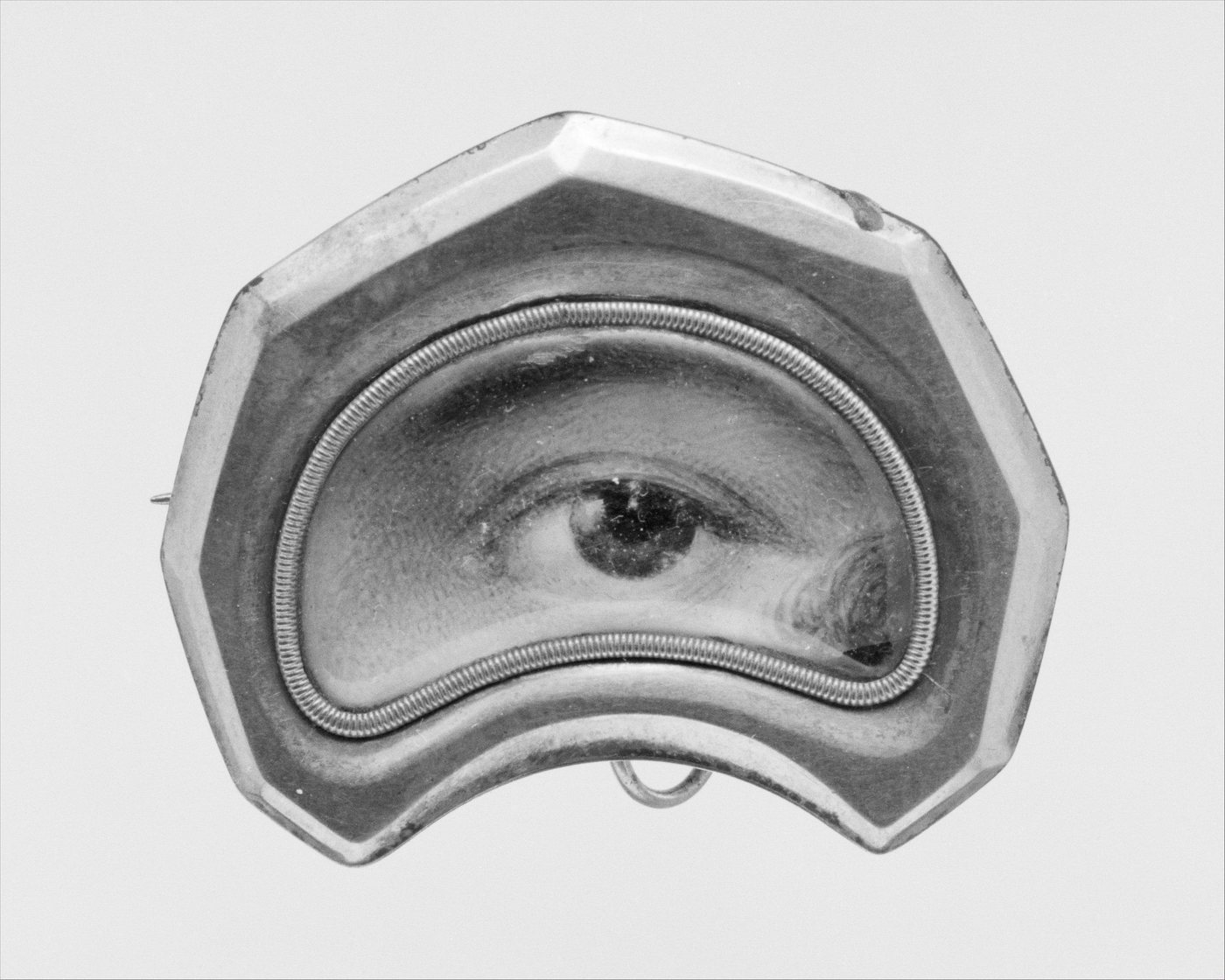
What lover's eye jewellery is, the Prince of Wales, Maria Fitzherbert and Richard Cosway story behind it, how eye miniatures were painted and mounted c.1785-1830, and why they are rare.
Mourning & Sentimental
What Is Mourning Jewellery?
What mourning jewellery is, how it developed from Stuart and Georgian memorial rings, why it peaked in Victorian Britain after Prince Albert's death in 1861, and the etiquette and materials behind it.