What Is a Negligee Necklace?
What a negligee necklace is, why its two unevenly matched drops distinguish it from a lavalier, and how it fits into the Edwardian garland style.
A negligee necklace is a fine-chain necklace with two pendant drops of deliberately unequal length hanging from it, an asymmetric variant of the single-drop lavalier necklace characteristic of Edwardian fine jewellery.
What Is a Negligee Necklace?
A negligee necklace shares its basic structure with the lavalier necklace - a fine chain, usually in platinum or gold, ending in a small set of stones - but where a lavalier hangs a single drop, or occasionally two drops of matching length, a negligee necklace’s two drops are deliberately different lengths, typically diverging from a small central motif such as a bow or knot. This visible asymmetry is the negligee’s single defining feature, distinguishing it at a glance from the more symmetrical lavalier.
How to Recognise It
Look for two separate pendant drops hanging from the same central point or small connecting motif, clearly unequal in length, rather than a single drop or a matched pair - a lavalier with two drops of the same length is not, strictly, a negligee necklace, since the asymmetry itself is the defining feature. As with the lavalier, the overall impression should be light and delicate, in keeping with the airy, lace-like “garland style” jewellery fashionable in the early 20th century.
When Was It Worn?
The negligee necklace is most strongly associated with the Edwardian period and the wider Belle Époque, roughly 1900 to the First World War, worn at the neckline for both fashionable daytime and formal occasions.
Origins
The negligee necklace developed alongside the lavalier as part of the broader early 20th-century taste for light, delicate platinum-and-diamond garland-style jewellery, and the two forms are best understood as closely related variants of the same basic single-chain-with-drop structure rather than as separate independent inventions.
How It Changed Over Time
The negligee necklace was at its most fashionable during the Edwardian period, when garland-style jewellery - light platinum settings, ribbon motifs, bows and swags - dominated fine jewellery in Britain, France and the United States, and its asymmetric double drop offered a variation on the single-drop lavalier within the same delicate visual idiom. As fashion moved toward the bolder, more geometric Art Deco style after the First World War, the negligee necklace’s very delicate, asymmetric form gave way to the longer, more architectural lines of the sautoir and to more structured pendant designs, and it did not carry forward into 1920s fashion in the way the longer chain forms did.
Materials
Platinum was the preferred setting metal for fine negligee necklaces, valued for the fine, strong settings it allowed in a very delicate design; gold was used for less expensive versions. Diamonds and pearls were the characteristic stones, often combined in a small cluster or bow motif at the point where the chain divides into its two unequal drops.
Construction
A negligee necklace’s chain is typically a fine trace or cable chain, dividing at a small central motif - often a bow, knot or cluster setting - into two separate drops of clearly different lengths, each ending in its own small stone or cluster. The asymmetry is a deliberate design choice rather than a result of wear or later alteration, and a period piece should show consistent construction and finish on both drops despite their differing lengths.
How It Was Worn
Worn at or just below the throat, suited to the high necklines fashionable in the Edwardian period, with the two unevenly matched drops falling in a deliberately asymmetric line down the front of the bodice.
Who Wore It?
The negligee necklace was women’s jewellery, worn across fashionable Edwardian society from the wealthiest wearers in fine platinum and diamonds to a broader middle-class market in gold and paste imitations of the same style.
Notable Variations
- Lavalier Necklace - the closely related single-drop (or matched-drop) form that the negligee necklace’s asymmetric design is a variant of.
- Bow-motif negligee - a negligee necklace with a decorative bow at the point where the chain divides, a particularly characteristic Edwardian detail.
- Sautoir - a much longer chain necklace that became more fashionable than the negligee from the 1920s onward.
Terminology
“Negligee” in this context is usually explained as referring to the necklace’s deliberately loose, asymmetric hang rather than to sleepwear, reflecting the period’s use of the French word for something worn informally or with a relaxed, unstudied line.
Similar Jewellery
A negligee necklace is most easily confused with a lavalier necklace, since both share the same fine-chain-and-drop structure; the presence of two clearly unequal drops, rather than one drop or a matched pair, is the clearest way to tell the two apart.
Examples in Museum Collections
“Negligee” is mainly a dealers’ and collectors’ term, and the distinction was looser in the period itself: Cartier’s “lavallière” necklaces of around 1900 often had two drops of unequal length. Museums usually catalogue these necklaces simply as necklaces or pendants, and no museum record using the name could be confirmed online. When searching collections, look among Edwardian necklaces of about 1900-1915 described as having two pendant drops, and compare the lavalier, which has a single drop.
Read next

Eras
Edwardian Jewellery
A guide to Edwardian jewellery (1901-1915): platinum and the garland style, Queen Alexandra's dog collars, Cartier, Boucheron and Fabergé in London, the Cullinan diamond, lavaliers, milgrain settings and day jewellery.

Gemstones
Pearls in Jewellery History
Natural pearls from the Gulf and Ceylon, seed-pearl work, Edwardian chokers and ropes, Mikimoto's cultured pearls of the 1910s-20s, imitation pearls, and pearls' bridal and mourning meanings.
Jewellery
What Is a Lavalier Necklace?
What a lavalier necklace is, how its single fine-chain drop defined Edwardian and Belle Epoque style, and how it differs from a plain pendant, negligee necklace or sautoir.
Jewellery
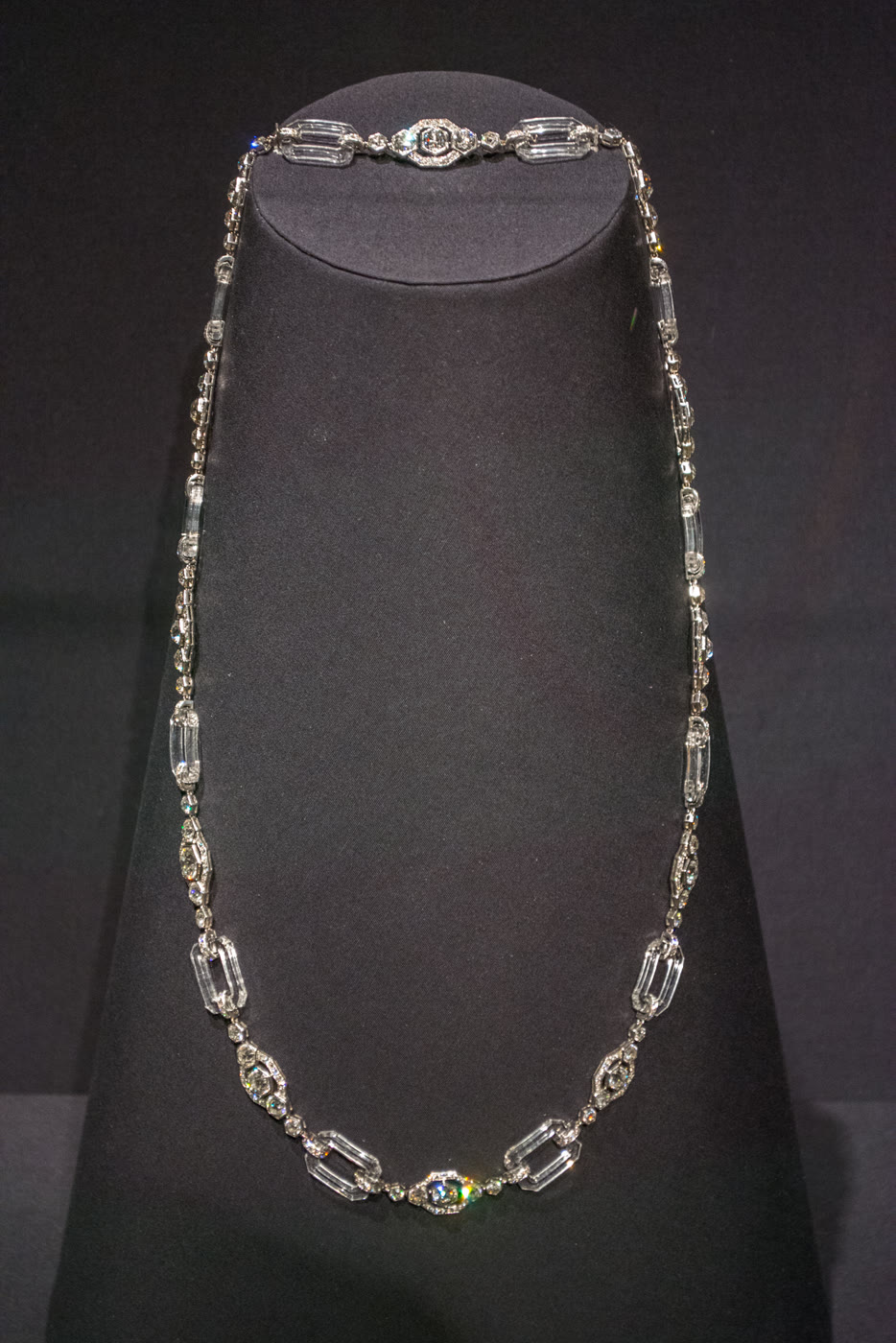
What Is a Sautoir?
What a sautoir is, why its very long chain suited the flat-fronted, dropped-waist silhouette of the 1920s, and how it differs from a negligee necklace or riviere.
Materials
Platinum in Jewellery History
Why platinum only became practical for jewellery around 1900, Cartier and the Edwardian garland style, Art Deco settings, Russian and South African supply, wartime restrictions and platinum marks.