What Is Masonic Jewellery?
An overview of Masonic jewellery as a documented historical category - the rings, watch fobs, pins and cufflinks bearing recognisable Masonic emblems worn to signal fraternal membership.
Masonic jewellery is jewellery bearing the recognisable symbols of Freemasonry, worn by members of Masonic lodges as rings, watch fobs, tie pins, cufflinks and pendants to signal membership, and a well-documented, distinct category of historical jewellery in its own right.
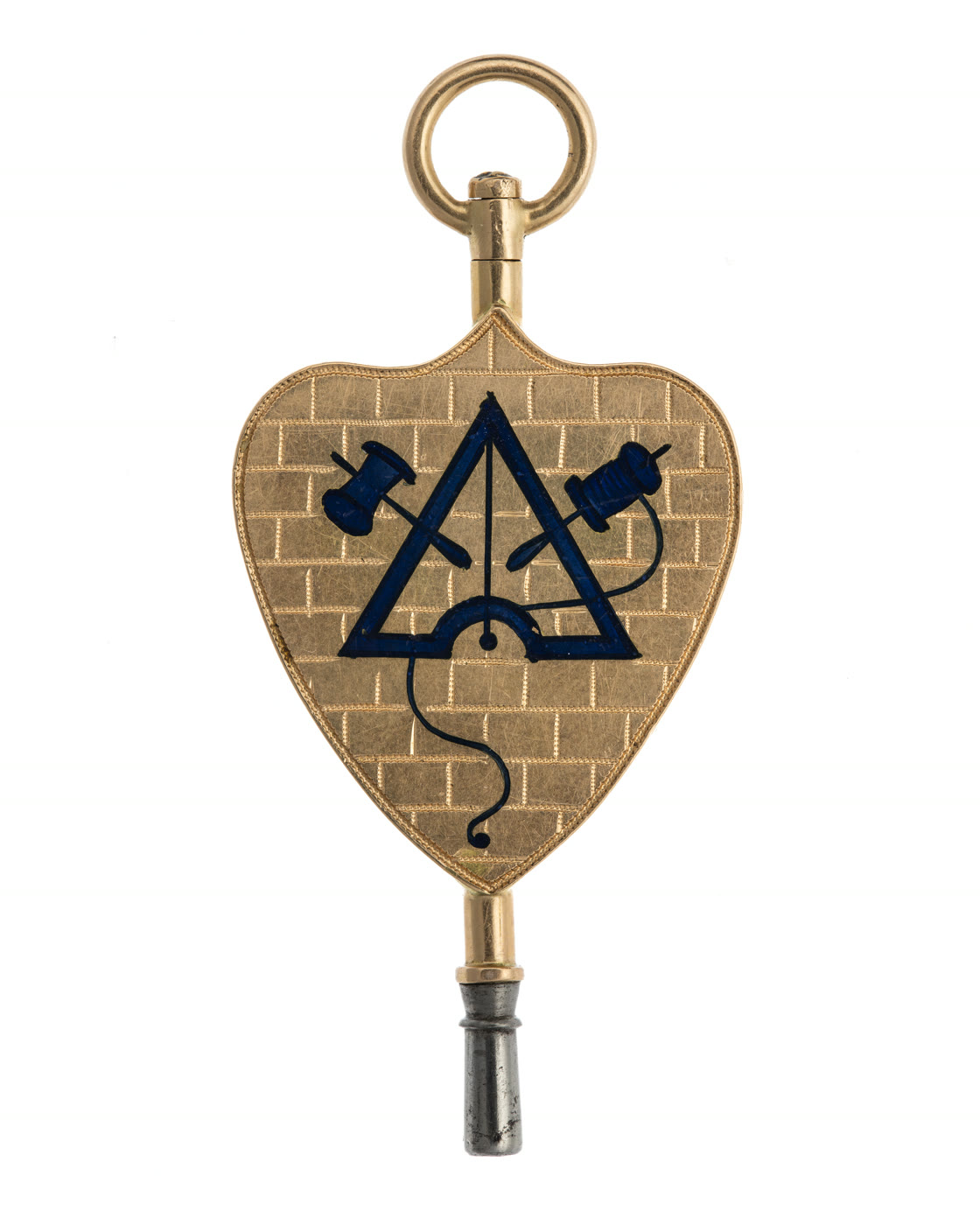
What Is Masonic Jewellery?
Masonic jewellery covers any piece of jewellery made or decorated to display recognised Masonic emblems, most familiarly the square and compasses, alongside a range of other emblems associated with specific Masonic degrees and bodies. This site treats Masonic jewellery purely as a historical jewellery category, describing its typical forms, materials and popularity; it does not attempt to explain or interpret the deeper symbolic or ritual meaning of specific Masonic emblems, which is a specialist subject properly addressed by dedicated Masonic sources rather than a general jewellery-history reference.
How to Recognise It
Look for the square and compasses, the most widely recognised Masonic emblem, often shown with a letter “G” at its centre, though a wide range of other emblems appear on Masonic jewellery tied to specific degrees, offices or Masonic bodies. These emblems appear across ordinary jewellery forms - engraved or enamelled on a ring face, mounted as the head of a stickpin or tie pin, set into a watch fob, or engraved on a cufflink - rather than defining any single distinct jewellery shape of their own.
When Was It Worn?
Masonic jewellery was worn by members of Masonic lodges from the early 18th century to 1950, with particular prominence through the 18th, 19th and early 20th centuries, when Masonic and other fraternal-organisation membership was especially widespread in Britain and the United States.
Origins
Organised Freemasonry dates from the founding of the first Grand Lodge in London in 1717, with Scottish lodge records reaching back to the 1590s, and the wearing of jewellery displaying its recognised emblems developed as a natural extension of lodge membership and ceremonial dress, allowing a member to identify openly with the organisation in everyday as well as ceremonial settings. The wider 19th-century boom in fraternal and benevolent society membership across Britain and the United States gave Masonic jewellery an especially large and varied surviving body of examples from this period.
How It Changed Over Time
Georgian and early 19th-century Masonic jewellery included gold rings, watch fobs and seals engraved with Masonic emblems, reflecting the period’s wider taste for engraved and seal-bearing accessories generally. Through the Victorian period, as fraternal-organisation membership grew substantially across Britain and the United States, the range of Masonic jewellery broadened considerably, including watch chains, cufflinks, tie pins and pendants, produced at a range of price points from simple base-metal pieces to fine gold and enamel work for lodge officers and wealthier members. This popularity continued into the Edwardian period and the early 20th century, supported by the era’s generally strong culture of fraternal and benevolent society membership, before gradually declining in prominence, alongside a broader 20th-century decline in fraternal-organisation membership generally.
Materials
Gold was used for finer Masonic jewellery, particularly rings and watch fobs belonging to lodge officers or wealthier members, often finished with enamel to pick out specific emblems in colour. Silver and other less costly metals served more affordable, widely produced examples, making Masonic jewellery accessible across a broad range of members and budgets.
Construction
Masonic jewellery was constructed using the same standard techniques as comparable ordinary jewellery of the period - engraving, enamelling and stone-setting for rings and fobs, and standard pin, hinge or link fittings for stickpins, cufflinks and fob attachments - with the Masonic emblem itself typically the defining decorative feature rather than any distinct method of construction.
How It Was Worn
Worn as ordinary jewellery is worn - a ring on the hand, a fob on a watch chain, a pin at the tie or lapel - with the piece’s Masonic character carried entirely by its engraved or applied emblem rather than by any distinctive shape or method of wear.
Who Wore It?
Masonic jewellery was worn by members of Masonic lodges, predominantly men through this period, spanning a wide range of social and economic backgrounds given the breadth of fraternal-organisation membership in 18th, 19th and early 20th-century Britain and the United States.
Notable Variations
- Masonic ring - a ring engraved or set with Masonic emblems, closely related in form to an ordinary signet ring.
- Masonic watch fob - a decorative fob carrying Masonic emblems, worn on a watch chain.
- Masonic tie pin or stickpin - a small pin topped with a Masonic emblem, worn at the necktie.
Similar Jewellery
Masonic jewellery is easily confused with jewellery bearing the emblems of other fraternal, benevolent or friendly societies that were similarly widespread in this period, since many shared a comparable taste for engraved emblematic jewellery; correctly identifying which organisation a specific emblem belongs to generally requires knowledge of that organisation’s specific symbols rather than jewellery construction alone.
Examples in Museum Collections
- Freemason’s ring, 1750-75. Victoria and Albert Museum, London, 212-1870. Gold, with emeralds and diamonds set in silver. The museum calls it a rare 18th-century Freemason’s ring; its shell-shaped bezel holds tiny set square, ruler, compasses, level and trowel emblems.
- Masonic badge, British, 1775-1800. Victoria and Albert Museum, London, M.732-1926. Pierced and engraved silver with compasses and set square, an equilateral triangle containing the letter G, and other emblems - the same recognition clues found on later pieces.
- Fob with Masonic symbolism, c.1835. Museum of Freemasonry, London, M2009/3495. Cast in a silver-coloured metal and set with garnets, in the form of compasses on a sector around a set square, with sun, moon and the Volume of Sacred Law - a less costly Masonic watch fob.
Read next
Eras
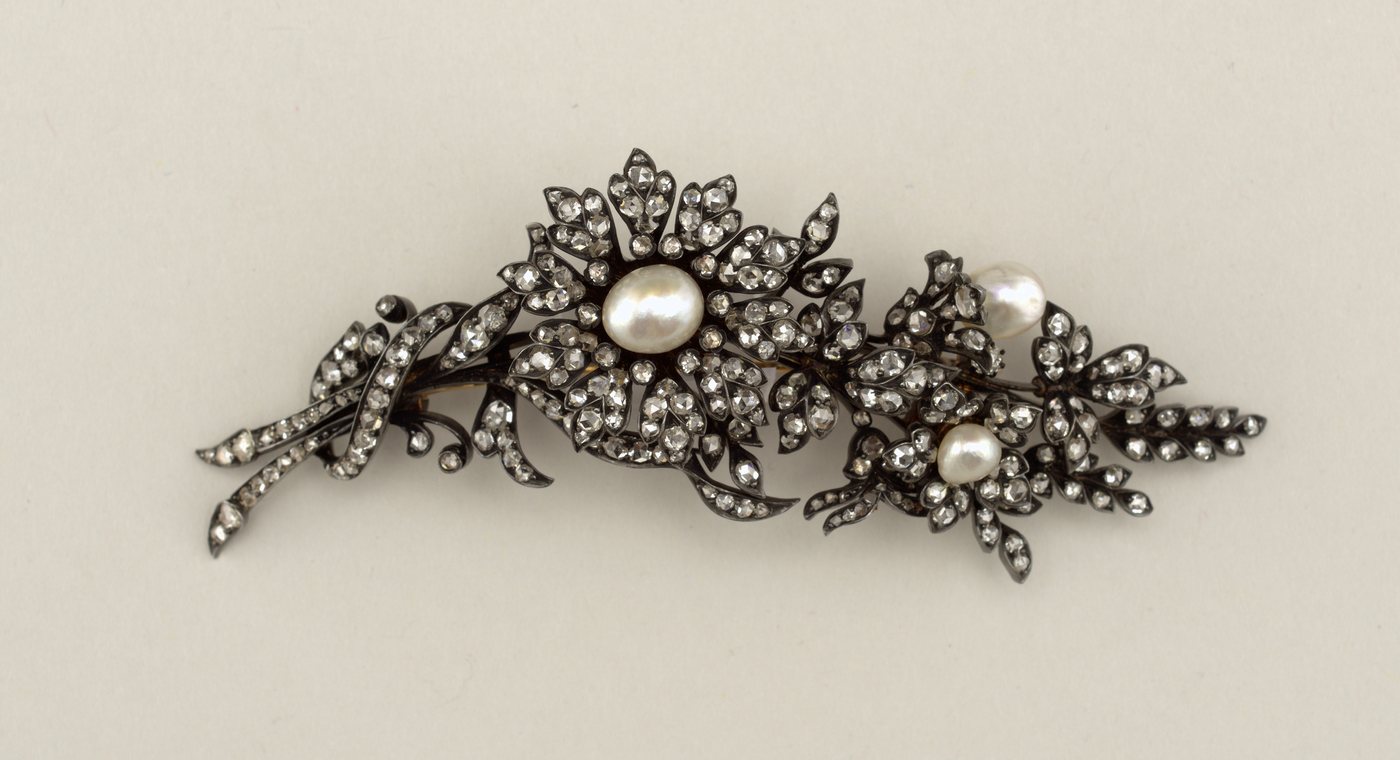
Georgian Jewellery
A guide to Georgian jewellery (1714-1837): Brazilian diamonds, closed-back foiled settings, rococo and Neoclassical styles, paste, cut steel and pinchbeck, sentimental miniatures, girandoles, rivières and Sévigné bows.
Eras
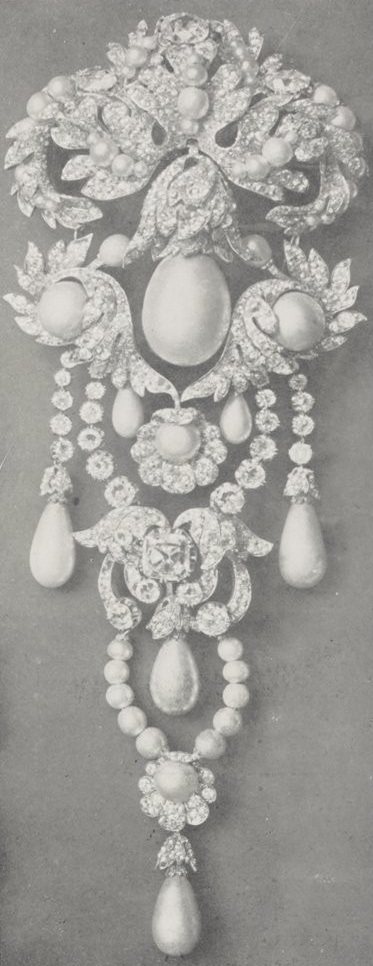
Victorian Jewellery
A guide to Victorian jewellery (1837-1901): the Romantic, Grand and Aesthetic periods, the Great Exhibition, gold rushes and 9ct gold, mourning and Whitby jet, archaeological revival, Scottish jewellery, and how to recognise each phase.
Jewellery
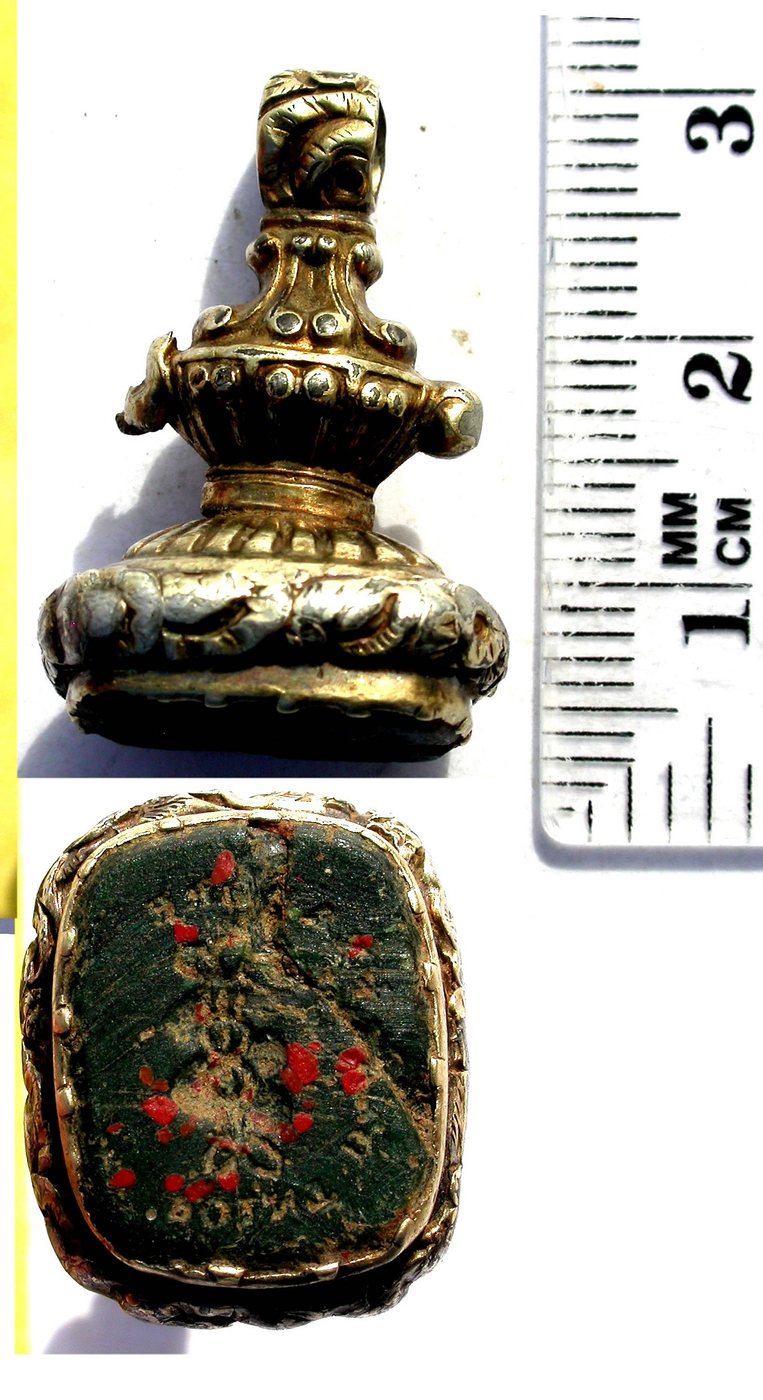
What Is a Fob Seal?
What a fob seal is, how its engraved intaglio face could press a wax seal, and why sealing wax's decline through the 19th and 20th centuries reduced the fob seal to a decorative watch-chain ornament.
Jewellery
What Is a Signet Ring?
What a signet ring is, how its engraved bezel was historically used to seal documents in wax, and how it became a largely decorative, strongly male-associated accessory.

Jewellery
What Is a Watch Chain?
What a watch chain is, how the Albert chain secured a man's pocket watch across a waistcoat, and how women wore an equivalent longer guard chain around the neck or on a brooch.