Opals in Victorian Jewellery
Hungarian and Australian opal, the 'unlucky opal' linked to Walter Scott's 1829 novel, Queen Victoria's opals, and the stone's revival in late Victorian, Edwardian and Art Nouveau jewellery.
Opal is best known for its play-of-colour - shifting flashes of spectral colour that move across the stone as it is turned - and it occupies an unusual place in Victorian jewellery history, moving from a stone dogged by superstition to one of the most sought-after materials of the later 19th and early 20th centuries.
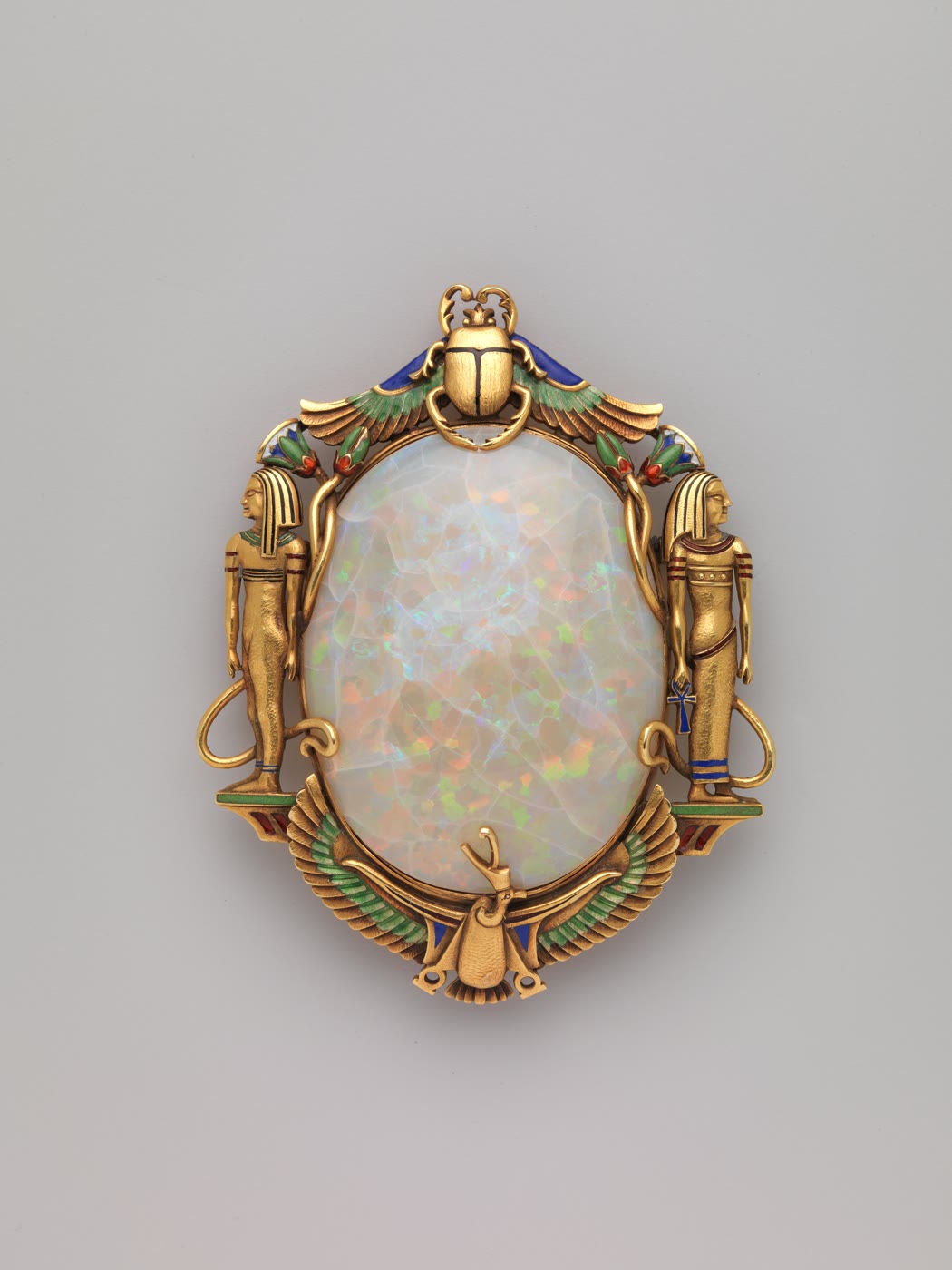
What Opal Is
Opal is a form of silica that contains water, usually several per cent by weight. Precious opal is made of microscopic silica spheres packed in a regular grid; light passing between them is split into colours, and the size of the spheres decides which colours appear. Common opal, without this ordered structure, shows no play-of-colour. The water content explains opal’s sensitivity: stones that dry out can develop a network of fine cracks.
A Reputation for Bad Luck
Opal carried a reputation for bad luck in some 19th-century popular belief, a superstition often linked to Sir Walter Scott’s 1829 novel Anne of Geierstein. In the novel, Lady Hermione wears an opal that changes with her moods; when a few drops of holy water fall on it the stone’s fire is extinguished, she falls ill, and she dies. It is often said that opal sales in Europe fell sharply for decades after the book appeared, but this claim is hard to document, and the superstition was never universal. Opal jewellery continued to be made and worn throughout the century, and the association reflects period belief and its literary source, not any real property of the stone.
Queen Victoria’s Opals
Queen Victoria is often credited with helping to counter the superstition. She wore opals and gave opal jewellery to members of her family. The best-documented example is the Oriental Circlet, a tiara designed by Prince Albert and made by Garrard in 1853 with Indian-style arches originally set with opals. Queen Alexandra, who is said to have thought opals unlucky, had them replaced with rubies in 1902. The circlet is in the Royal Collection.
Hungarian Opal
Before the Australian discoveries, opal used in European jewellery came chiefly from long-worked mines at Dubník, near Prešov in present-day Slovakia, then part of the Kingdom of Hungary - so the material was sold as “Hungarian opal”. These mines produced white opal with a milky body and bright, small-patterned colour, and were worked intensively in the 18th and 19th centuries, much of the output passing through Vienna. A large Hungarian opal known as the Harlequin, found in the 18th century, is in the Natural History Museum in Vienna. Mexico also supplied opal from the 19th century, including transparent orange “fire opal” from the Querétaro region, which was often faceted rather than cut as a cabochon.
Australian Opal from the 1870s
Opal’s fortunes recovered by the later Victorian and into the Edwardian period, helped by major new discoveries in Australia. Precious opal was found in Queensland in the early 1870s, where it occurs in thin seams in ironstone boulders (“boulder opal”). The first large commercial field was White Cliffs in New South Wales, worked from around 1890, and in the early 1900s miners at Lightning Ridge, also in New South Wales, began producing black opal - stones with a dark body that makes the colours appear especially vivid. The Adelaide dealer Tullie Wollaston is credited with establishing Australian opal on the London market in the 1890s, in the face of a trade used to Hungarian material.
Australian fields became, and have remained, the dominant source of fine precious opal, and the increased and more reliable supply coincided with - and likely contributed to - opal’s growing fashionability by the century’s end.
Opal in Art Nouveau and Arts and Crafts Jewellery
Opal became a favoured stone of the Art Nouveau period, whose designers valued its shifting colour over the harder sparkle of faceted precious stones. René Lalique used it with enamel, horn and glass; the Paris firm Falize Frères set opal beads among gold mistletoe leaves on a horn comb bought by the Kunstgewerbemuseum in Berlin at the 1900 Exposition. Arts and Crafts jewellers in Britain and America also used Australian opal widely, often as irregular cabochons or in thin slices, set in silver or gold with enamel.
Cutting: Cabochon, Not Faceted
Precious opal with play-of-colour is not cut with facets in the way transparent gemstones such as diamond or sapphire are. Because its play-of-colour depends on the internal structure rather than on faceted refraction, it is shaped and polished as a smooth cabochon, domed or nearly flat, which best displays the colour flashes across the stone’s surface. Cabochon opals in Victorian and Edwardian jewellery range from small accent stones to large single centrepieces; carved opal, including cameos and small carved faces, also appears from the late 19th century.
Typical Settings
Victorian and Edwardian opal jewellery most often set the cabochon within a surround of diamonds or seed pearls, a combination that let the sparkle of the surrounding stones frame the opal’s softer, shifting colour rather than compete with it. Gold mounts predominate in earlier Victorian pieces, while diamond-set opal jewellery in platinum became more common by the Edwardian period, in keeping with the wider shift described on the platinum in jewellery history page. Opal was also paired with green demantoid garnet in Edwardian brooches and pendants.
A Fragile Material
Opal is a comparatively soft and delicate gemstone, more prone than many other stones to cracking, chipping or developing a network of fine cracks (“crazing”) over time, particularly with exposure to heat, sudden temperature change or prolonged dryness. This is a general material property of opal as a species, not a comment on any individual stone, and it is one reason surviving antique opal jewellery is treated with particular care by collectors, dealers and conservators.
Doublets, Triplets and Synthetics
Thin slices of opal too fragile to set alone were cemented to a backing of dark potch (common opal) or other material to make a “doublet”, and later given a clear quartz or glass cap to make a “triplet”. Assembled opals like these became common in the 20th century. Synthetic opal was not produced commercially until the 1970s, so it does not occur in jewellery made before 1950, although later replacement stones can.
No claim is made here about determining, from a description or photograph, whether a specific opal is natural, assembled or treated - that requires specialist examination.
Read next
Eras
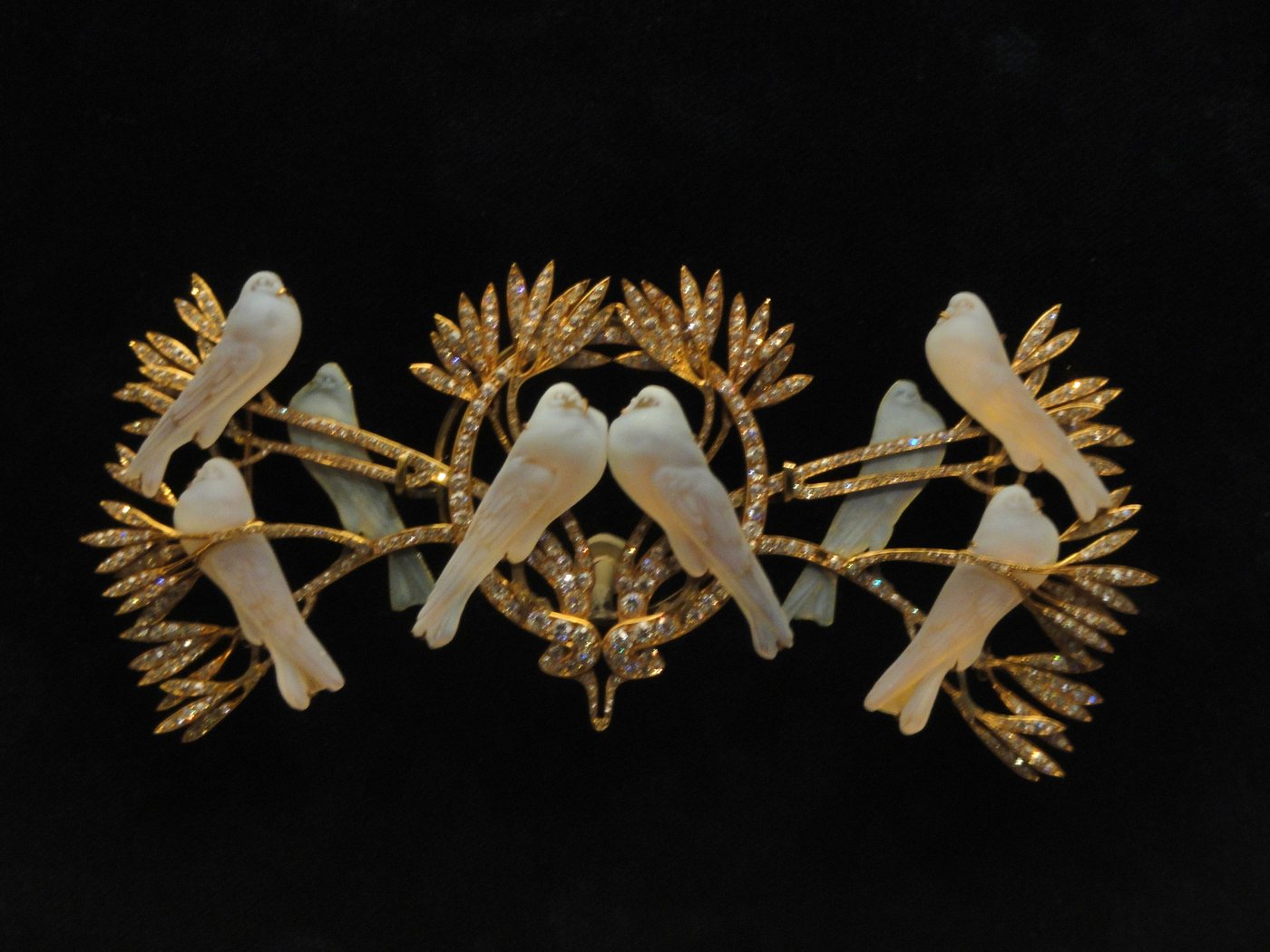
Art Nouveau Jewellery
A guide to Art Nouveau jewellery (c.1890-1910): René Lalique and Gulbenkian, Fouquet and Mucha, Vever and Gaillard, plique-à-jour and horn, Jugendstil, Liberty's Cymric range, Tiffany, and the mass-produced silver that spread the style.

Eras
Edwardian Jewellery
A guide to Edwardian jewellery (1901-1915): platinum and the garland style, Queen Alexandra's dog collars, Cartier, Boucheron and Fabergé in London, the Cullinan diamond, lavaliers, milgrain settings and day jewellery.
Eras
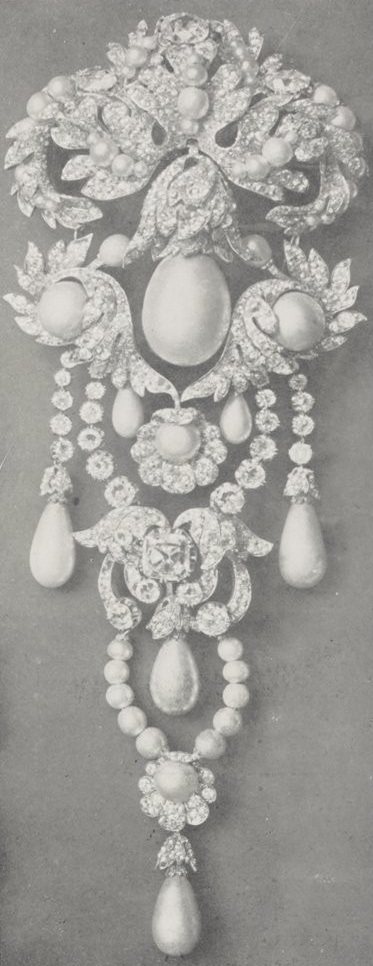
Victorian Jewellery
A guide to Victorian jewellery (1837-1901): the Romantic, Grand and Aesthetic periods, the Great Exhibition, gold rushes and 9ct gold, mourning and Whitby jet, archaeological revival, Scottish jewellery, and how to recognise each phase.
Gemstones
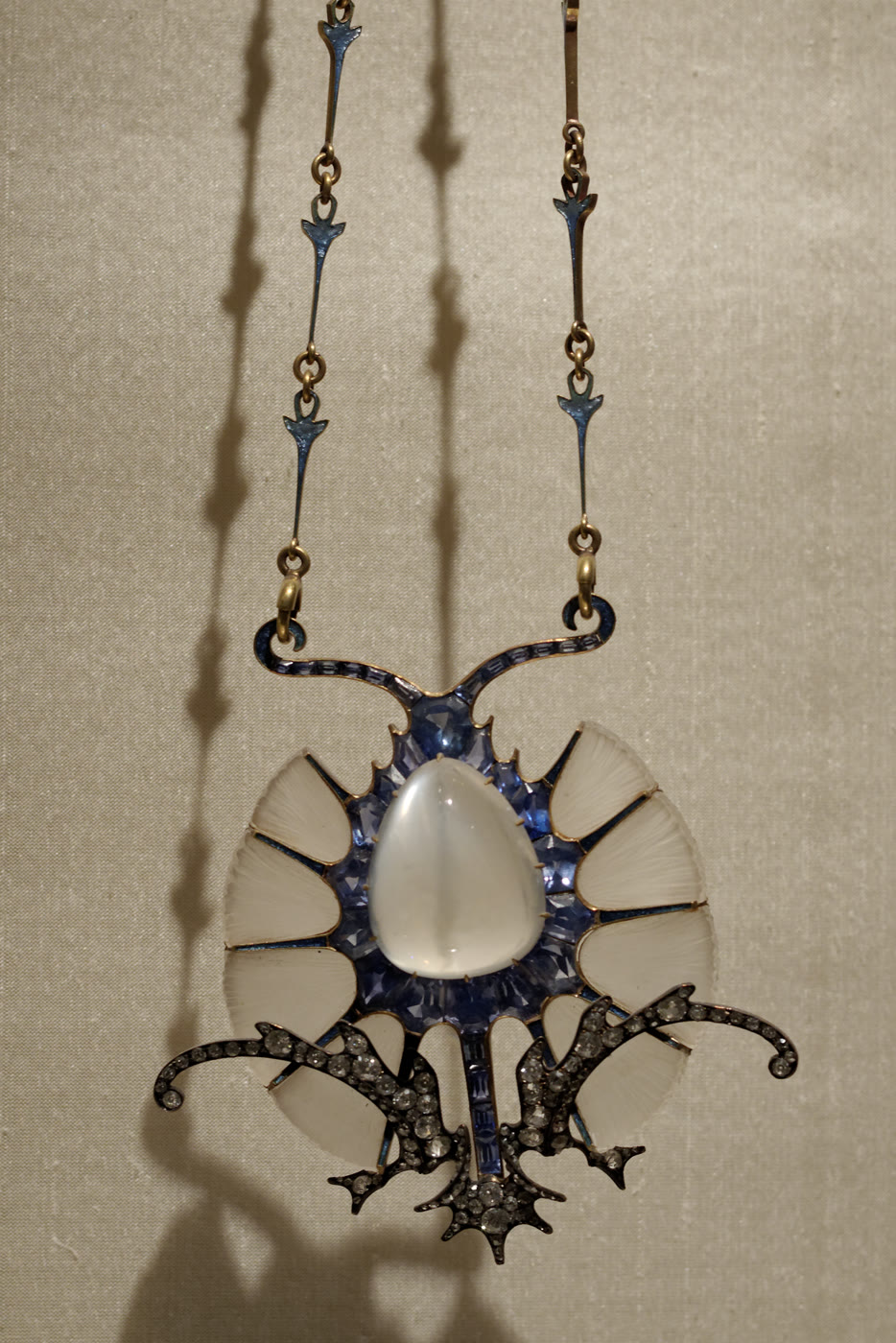
Moonstone in Art Nouveau Jewellery
Why Ceylon moonstone's glowing sheen suited René Lalique, Arts and Crafts makers, Georg Jensen and Edwardian jewellers c.1890-1930, with its cabochon cutting, carved faces and settings.

Gemstones
Pearls in Jewellery History
Natural pearls from the Gulf and Ceylon, seed-pearl work, Edwardian chokers and ropes, Mikimoto's cultured pearls of the 1910s-20s, imitation pearls, and pearls' bridal and mourning meanings.

Gemstones
Turquoise in Victorian Jewellery
Persian turquoise from Nishapur in Victorian jewellery: forget-me-not clusters, pavé snakes, Queen Victoria's bridesmaids' brooches, Arts and Crafts 'matrix', imitations and colour change.