Pendant vs Necklace: What's the Difference?
Why a pendant and a necklace describe different parts of the same worn ornament, and where the two terms blur together.
“Pendant” and “necklace” are often used as if they mean the same thing, but strictly they describe two different parts of what is casually called “a necklace” as a whole: the necklace is what goes around the neck, and the pendant is the hanging ornament suspended from it.
Short Answer
A necklace is the chain, cord or strand worn around the neck; a pendant is a separate hanging ornament worn suspended from a chain or cord. A pendant is typically worn on a necklace, but a necklace does not require a pendant at all, and in principle a single pendant can be worn on more than one different chain.
What Is a Pendant?
A pendant is a piece of jewellery designed to hang - from a chain, cord, ribbon or, in earlier periods, a decorative clasp - rather than to encircle the neck on its own. It is defined by this suspended function rather than by any single shape, material or period, ranging from a small enamelled locket to an elaborate gem-set centrepiece. Because a pendant is a distinct object from its chain, some historical examples were designed to be moved between different chains, or even repurposed from a brooch or other jewellery type via a soldered or added loop.
What Is a Necklace?
A necklace is any ornament worn around the neck, and the term covers a wide range of structurally different pieces - a single strand of matched pearls, a rivière necklace of graduated gemstones set link to link, a chain of plain gold links, or an elaborate multi-strand festoon necklace. Many necklaces carry no pendant at all: their visual interest comes from the strand or chain itself, evenly distributed along its length, rather than from a single suspended focal point.
Key Differences
| Property | Pendant | Necklace |
|---|---|---|
| What it refers to | The hanging ornament itself | The chain, cord or strand worn around the neck |
| Can exist without the other | Yes - can be stored or displayed separately from any chain | Yes - many necklaces (rivières, pearl strands) have no pendant |
| Typical relationship | Worn suspended from a necklace or chain | Often supports a pendant, but frequently worn alone |
| Interchangeability | A single pendant can sometimes be worn on different chains | A chain can sometimes carry different pendants |
| Focus of ornament | A single suspended focal point | Often distributed evenly along the strand, unless it carries a pendant |
Historical Usage
Across the Georgian, Victorian and Edwardian periods, pendants were frequently designed as detachable, versatile pieces - a locket or gem-set drop that a family might own separately from any particular chain and combine as occasion or fashion dictated. Fine gemstone necklaces, meanwhile, were often designed as complete unified pieces, such as a rivière of matched or graduated stones, where the entire strand rather than any single point was the ornament’s purpose. Lavalier and festoon-style necklaces of the late 19th and early 20th centuries sat somewhere between the two ideas, combining a decorative chain or swagged strand with one or more drops, blurring the strict separation between “chain” and “hanging ornament” within a single designed piece.
Where the Terms Overlap
In everyday and even trade usage, “necklace” is frequently used loosely to describe the whole worn object, pendant included, without distinguishing the two parts - someone might reasonably call a locket-on-a-chain simply “a necklace” without any confusion arising. The distinction matters more when the two elements are, or could be, separated: a fixed, non-removable centre ornament soldered directly into a necklace’s design is sometimes described as “a necklace” even though it has a clearly pendant-like element, precisely because it cannot be removed and worn or replaced independently. Where a piece’s pendant is detachable and interchangeable, however, referring to it specifically as “a pendant” (as distinct from its chain) becomes the more precise and useful description, particularly for cataloguing or research purposes.
Related Reading
For the dedicated entry on the hanging-ornament form itself, see What Is a Pendant?. For a necklace type defined by its continuous strand rather than any pendant, see What Is a Rivière Necklace?.
Read next
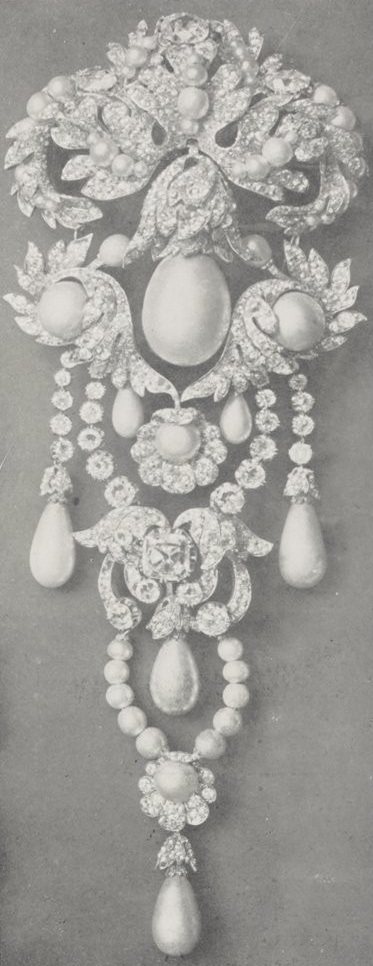
Eras
Victorian Jewellery
A guide to Victorian jewellery (1837-1901): the Romantic, Grand and Aesthetic periods, the Great Exhibition, gold rushes and 9ct gold, mourning and Whitby jet, archaeological revival, Scottish jewellery, and how to recognise each phase.

Jewellery
What Is a Festoon Necklace?
What a festoon necklace is, how its draping swagged strands differ from a riviere's unbroken line of stones, and why it stayed popular from the Georgian through the Victorian period.
Jewellery
What Is a Lavalier Necklace?
What a lavalier necklace is, how its single fine-chain drop defined Edwardian and Belle Epoque style, and how it differs from a plain pendant, negligee necklace or sautoir.
Jewellery
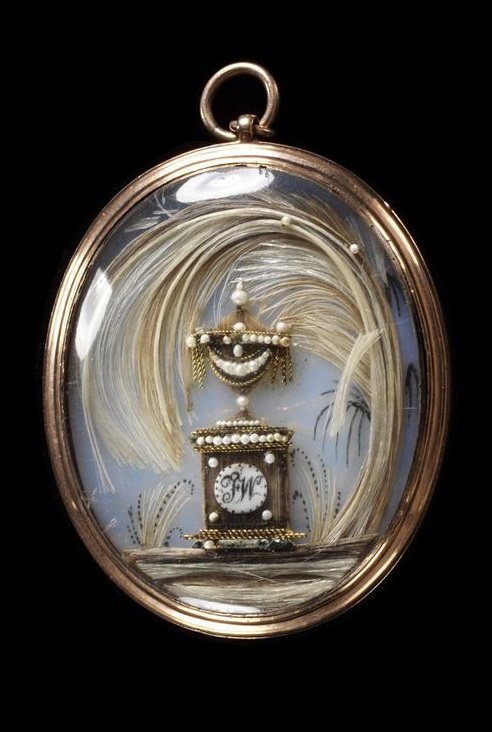
What Is a Locket?
What a locket is, how its hinged compartment was used to hold a photograph, portrait or hair, and how the form evolved from plain Georgian cases to elaborate Victorian mourning lockets.
Jewellery
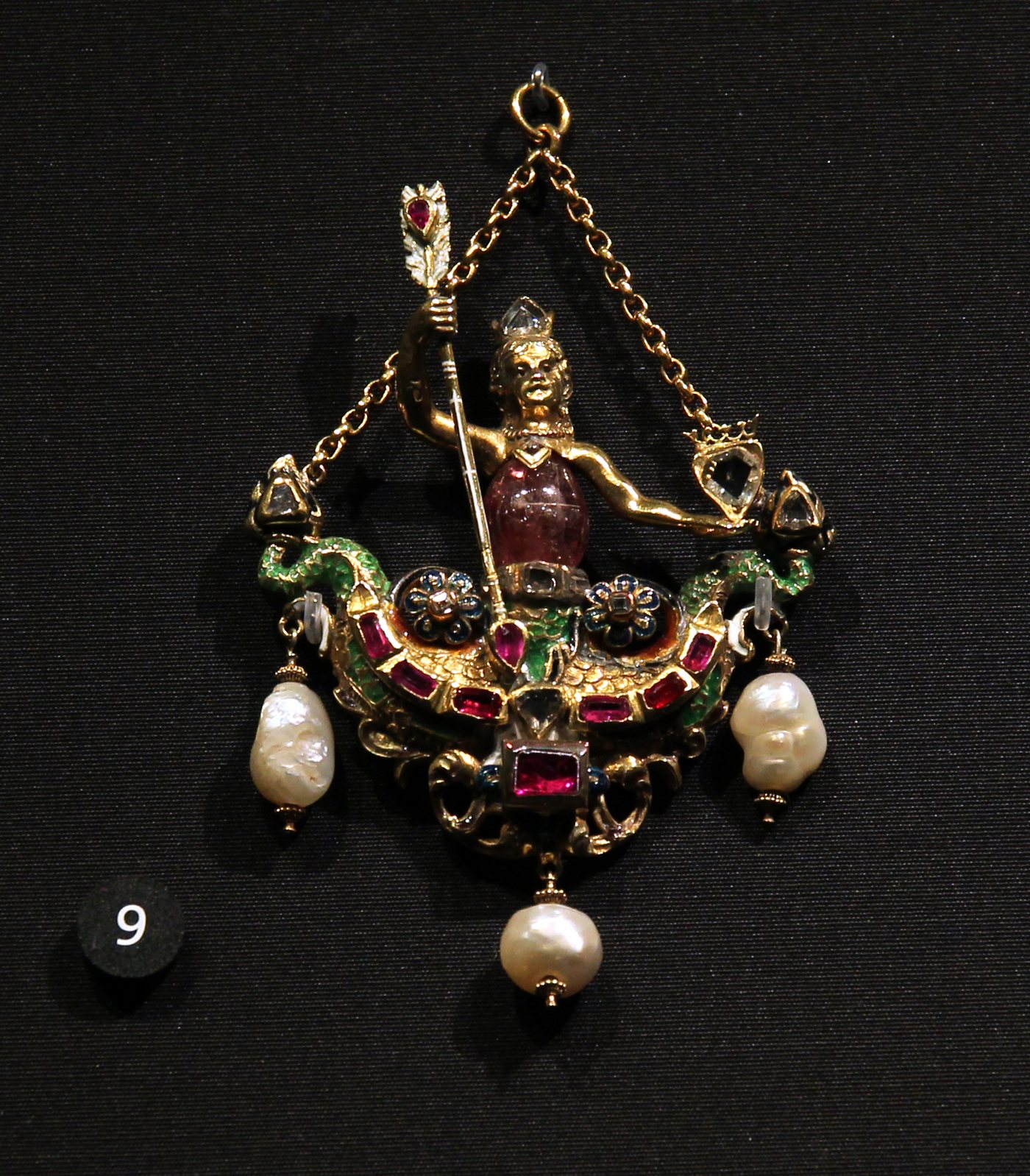
What Is a Pendant?
What a pendant is, how it differs from an integrated necklace centrepiece, and how forms like the locket, lavalier and negligee pendant developed within the broader category.
Jewellery
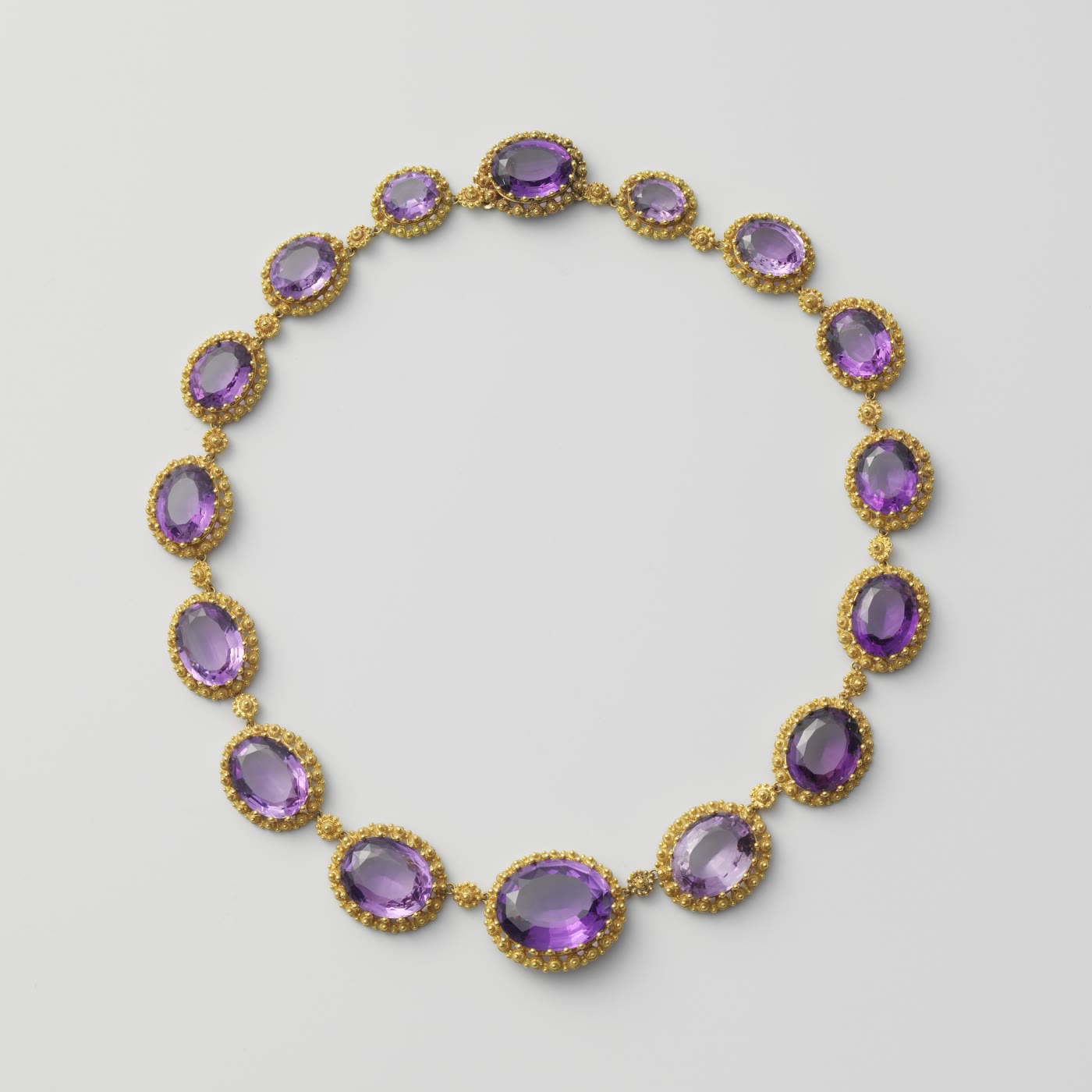
What Is a Rivière Necklace?
What a riviere necklace is, why its unbroken line of individually set stones made it one of the most enduring necklace forms, and how it differs from a festoon or fringe necklace.