Art Nouveau vs Art Deco Jewellery: What's the Difference?
How to tell Art Nouveau jewellery (c.1890-1910) from Art Deco (c.1915-1935): curves vs geometry, enamel and horn vs platinum and diamonds, Lalique vs Cartier, and the features that separate the two at a glance.
Art Nouveau and Art Deco are often confused because their names are similar and both are associated with Paris and the early 20th century. In jewellery, they are almost opposites. Art Nouveau is curving, naturalistic and dreamlike; Art Deco is geometric, symmetrical and machine-age. They were separated by the First World War and by a generation of taste.
Short Answer
Art Nouveau jewellery (about 1890-1910) uses flowing, asymmetrical lines, women’s faces and bodies, insects, flowers and fantastical creatures, often in enamel, horn, glass and moonstone, where artistry matters more than the value of the materials. Art Deco jewellery (about 1915-1935) uses straight lines, symmetry and geometric shapes, usually in platinum with diamonds and strongly contrasting colours such as black onyx, coral, jade and emerald.
What Is Art Nouveau Jewellery?
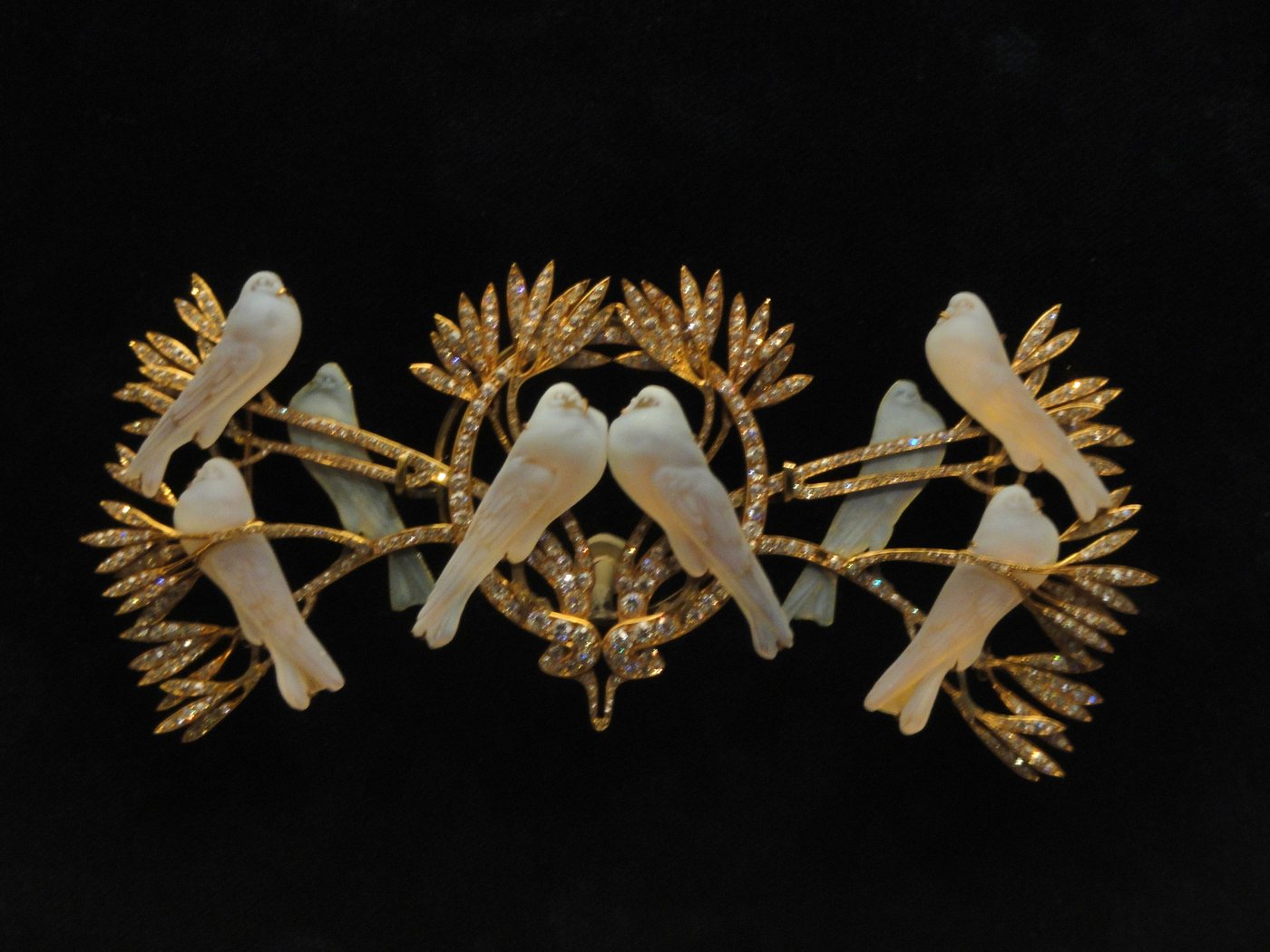
Art Nouveau jewellery was a reaction against industrial, historicist design. Its leading figure, René Lalique, showed his jewellery to great acclaim at the Paris Exposition Universelle of 1900. Designers including Georges Fouquet, Henri Vever and Lucien Gaillard made brooches, combs, pendants and corsage ornaments from carved horn, plique-à-jour enamel, glass, ivory, opal and moonstone, choosing materials for colour and effect rather than cost. Its motifs - dragonflies, orchids, peacocks, women with flowing hair, and insects - were drawn from nature, Symbolist art and Japanese prints.
What Is Art Deco Jewellery?
Art Deco took its name from the 1925 Paris Exposition des Arts Décoratifs. Its jewellery, made by houses such as Cartier, Van Cleef & Arpels and Boucheron, reduced ornament to geometry - chevrons, circles, stepped outlines and fan shapes - in strict symmetry. Platinum and diamonds were its basic palette, with calibré-cut coloured stones and black onyx or enamel for contrast. Its influences were Cubism, machinery, ancient Egypt and the arts of India and China.
Key Differences
| Property | Art Nouveau | Art Deco |
|---|---|---|
| Dates | c.1890-1910 | c.1915-1935 |
| Line | Curving, flowing, whiplash curves; asymmetry | Straight lines, geometry, strict symmetry |
| Motifs | Women, insects, flowers, peacocks, fantastical creatures | Chevrons, fans, sunbursts, stepped shapes, stylised flowers, Egyptian motifs |
| Metals | Gold, often with a matt or chased surface; silver for cheaper work | Platinum and white gold; some yellow gold later |
| Stones and materials | Enamel (including plique-à-jour), horn, glass, ivory, opal, moonstone, baroque pearls | Diamonds, calibré sapphires, rubies and emeralds, black onyx, coral, jade, rock crystal |
| Stone cuts | Cabochons, carved stones | Baguettes, emerald cuts, calibré and brilliant cuts |
| Key designers | René Lalique, Georges Fouquet, Henri Vever, Lucien Gaillard | Cartier, Van Cleef & Arpels, Boucheron, Raymond Templier, Jean Després |
| Mood | Romantic, sensual, dreamlike | Modern, crisp, glamorous |
Where They Overlap
The two styles are not completely sealed off from each other. Some jewellers worked in both: the Fouquet firm moved from Georges Fouquet’s Art Nouveau work of 1900 to Jean Fouquet’s geometric modernism of the 1920s. Lalique himself turned from jewellery to glass, and his moulded glass pendants of the 1920s use stylised, simplified forms that sit between the two. Stylised flowers, which appear in Art Deco as flat, geometric baskets and bouquets, are a descendant of Art Nouveau naturalism.
In between came the Edwardian “garland style” of platinum, diamonds and pearls, which coexisted with Art Nouveau and led into Art Deco. See Edwardian vs Art Deco Jewellery.
A Quick Test
Imagine drawing the piece’s outline. If you need curves, tendrils and an asymmetrical composition, it is probably Art Nouveau. If you could draw it with a ruler and compasses and fold it down the middle, it is probably Art Deco.
Read next
Compare
Art Nouveau vs Arts and Crafts Jewellery
Art Nouveau and Arts and Crafts jewellery share almost the same date range and both reacted against mainstream Victorian production, but one pursued artistic effect and the other craft ethics.
Compare
Edwardian vs Art Deco Jewellery
Edwardian and Art Deco jewellery both favoured platinum, but one is soft and curved and the other hard-edged and geometric - here's how to tell the garland style from Deco.

Eras
Art Deco Jewellery
A guide to Art Deco jewellery (c.1915-1935): geometric symmetry, the 1925 Paris Exposition, Cartier's Tutti Frutti and Van Cleef & Arpels' Mystery Set, the modernist jewellers, new stone cuts, Egyptian and Indian influences, and costume jewellery.
Eras
Art Nouveau Jewellery
A guide to Art Nouveau jewellery (c.1890-1910): René Lalique and Gulbenkian, Fouquet and Mucha, Vever and Gaillard, plique-à-jour and horn, Jugendstil, Liberty's Cymric range, Tiffany, and the mass-produced silver that spread the style.
Gemstones
Moonstone in Art Nouveau Jewellery
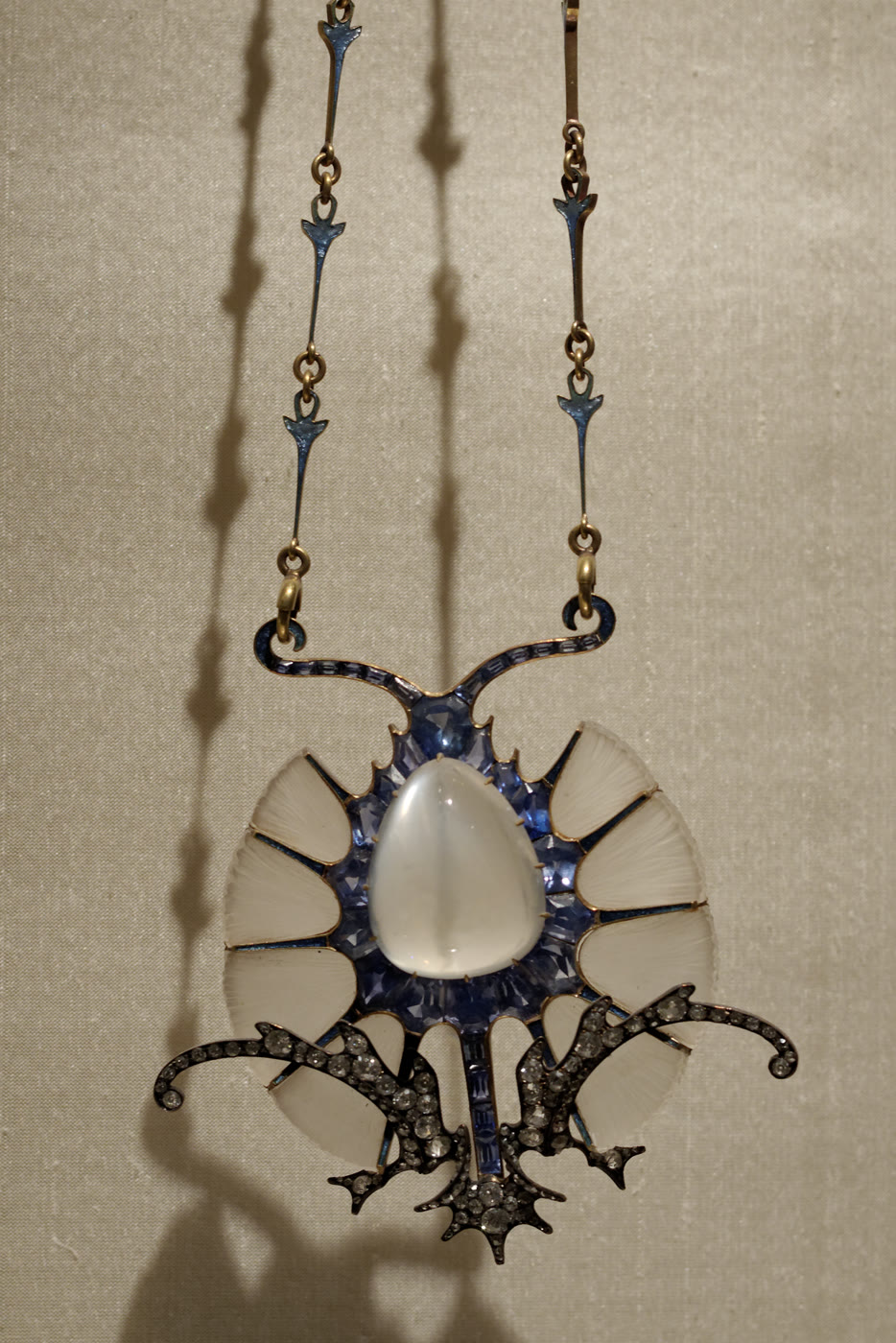
Why Ceylon moonstone's glowing sheen suited René Lalique, Arts and Crafts makers, Georg Jensen and Edwardian jewellers c.1890-1930, with its cabochon cutting, carved faces and settings.
Symbols
Insect Jewellery
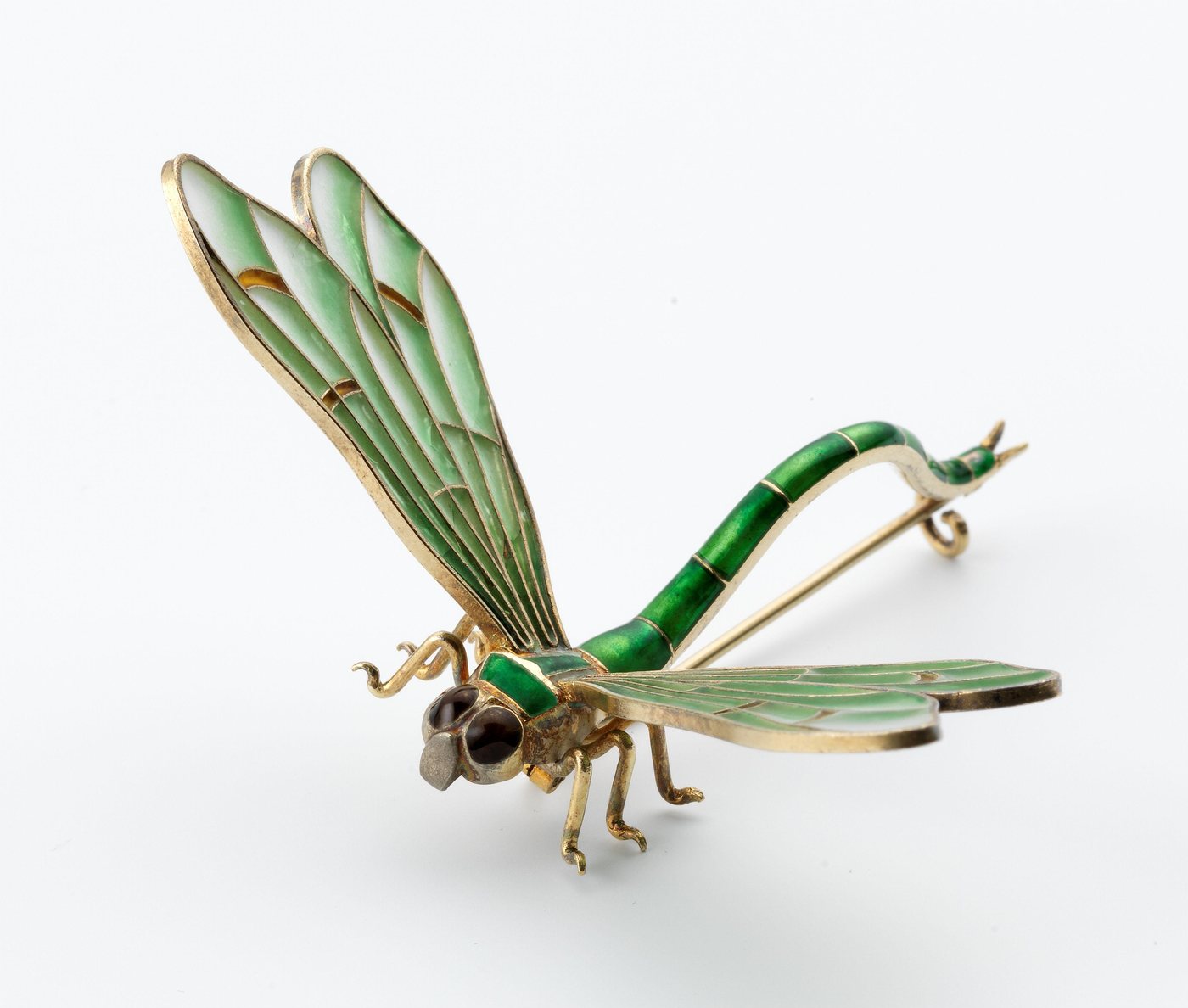
Insect jewellery from the Napoleonic bee to Victorian diamond flies and Lalique's Dragonfly Woman: naturalistic and Art Nouveau traditions, scarabs and real beetle wings.