Understanding Pin and Hinge Construction
How pin-and-hinge mechanisms work across brooches, hatpins and stickpins, and why the presence or absence of a catch is a useful structural distinction.
Pin-and-hinge mechanisms appear across several distinct jewellery types - brooches, hatpins and stickpins among them - and while How to Date an Antique Brooch by Its Clasp looks specifically at brooch catches, it’s worth understanding the broader construction principles that connect and distinguish these related pin-based forms.
What to Look At
Across any pin-based piece, look at how the pin is attached (a hinge allowing it to swing, or a fixed mount), how - if at all - the pin’s point is secured once the piece is fastened, and whether the mechanism looks proportionate to and consistent with the rest of the piece. As with catches specifically, hinge and pin construction is a suggestive clue toward likely period and type, not a decisive one, and pin assemblies are frequently repaired or replaced independently of the body of the piece they belong to.
The Basic Hinge
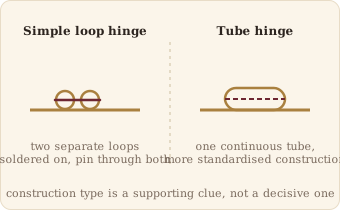
A hinge is the mechanism that allows a pin to swing outward from the body of a brooch, bar brooch or similar piece, so that it can be inserted through fabric and then closed flat against the garment. The simplest form is built from two small soldered metal loops through which a separate pin is passed, a construction method that is straightforward to produce by hand and appears from 1700 to 1950. A manufactured tube hinge, using a continuous metal tube set into the piece with a fitted pin running through it, reflects a more standardised, later production method, though - as with catch styles - both hinge types were used across long, overlapping spans of time, and hinge construction alone cannot narrow a date precisely.
Brooches: A Full Pin-and-Catch Assembly
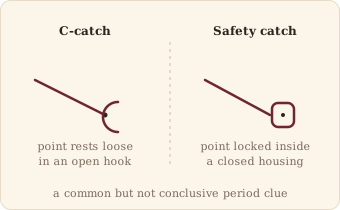
A brooch’s fastening mechanism is the most structurally complete of this group: a hinged pin, together with a separate catch at the opposite end that encloses or otherwise secures the pin’s point once closed. This full assembly - hinge, pin and catch working together - is what allows a brooch to be fastened securely to fabric and stay closed during wear, and it’s the specific mechanism examined in detail in How to Date an Antique Brooch by Its Clasp.
Hatpins and Stickpins: No Catch at All
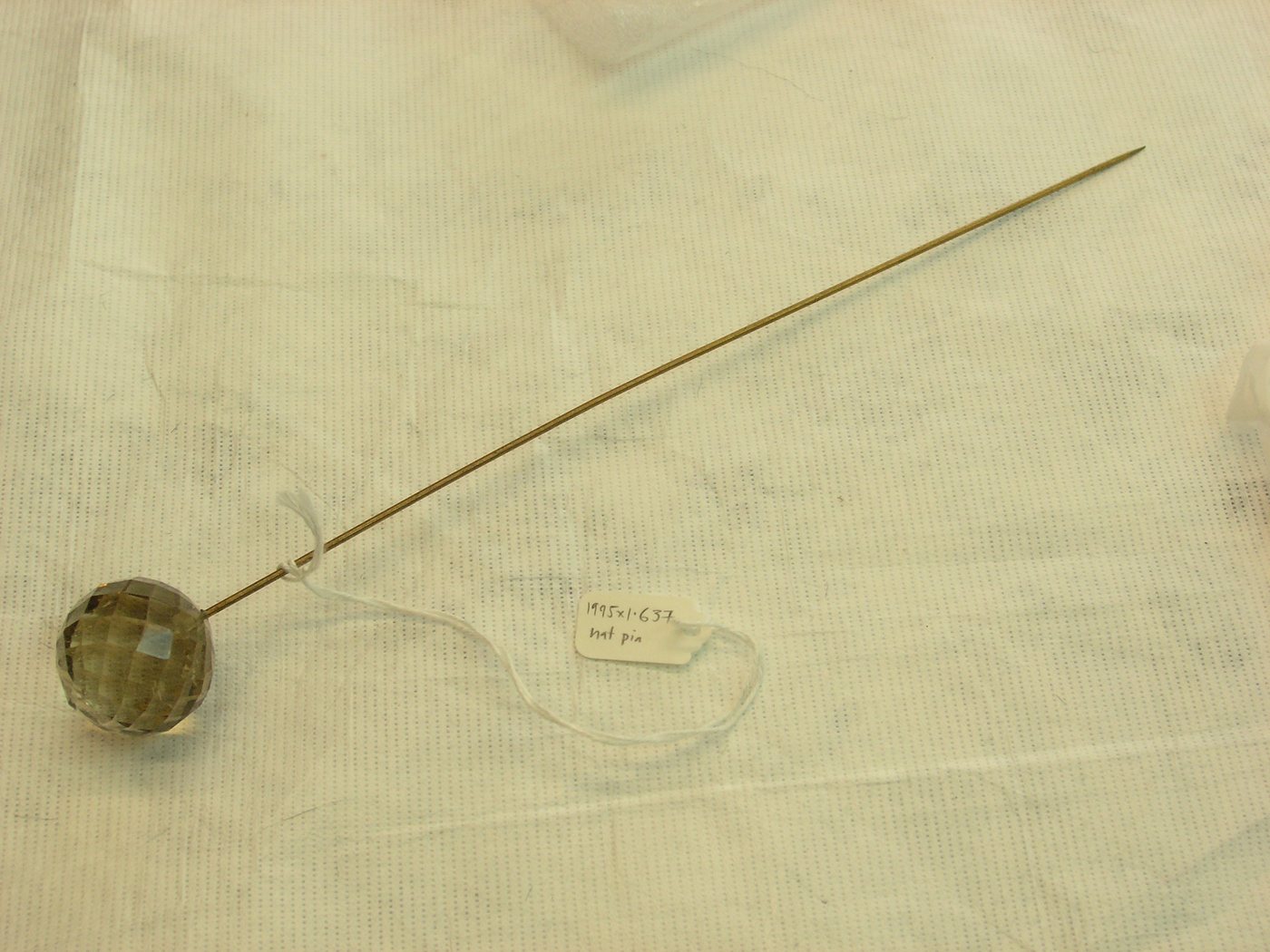
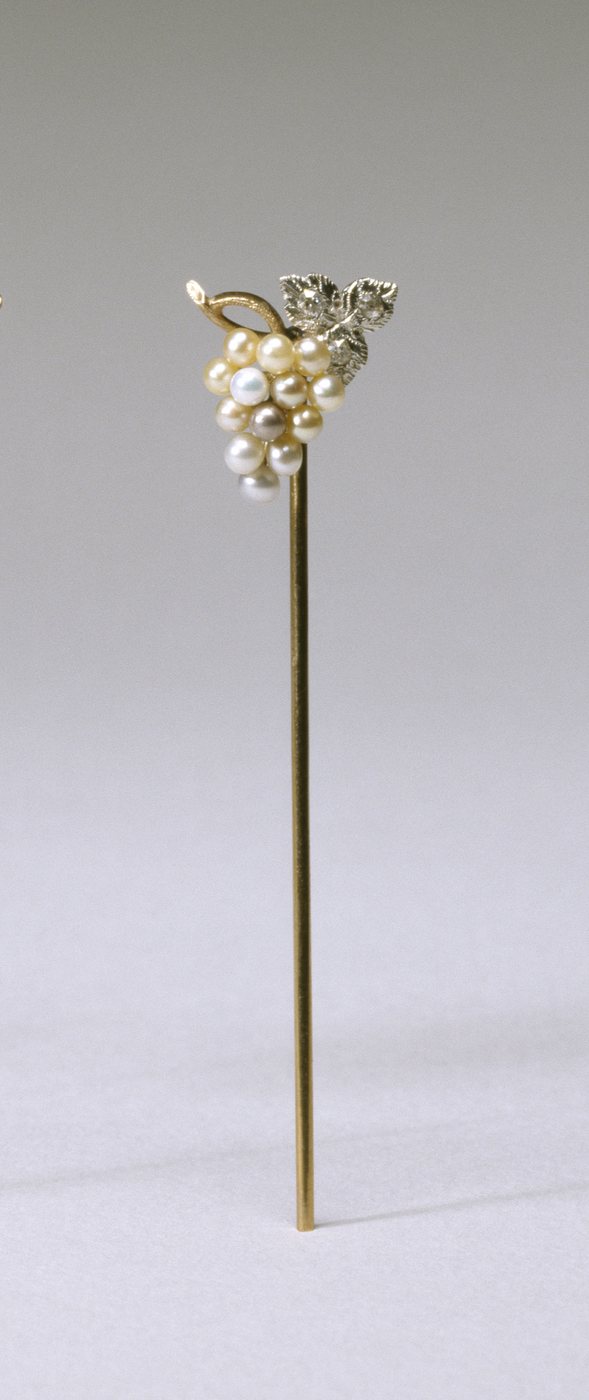
A hatpin and a stickpin are structurally simpler than a brooch in one specific, useful respect: neither has a catch mechanism at all. Both consist of a decorative head mounted on a long, plain pin that is simply pushed through fabric or, in a hatpin’s case, through a hat and the hair beneath it, relying on the pin’s length and the friction of the material to hold it in place rather than any locking mechanism. Some examples, particularly hatpins, were sold or later fitted with a separate protective guard or point-protector to cover the sharp end when not in use, but this is a separate accessory rather than part of the pin’s own fastening mechanism. Because a hatpin or stickpin has no catch to date by, distinguishing between them and identifying their likely period relies much more heavily on the pin’s length, the design and construction of the decorative head, and overall style than on any fastening-mechanism evidence; see Brooch vs Pin for more on how these related pin-based forms are distinguished from one another generally.
Where to Go From Here
For the fuller treatment of brooch catch styles specifically, see How to Date an Antique Brooch by Its Clasp. For the jewellery-type entries covering these forms individually, see Hatpin and Stickpin, and for a broader approach to researching a specific piece, see How to Research an Inherited Piece of Jewellery.
Read next
Compare
Brooch vs Pin: What's the Difference?
Why brooch and pin often mean the same thing, where usage diverges, and how a stickpin differs structurally from both.
Identify
How to Date an Antique Brooch by Its Clasp
What clasp and catch styles can suggest about a brooch's likely period, and why the catch alone can never confirm a date.
Identify
How to Research an Inherited Piece of Jewellery
A practical starting process for researching an inherited piece of jewellery, from family history and construction clues to when to consult a specialist.

Jewellery
What Is a Bar Brooch?
What a bar brooch is, why its narrow horizontal form suited late Victorian and Edwardian dress, and how it compares with fuller, more elaborate brooch styles.
Jewellery
What Is a Hatpin?
What a hatpin is, how its decorative head ranged from simple to elaborate, and the surprising documented history of hatpins as a means of self-defence before their Edwardian-era decline.
Jewellery
What Is a Stickpin?
What a stickpin is, how its simple push-through pin differs structurally from a hinged brooch, and why it became a leading form of men's jewellery in this period.